Software lifecycle management can feel like a maze, but it doesn’t have to be. Below we break down the idea, show the stages, list the tools, and point out why it matters for small firms.
What Is Software Lifecycle Management?
Software lifecycle management (SLM) is a systematic way to plan, build, deploy, maintain, and eventually retire a software product. It treats the product like a house , you draw the blueprint, construct the walls, keep the roof repaired, and finally demolish it when it’s no longer useful. The goal is to keep the software reliable, cost‑effective, and aligned with business goals from day one to the day it’s shut down.
SLM covers everything from initial planning to retirement, and each stage impacts performance, cost, and longevity. While SLM looks at the whole product, application lifecycle management (ALM) focuses on the development side only, requirements, coding, testing, and release.
For regulated sectors like medical devices, a solid SLM process can be the difference between passing an audit and costly rework. Medical device software development often uses SLM to keep traceability matrices up to date and to generate design history files required by FDA standards.
Bottom line: SLM is the roadmap that keeps software alive and valuable.
Key Phases of the Software Lifecycle
The lifecycle breaks into several distinct phases. Each phase adds a layer of control that helps teams avoid surprises later on.
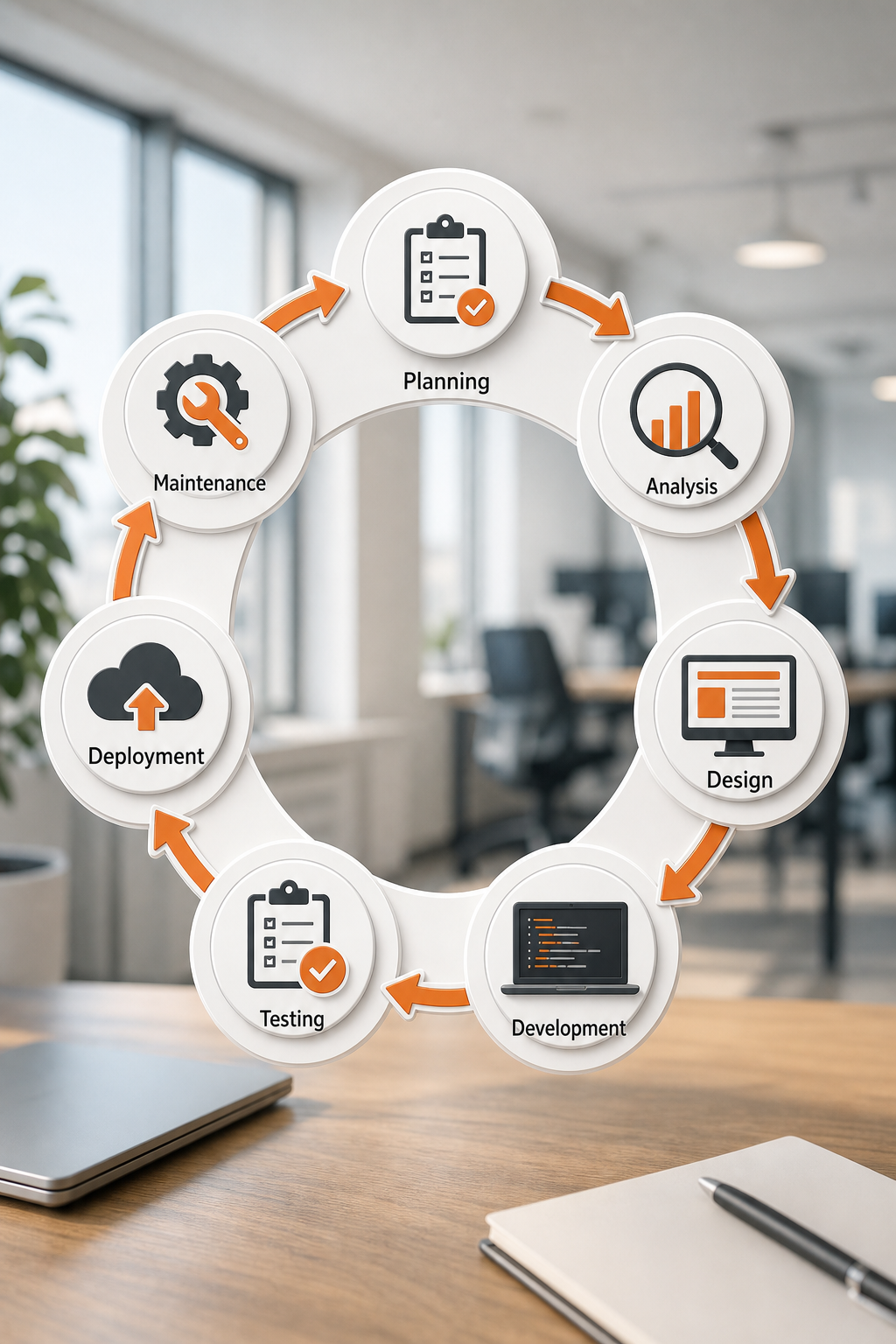
First comes planning. Teams gather goals, define scope, and allocate budgets. This stage sets the direction and makes sure everyone knows what they’re building.
Next is analysis, where requirements are turned into detailed specs. Designers then create the architecture and user‑interface mock‑ups. Development follows, turning designs into working code while adhering to coding standards.
Testing validates that the code meets the specs and is free of critical bugs. After testing, deployment pushes the software to production , either on‑premise or in the cloud. Finally, maintenance keeps the app secure, performant, and up‑to‑date.
These steps match what Atlassian describes as the core SDLC phases.
Each phase feeds the next, creating a loop of feedback and improvement.
Benefits of Effective Lifecycle Management for Small Businesses
Small firms often run on thin margins, so wasted time or surprise bugs can feel like a crisis. Good lifecycle management trims that risk.
First, clear planning means you know exactly what to build. That prevents scope creep and keeps budgets honest.
Second, regular testing catches issues early, so you avoid costly emergency patches after launch.
Third, a maintenance routine keeps the app secure and compatible with new OS versions, which protects your brand’s reputation.
Fourth, SLM creates a single source of truth for requirements and design. When everyone works from the same docs, miscommunication drops dramatically.
Finally, a structured retirement plan lets you phase out old features without shocking users.
All of these add up to faster releases, lower support tickets, and happier customers. Application maintenance services can fill the gap for firms that lack an in‑house team.
Top ALM Tools Compared , Which Fits Your Business?
Choosing the right ALM platform depends on what you need most , traceability, automation, or price. Below is a quick look at six popular options.
Atlassian scores high on integration because its products talk to each other out of the box. If you already use Jira for issue tracking, adding Confluence and Bamboo gives you a near‑complete ALM suite without extra glue code.
Azure DevOps shines for teams that live in the Microsoft ecosystem. Its pricing is transparent, and the built‑in pipelines work well with Visual Studio.
IBM’s offering is best for enterprises that need both Agile and Waterfall in the same project, plus strong governance.
Helix ALM targets regulated markets where audit trails are non‑negotiable. It provides a traceability matrix that maps requirements to code and test results.
SpiraTeam brings AI‑driven automation to the table, which can cut manual effort for repetitive testing tasks.
Jama Software is a solid pick for heavily regulated sectors like medical devices, but it lacks built‑in automation.
Pick the tool that matches your biggest pain point , whether that’s integration, compliance, or price.
How Lakeway Web Development Customizes Lifecycle Solutions
At Lakeway Web Development we treat SLM as a partnership. We start with a discovery workshop to map your current process, then we design a workflow that fits your team’s size and skill set.
Next, we choose the right tech stack , whether that’s a low‑code platform for rapid delivery or a custom codebase for complex logic. Our AI‑powered search lets stakeholders ask natural‑language questions about requirements or bugs, which speeds decision‑making.
We also embed preventive software maintenance practices into the CI/CD pipeline. That means security patches and performance checks run automatically before each release.
Finally, we set up monitoring dashboards that show real‑time health metrics. If a threshold is crossed, the team gets an alert and can act before users notice.
Our approach works for law firms, medical practices, and e‑commerce owners , anyone who needs a reliable app without the overhead of a large IT department.
FAQ
What does software lifecycle management include?
It includes planning, analysis, design, development, testing, deployment, and ongoing maintenance , all managed as a single, coordinated process.
Is SLM the same as ALM?
No. SLM covers the entire life of a software product, while ALM focuses mainly on the development and release phases.
Can a small business afford an ALM tool?
Yes. Options like Atlassian’s starter tier or open‑source platforms such as Tuleap can provide core ALM features for a modest budget.
How often should I review my software roadmap?
Quarterly reviews keep the roadmap aligned with market changes and help catch scope drift before it becomes costly.
What role does automation play in lifecycle management?
Automation reduces manual effort in testing, builds, and deployments, which speeds releases and lowers the chance of human error.
Conclusion
If you want a smoother, lower‑cost software journey, start by adopting a clear SLM framework and choose an ALM tool that matches your biggest need. Reach out to Lakeway Web Development for a free assessment and see how a custom solution can fit your business.