Building safe, regulated software for medical devices feels like walking a tightrope. One slip can delay a launch, cost millions, or even put patients at risk. In this list we break down the tools that let you stay on the line and keep the project moving.
We’ll cover eight platforms that help you meet FDA, IEC 62304, and ISO 14971 requirements while giving you the flexibility to iterate fast. You’ll see how each tool fits into a typical development flow, what documentation they generate, and where they shine or fall short. Let’s get into the shortlist.
1. Model‑Based Design Environment for FDA‑Compliant Software
Model‑based design environments let you build a virtual prototype before any line of code is written. That means you can run safety analyses, generate test vectors, and produce traceability reports that match IEC 62304 Chapter 5 expectations. The visual environment also helps non‑engineers understand algorithm behavior, which smooths risk reviews.
When you click custom desktop applications on a project, you often need to pull data from a simulation model into a Windows‑based UI. The integration is straightforward because the provider supplies C/C++ code generators that produce ISO‑compliant source files. Those files can be compiled with certified toolchains, keeping the software life‑cycle clean.
Pros:
- Automatic generation of C code that meets IEC 62304 documentation needs.
- Built‑in support for Monte‑Carlo simulations and statistical validation.
- Extensive library of medical‑grade signal‑processing blocks.
Cons:
- Licensing can be pricey for large teams.
- Steeper learning curve for developers new to model‑based design.
- Heavy GUI may slow down headless CI pipelines.
Real‑world tip: A cardiac‑monitor startup used the model‑based design environment to model arrhythmia detection. By generating the final C code directly from the model, they cut verification time by 30 % and handed the FDA a complete software‑life‑cycle package in one submission.
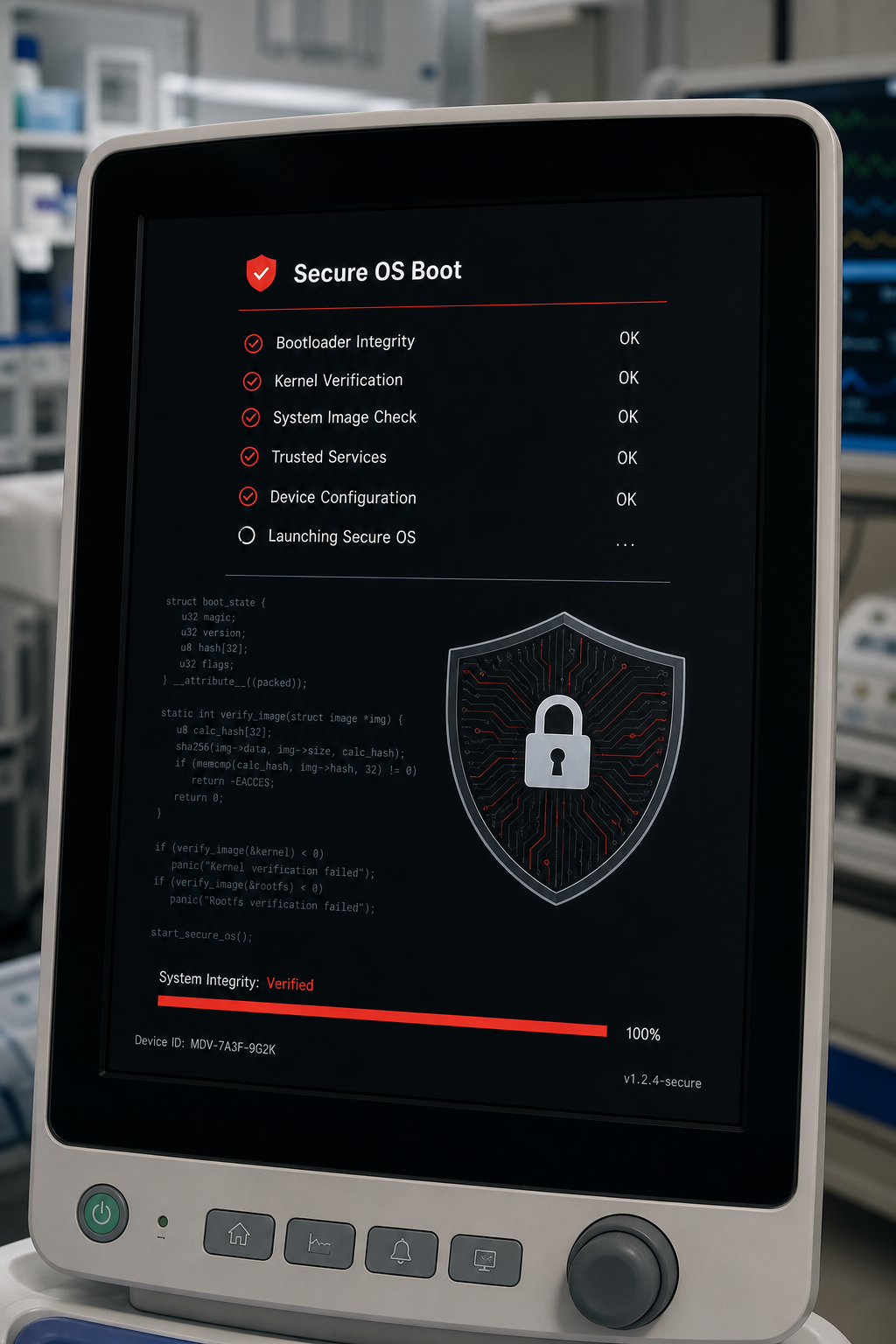
2. Pre‑Certified Operating System for SaMD
Software as a Medical Device (SaMD) runs on general‑purpose hardware, but the OS still needs to be vetted for safety. A pre‑certified OS is a stripped‑down Linux build that already satisfies many FDA expectations for off‑the‑shelf (OTS) software. The OS ships with a documented security hardening guide and a risk‑management workbook that map directly to IEC 62304 Section 5.
The platform also provides a validated driver stack for common peripherals used in insulin pumps and portable imaging. Because the OS is pre‑certified, you can focus on your application logic instead of spending weeks proving the kernel’s reliability.
According to the FDA’s SaMD guidance, manufacturers must document the operating environment and show that any OTS components are safe for the intended use. A pre‑certified OS supplies the exact templates you need, which trims the documentation load.
Pros:
- Pre‑validated kernel reduces SOUP (Software of Unknown Provenance) effort.
- Long‑term security patches are provided under a medical‑device support contract.
- Clear mapping to FDA’s risk‑management guidance.
Cons:
- Limited to supported hardware platforms.
- Customization may require a support agreement.
- Not all third‑party libraries are pre‑approved.
Example: A tele‑health company needed a low‑latency video pipeline for remote diagnostics. By adopting a pre‑certified OS, they avoided a separate validation of the Linux kernel, and the FDA accepted the OS documentation as part of their 510(k) submission.
3. Certified Compiler for Medical Firmware
When you write firmware for an implantable device, the compiler is the first line of defense against hidden bugs. A certified compiler that is listed as IEC 62304‑compliant by several certification bodies is available. The toolchain produces deterministic binaries, and the IDE includes static analysis that flags MISRA‑C violations out of the box.
Integrating the compiler with your CI system is simple: the command‑line driver can be called from common CI/CD platforms, letting you enforce unit‑test coverage thresholds that match ISO 14971 risk levels.
Developers often ask whether the certified compiler can produce a “SOUP‑free” binary. While the compiler itself is a trusted component, you still need to document the configuration and any runtime libraries you link. Its documentation provides a pre‑approved list of runtime libraries that simplify that step.
Pros:
- Deterministic code generation for safety‑critical timing.
- Built‑in MISRA‑C checker that aligns with risk‑class C requirements.
- Extensive support for popular microcontroller architectures.
Cons:
- License cost scales with number of target devices.
- Proprietary debugger may limit use of open‑source tools.
- Learning curve for advanced optimization flags.
Case in point: A neurostimulation company used the certified compiler to compile their firmware for a Class III implant. The static analysis reports were included verbatim in their Design History File, shaving two weeks off the FDA audit.
Also, a quick look at mobile app development shows how a companion app can be linked to the firmware through secure BLE profiles, keeping the overall system in compliance.
4. ALM Platform for Medical Device Traceability
Application Lifecycle Management (ALM) is the glue that holds requirements, tests, and code together. A specialized ALM platform offers an end‑to‑end traceability matrix that maps every requirement to its design, implementation, and verification artifact. The platform’s audit‑ready reports line up with IEC 62304’s documentation sections, making it easier to generate a Design History File (DHF) for FDA reviewers.
The platform also supports versioned baselines, which is vital when you need to demonstrate that a change in a risk‑class C device was evaluated against ISO 14971. You can lock a baseline before a change request, run impact analysis, and then unlock only after the new verification evidence is attached.
Pros:
- Full bi‑directional traceability from requirement to test case.
- Built‑in compliance dashboards for IEC 62304 and ISO 13485.
- Role‑based access controls keep sensitive data secure.
Cons:
- Initial setup can be complex for small teams.
- Licensing is per‑user, which can add up for large projects.
- Custom scripting may be required for niche reporting.
Real‑world example: A wearable glucose monitor team used such an ALM platform to link each sensor algorithm to its risk analysis. When the FDA asked for evidence of a specific test, the team exported a single traceability report in minutes, avoiding a costly follow‑up request.
Need a visual upgrade? Check out our UX/UI design services to make the traceability view more user‑friendly for cross‑functional teams.
5. Requirements Management for MedTech Teams
This platform focuses on capturing, reviewing, and approving requirements in a collaborative space. Its “Requirements Hierarchy” view lets you break a high‑level clinical need into testable software functions, which is exactly what IEC 62304 Chapter 5 calls for.
What sets this tool apart is its built‑in change‑impact analysis. When a requirement shifts, the tool flags all linked test cases, design documents, and risk entries, so you can see the ripple effect before you commit to a code change.
Pros:
- Live collaboration with comment threads tied to each requirement.
- Automatic impact analysis reduces missed traceability.
- Export to Excel or PDF meets audit‑submission formats.
Cons:
- Interface can feel dense for newcomers.
- Pricing is subscription‑based, which may not suit short‑term projects.
- Advanced reporting requires custom scripting.
Example: A cardiac‑stent developer used the platform to capture ISO 14971 hazards alongside functional specs. The impact analysis helped them prove that a new coating did not introduce software‑related risks, speeding up the CE marking process.

6. RTOS Selection: Real‑Time Operating Systems for Implantables
Implantable devices need deterministic timing and strict memory protection. A specialized real‑time operating system (RTOS) provides a certified kernel that can meet IEC 62304’s software‑life‑cycle documentation requirements. The kernels are considered “SOUP” under FDA guidance, so you must provide a risk‑management plan that shows the OS meets class‑C safety needs.
The FDA’s OTS guidance states that off‑the‑shelf OSes do not need a separate validation program, but the device‑level verification must cover all OS services used. Reputable RTOS vendors supply a Design History File that lists supported processors, memory footprints, and safety‑critical APIs, making it easier to assemble the DHF.
Pros:
- Small footprint fits low‑power implant hardware.
- Extensive certification packages for medical class C devices.
- Choice of community or commercial support models.
Cons:
- Some open‑source RTOS options require adding your own safety documentation.
- Commercial RTOS licensing can be costly for startups.
- All RTOS options need careful configuration to avoid priority inversion.
Case study: A neuro‑prosthetic company chose a commercial RTOS after a risk analysis showed that its priority‑inheritance mutex met the required response time of 5 ms. The DHF included the RTOS safety manual, and the FDA cleared the device without a supplemental OS validation.
According to Wikipedia’s overview of IEC 62304, the standard emphasizes documented risk analysis for any reusable software component, which aligns with the RTOS safety manuals.

7. Statistical Analysis Tool for Clinical Validation
Regulatory submissions often require statistical proof that a device meets its performance claims. This tool offers a suite of biostatistics tools that are pre‑validated for medical research, including ROC analysis, Bland‑Altman plots, and power calculations. The software can export results as PDF reports that match the format expected by FDA 510(k) and EU MDR dossiers.
Beyond basic stats, the tool includes a “sample‑size calculator” that lets you model different enrollment scenarios and see how they affect confidence intervals. This helps you avoid under‑powered studies that could stall a submission.
Pros:
- Built‑in medical‑grade tests (e.g., McNemar, Kappa).
- One‑click export to regulatory‑ready PDFs.
- Simple UI that clinicians can use without a statistician.
Cons:
- Not a full‑scale data‑science platform.
- Lacks integration with automated test pipelines.
- License is per‑seat, which can add up for large study teams.
Real example: A wearable blood‑pressure monitor used a statistical analysis tool to run a Bland‑Altman analysis against a gold‑standard cuff. The resulting PDF was attached to the FDA submission and accepted without request for additional analysis.
[TOOL_SCREENSHOT] | Alt: Statistical analysis tool homepage screenshotFrequently Asked Questions
What is IEC 62304 and why does it matter for medical device software?
IEC 62304 defines the software‑life‑cycle processes required for safe medical device software. It splits projects into risk classes (A, B, C) and mandates documentation for each phase, from planning to maintenance. Meeting this standard shows regulators that you have a controlled process for handling bugs, updates, and post‑market surveillance. Skipping any step can lead to a failed audit or a delayed market launch.
Do I need a separate validation plan for the operating system?
Yes. Even if you use an off‑the‑shelf OS like a specialized medical device OS, the FDA expects you to document how the OS services are used, the maximum load conditions, and any error handling you rely on. A risk‑management file that cites the OS’s security hardening guide usually satisfies the requirement.
How can I keep traceability up to date as the project evolves?
Use an ALM tool that offers live impact analysis. When a requirement changes, the tool flags every linked test case, design doc, and risk entry. Export the updated matrix regularly and store it in your Design History File to prove you maintain traceability throughout the product’s life.
Is a certified compiler necessary for Class C devices?
While the compiler itself isn’t a regulated component, using a certified compiler that meets industry standards makes it easier to prove deterministic behavior and meet MISRA‑C rules. The compiler’s configuration file becomes part of your software‑development plan, which regulators will review.
Can I use open‑source statistical packages instead of a specialized medical statistical tool?
Open‑source tools can generate the same numbers, but they often lack the ready‑made PDF report format that regulators expect. If you go the open‑source route, you’ll need to create a validation package that shows the calculations were performed correctly, which adds extra work.
What’s the best way to manage risk for third‑party libraries?
Document each library’s version, license, and known vulnerabilities. Run a software composition analysis (SCA) scan early, and include the results in your risk‑management file. If a library is flagged as high‑risk, either find a safer alternative or add mitigation steps such as runtime monitoring.
How often should I update the OS in an already certified device?
Post‑market surveillance requires you to monitor OS security patches. If a critical vulnerability is disclosed, you must assess the impact on your device and issue a field‑update if the risk‑benefit balance is affected. Keeping a change‑control log helps you demonstrate compliance during audits.
Do I need a separate design history file for each tool I use?
No. The DHF is a single repository that contains all evidence, requirements, code, tests, risk analysis, and tool‑generated reports. Most ALM platforms let you attach files directly to the corresponding artifact, keeping everything in one place for the regulator’s review.
Conclusion
Choosing the right toolbox can mean the difference between a smooth FDA submission and a costly redesign cycle. Model‑based design tools give you model‑based safety early. Specialized medical OS platforms remove the headache of OS validation. Compilers optimized for medical devices add deterministic code generation. Application Lifecycle Management (ALM) tools keep your traceability ironclad. A certified RTOS ensures real‑time performance. And statistical analysis software lets you prove clinical validity with stats that regulators trust.
We’ve seen teams cut verification time by up to a third simply by picking a platform that automates documentation. If you’re ready to simplify your medical device software development, consider partnering with a firm that blends these tools into a smooth workflow.Lakeway Web Developmenthas built custom, compliant pipelines that stitch together model‑based design, ALM, and statistical analysis, all under one roof.
Ready to move faster?Start a conversation today, see a demo, and get a roadmap that aligns with IEC 62304, ISO 14971, and FDA expectations.