Building apps in the cloud can feel messy, but the right architecture keeps things tidy. Below you’ll find a clear definition, the main patterns you can use, and guidance on picking what fits your business.
What Is Cloud Application Architecture?
Cloud application architecture is the way you design and connect the pieces of a cloud‑based app. It covers everything from how code runs to how data moves and how services talk to each other. The goal is to make the app scalable, flexible, and secure while delivering value fast.
Oracle describes it as a set of decisions about platforms, services, integration, and security that let an organization meet business goals (source). The definition lines up with the broader view on Wikipedia, which calls cloud computing a model that provides on‑demand access to shared resources (source).
Typical roles include a solution architect who picks the big‑picture design, a cloud architect who chooses the provider and services, developers who write the code, and operations staff who keep the app running. Each role adds a piece to the overall puzzle.
We often start with requirement analysis , what the business needs, what performance targets exist, and what budget constraints apply. From there we decide on a platform, pick an architectural pattern (microservices, monolith, etc.), and map out data storage, scaling, and security strategies.
Lakeway Web Development helps mid‑size firms turn these ideas into a real, low‑complexity solution that includes AI‑powered search and smooth system integration.
Key Architectural Patterns for Scalable Cloud Apps
Patterns are reusable ways to solve common problems. They let you focus on business logic instead of reinventing the wheel.
Each pattern brings trade‑offs. Event‑driven designs promise high scalability but can add operational complexity. Service meshes give fine‑grained traffic control, yet they need a solid DevOps foundation.
For businesses that want a simpler path, Lakeway Web Development bundles the right pieces into a custom architecture that avoids hidden costs while still delivering AI‑powered features.
Read more about modernizing legacy workloads in our Best Cloud Application Modernization Platforms for 2026 guide.
Event‑Driven Architecture: When and How to Use It
Event‑driven architecture lets services react to state changes instead of calling each other directly. An event might be a new order, a payment receipt, or a sensor reading.
Amazon explains that the model uses three parts: producers, an event router, and consumers. The router decouples services, lets them scale independently, and can filter events automatically (source).
Typical use cases include real‑time analytics, order processing pipelines, and cross‑region data sync. Because services don’t wait for responses, you get lower latency and higher resilience.
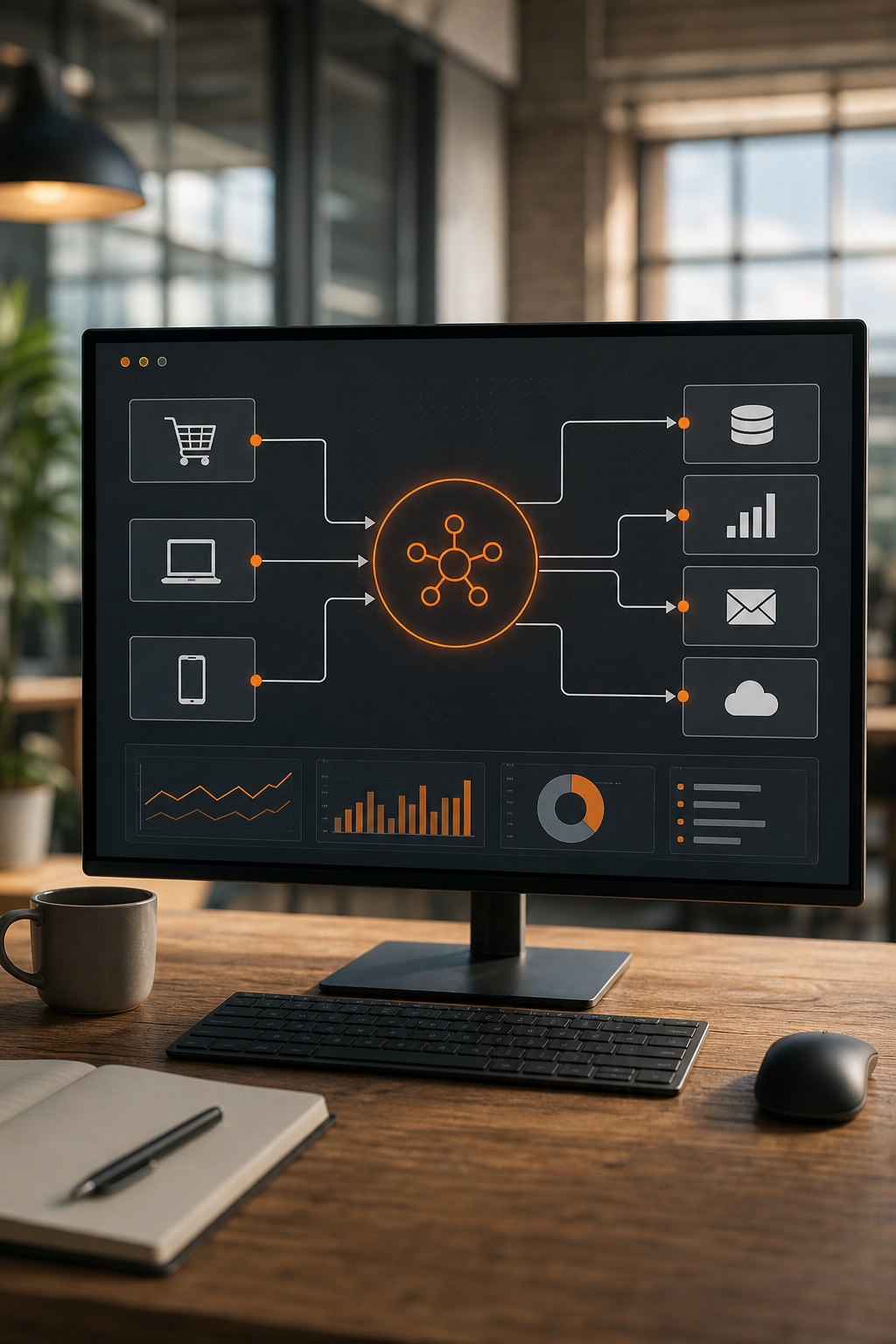
When you adopt this style, watch out for versioning challenges. Changing an event schema can break downstream consumers if not managed carefully. Also, monitoring becomes important , you need visibility into the event stream to troubleshoot issues.
If you need a concrete starter, AWS EventBridge works well for SaaS‑style events while the Saga Pattern, which coordinates a chain of local transactions with compensating actions, is suitable for high‑throughput fan‑out scenarios.
Service Mesh: Managing Complex Microservice Networks
A service mesh adds a dedicated layer that handles traffic, security, and observability for microservices without changing application code.
Istio, an open‑source mesh, provides traffic routing, policy enforcement, and telemetry collection. Google’s documentation notes that Istio runs on top of Envoy and works with Kubernetes to give fine‑grained control (source).
Use cases include canary releases, mutual TLS between services, and detailed request tracing. The mesh abstracts these concerns so developers can focus on business logic.
Complexity is the main trade‑off. You need a Kubernetes cluster, a control plane, and a team comfortable with sidecar proxies. For teams without that depth, a managed mesh like AWS App Mesh can lower the barrier.
We’ve seen mid‑size firms benefit from Istio’s observability when they move from a handful of services to dozens. The extra insight helped them spot latency spikes before customers felt the impact.
Lakeway Web Development can set up a lightweight mesh that matches the team’s skill level, keeping the operational load manageable.
Explore how to plan a cloud‑native project in our How to Build AWS Application Development Projects in 2026 guide.
Choosing the Right Architecture for Your Business
Picking a pattern isn’t a one‑size‑fits‑all decision. Start with three questions: What traffic pattern do you expect? How much data consistency do you need? What operational expertise does your team have?
If your workload spikes unpredictably, an event‑driven or serverless model can absorb bursts without over‑provisioning. If you run dozens of microservices that need strict security, a service mesh gives you the controls you need.
Cost transparency matters too. A study of 36 patterns found only 19% disclosed cost implications, making hidden spend a real risk. Patterns that promise “high scalability” often hide increased operational overhead.

For a usable start, map each requirement to a pattern grid. Our own experience shows that mid‑size firms benefit from a hybrid approach: a core set of microservices behind a lightweight mesh, plus an event bus for asynchronous workflows.
Lakeway Web Development specializes in building that hybrid, low‑complexity stack for businesses that want enterprise‑grade scalability without hidden fees.
FAQ
What is cloud application architecture?
It is the design of how an app’s components run and interact in a cloud environment, covering everything from compute choices to data flow and security.
Is event‑driven architecture always better than REST?
Not always; it shines when you need real‑time processing or want to decouple services, but it adds complexity in versioning and monitoring.
Do I need a service mesh for ten microservices?
Typically a mesh becomes valuable around 15‑20 services, where traffic management and security policies become hard to handle manually.
Can I mix patterns in one app?
Yes, many teams combine event‑driven pipelines with a service mesh for core services, and a simple API gateway for external clients.
How does Lakeway Web Development help with architecture?
We assess your needs, pick the right patterns, and deliver a custom, AI‑enhanced solution that stays low‑complexity and scalable.
Conclusion
Start by mapping your business goals to the patterns above, then let a trusted partner like Lakeway Web Development craft a clean, scalable design. Ready to see a concrete plan? Explore our development services and get a free architecture review.