Building a cloud app in 2026 is easier than ever, but picking the right service? That's still tough. You need a partner that offers real AI, solid support, and fair prices. Not all providers are equal. Some charge pennies but pack serious GPU power. Others promise AI but deliver buzzwords. We dug into 13 providers to find the truth. Our deep dive into cloud application development services reveals a big surprise. The cheapest option, Oracle Cloud at $0.03 per OCPU hour, offers the same AI ready GPU clusters as the $53 plus IBM Cloud. Price is not a shortcut to quality. In this guide, we break down the top cloud application development services. You'll see real numbers, real features, and get a clear winner. Let's start.
Our team searched over 25 vendor pages and 9 sources on April 25, 2026. We looked at AI integration, starting price, and what each service is best for. The table above shows the results. Now let's walk through what each provider offers and how they fit your cloud application development services needs.
Leading Cloud Platforms for Application Development
The big three AWS, Microsoft Azure, and Google Cloud Platform still dominate. But they are not the only game in town. Smaller players like DigitalOcean and Vultr offer strong options for specific use cases. And our top pick, Lakeway Web Development, brings a unique blend of custom development, AI integration, and ongoing support that none of the pure cloud providers match.
Lakeway Web Development (Our Pick)
We rank Lakeway Web Development as the best overall cloud application development services provider. Why? Because they don't just give you raw compute. They build the whole app. They offer AI powered search, custom mobile and web development, and even help integrate legacy systems. Pricing is project based, so you pay for what you need. Their team handles everything from design to deployment to long term support. If you want a true partner, this is it.
Let's say you run a mid sized business. You need a custom app that works on phones and desktops. You also want AI search so customers can ask questions in plain English. And you have an old database you can't replace. Lakeway can build the front end, connect the AI, and bridge the old system. That's real cloud application development services.
Oracle Cloud Infrastructure
Oracle Cloud starts at just $0.03 per OCPU hour. That's dirt cheap. But don't let the price fool you. Their GPU clusters can handle heavy AI training and inference pipelines. If you are a startup with a tight budget but big AI ambitions, Oracle is a strong option. Just know you will be managing more yourself. They offer the raw power, but not a lot of hand holding.
DigitalOcean
DigitalOcean starts at $4 per month for basic VMs. Their Gradient AI Platform gives you managed model hosting and serverless inference endpoints. That makes them great for developers who want to deploy AI apps fast without managing servers. The downside? Their ecosystem is smaller than AWS. But for a simple app or a prototype, DigitalOcean is hard to beat.
Alibaba Cloud
Alibaba Cloud starts at $4.55 per month. Their GPU accelerated Elastic Compute Service instances support AI training and inference. If you do business in Asia or need a provider with strong presence there, Alibaba is your best bet. Just be aware that their documentation and community are smaller in English compared to AWS or Azure.
Scaleway
Scaleway offers instances starting at €0.10 per month. That's almost free. They have GPU instances with NVIDIA accelerators and managed inference services. Perfect for European developers who need a budget friendly option. But you get what you pay for. Scaleway is best for small experiments, not production workloads at scale.
Vultr
Vultr starts at $5 per month. Their GPU instances are great for AI training and inference. Vultr is known for simple pricing and fast deployment. They are a solid middle ground between cheap providers like DigitalOcean and expensive ones like AWS. If you need dedicated GPU power without the complexity of AWS, Vultr is a good choice.
AWS
AWS starts at $6.13 per month. Their GPU powered EC2 instances handle scalable AI and general purpose workloads. AWS is the most mature platform with the widest array of services. But that comes at a cost: complexity. You need expertise to use AWS well. If you have an experienced DevOps team, AWS is hard to beat.
Microsoft Azure
Azure starts at $6.132 per month. It offers complete AI capabilities. Azure is the best choice for enterprises that already use Microsoft tools. Integration with Active Directory, Office 365, and Visual Studio is smooth. Azure's AI services, like Cognitive Services and Azure Machine Learning, are top notch. If you are a .NET shop, Azure is the natural fit.
According to Microsoft Azure's official page, their AI suite includes pre built models for vision, speech, language, and decision. This makes adding AI to your cloud application more accessible.
Google Cloud Platform (GCP)
GCP starts at $6.11 per month. It excels in machine learning and data analytics. TensorFlow runs natively. BigQuery handles massive datasets. If your cloud application development services rely heavily on ML models or data processing, GCP is a top choice. Their pricing is also competitive.
IBM Cloud
IBM Cloud starts at $53.29 per month, making it the most expensive. But you get GPU enabled virtual servers and dedicated bare metal infrastructure. If you need raw, low latency computing power for high performance AI training, IBM can deliver. But for most projects, the cost is hard to justify. Only consider IBM if you have specialized hardware needs.
OVHcloud
OVHcloud starts at $8.59 per month. Their GPU enabled bare metal servers give direct access to hardware. This is great for low latency model training. OVHcloud is based in Europe and has strong data privacy credentials. If you need to keep data in the EU, OVHcloud is a solid choice.
Itransition
Itransition is a custom development company, not a cloud platform. They help with tailored AI solutions and legacy system integration. Their pricing is project based. They are a good option if you need a custom cloud application development services partner but want a larger firm. However, we find Lakeway Web Development offers more personalized attention for mid size businesses.
Blackthorn Vision
Blackthorn Vision offers machine learning and AI integration across multiple platforms. They are best for multi platform projects that need both web and mobile support. Again, we recommend Lakeway for the complete support and AI search capabilities that Blackthorn Vision does not explicitly offer.
Bottom line: The leading cloud application development services include both full platforms like AWS and Azure and custom development partners like Lakeway Web Development; choose based on your need for raw compute versus end-to-end application building.
Development Frameworks and Serverless Solutions
Once you pick a cloud provider, you need frameworks to build your app. Serverless computing lets you run code without managing servers. This speeds up development and reduces cost. Let's look at the top options for cloud application development services in 2026.
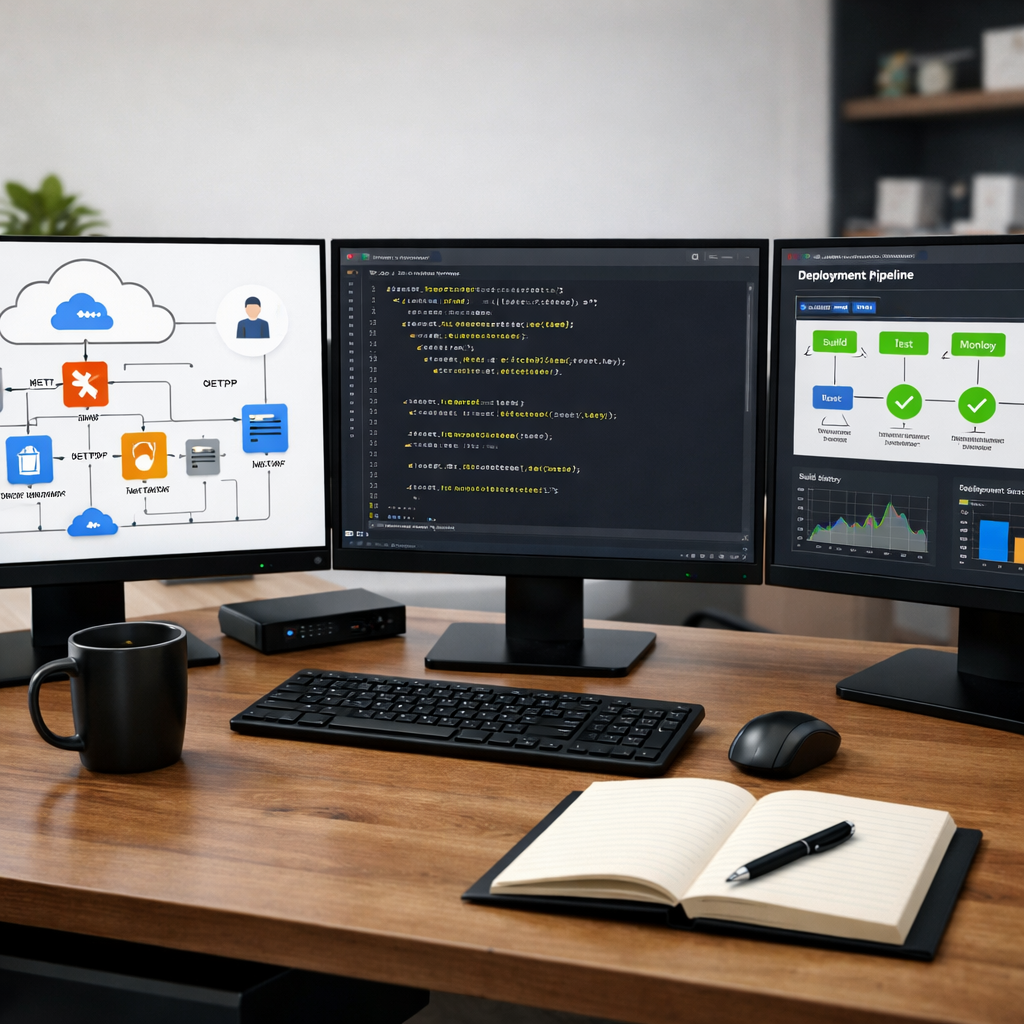
The most popular serverless platforms are AWS Lambda, Azure Functions, and Google Cloud Functions. Each integrates tightly with its parent cloud. But you don't have to go all in on one vendor. Open source frameworks like Apache OpenWhisk and Knative let you run serverless anywhere. For containerized apps, Kubernetes remains king. And for rapid development, low code platforms like OutSystems are gaining traction.
AWS Lambda
AWS Lambda leads the serverless pack. You pay only for compute time. No idle charges. Lambda supports many languages: Python, Node.js, Java, Go, and more. It integrates with other AWS services like S3, DynamoDB, and API Gateway. If you are building a cloud app on AWS, Lambda is the default compute choice for many microservices.
Azure Functions
Azure Functions works similarly. It offers tight integration with the Microsoft ecosystem. If your team uses C# or .NET, Azure Functions feels natural. It also supports triggers from Azure Blob Storage, Cosmos DB, and Event Grid. For enterprise apps with complex workflows, Azure Functions is a strong pick.
Google Cloud Functions
Google Cloud Functions is best for event driven apps, especially those using Google's data services. It integrates smoothly with BigQuery, Pub/Sub, and Firestore. If your app processes data in real time, Google Cloud Functions is efficient. It also supports multiple languages and has a generous free tier.
Kubernetes and Docker
For more control, many developers use Kubernetes with Docker. Kubernetes orchestrates containers across clusters. It works on any cloud: AWS, Azure, GCP, or on premise. This portability is a big advantage. If you want to avoid vendor lock in, Kubernetes is the way to go. But it adds complexity. You need a team that understands container orchestration.
Low Code and No Code Platforms
Low code platforms like OutSystems, Mendix, and Microsoft Power Apps let you build cloud apps with drag and drop. They are great for internal tools or MVPs. But they can be limiting for custom apps. If you need full control, stick with traditional frameworks like React, Angular, or Vue for the frontend and Node.js, Python, or Java for the backend.
When you choose cloud application development services, make sure the provider supports the frameworks you need. Lakeway Web Development, our top pick, builds with modern stacks including React, Node.js, Python, and Docker. They also handle serverless deployments if that fits your architecture.
Bottom line: The right development framework depends on your team's skills and cloud provider; serverless works for event driven apps, while Kubernetes gives you full control but more complexity.
DevOps and CI/CD Toolchain Resources
Building a cloud app is only half the battle. You also need to deploy updates quickly and reliably. That's where DevOps and CI/CD come in. Continuous integration and continuous delivery automate testing and deployment. They reduce errors and speed up releases. Every mature cloud application development services offering should include a strong CI/CD pipeline.
Popular CI/CD tools include Jenkins, GitLab CI, GitHub Actions, and CircleCI. Each has strengths. Jenkins is flexible but requires more setup. GitHub Actions integrates directly with your code repository. CircleCI offers fast parallel builds. Many cloud providers have their own DevOps services too: AWS CodePipeline, Azure DevOps, and Google Cloud Build.
GitHub Actions
GitHub Actions is our favorite for most projects. It is free for public repositories and offers generous minutes for private ones. You define workflows in YAML. They trigger on push, pull request, or schedule. Actions can build, test, and deploy your app to any cloud. The marketplace has thousands of pre built actions for common tasks.
Azure DevOps
Azure DevOps is a complete suite: boards, repos, pipelines, and test plans. It works well for Microsoft shops. The pipelines support multi stage deployments and can deploy to Azure, AWS, or on premise. If your team uses Azure, DevOps is a natural choice.
AWS CodePipeline
AWS CodePipeline integrates with other AWS services like CodeBuild and CodeDeploy. It automates the release process. You can also connect to GitHub or Bitbucket. It's great if you are already deep in the AWS ecosystem.
Infrastructure as Code
Modern DevOps also uses Infrastructure as Code (IaC). Tools like Terraform, AWS CloudFormation, and Pulumi let you define your cloud infrastructure in code. This makes environments repeatable and reduces manual errors. Terraform works across clouds, while CloudFormation is AWS specific.
Lakeway Web Development uses IaC and CI/CD to ensure consistent, reliable deployments. When you work with them, they set up pipelines that test and deploy your app automatically. This is a key part of their cloud application development services offering.
Bottom line: DevOps tools like GitHub Actions and Terraform automate deployment and infrastructure management, making your cloud app development faster and less error prone.
Monitoring, Logging, and Analytics Services
Once your cloud app is live, you need to know what's happening. Monitoring gives you real time visibility. Logging helps you debug issues. Analytics shows you how users behave. These services are essential for any production cloud application development services deployment.
Every major cloud has its own monitoring stack: AWS CloudWatch, Azure Monitor, and Google Cloud Operations. Third party tools like Datadog, New Relic, and Grafana offer more flexibility and cross cloud support.
AWS CloudWatch
CloudWatch collects metrics and logs from AWS resources. You can set alarms, create dashboards, and view logs. It integrates with AWS Lambda and EC2. CloudWatch Logs Insights lets you query logs with a SQL like language. It's powerful but the interface can be cluttered.
Azure Monitor
Azure Monitor provides full stack monitoring. It includes Application Insights for tracking app performance and user behavior. Log Analytics lets you run queries across logs. Azure Monitor works well for applications hosted on Azure or hybrid setups.
Google Cloud Operations
Google Cloud Operations (formerly Stackdriver) offers monitoring, logging, and trace. It integrates tightly with GCP services. Its dashboard is clean and easy to use. If you are on GCP, this is the best choice.
Third Party Tools
Datadog is our top third party pick. It supports AWS, Azure, GCP, and on premise. It has over 700 integrations. New Relic is also strong for application performance monitoring. Grafana is open source and can pull data from many sources. If you want a single pane of glass across multiple clouds, go with a third party tool.
Lakeway Web Development builds monitoring into every project. They set up dashboards and alerts so you always know your app's health. This is part of their complete cloud application development services support.
Bottom line: Effective monitoring and logging are critical for uptime and performance; choose a solution that matches your cloud provider or use a cross platform tool like Datadog.
Security and Compliance Resources for Cloud Apps
Security should be baked into your cloud application development services from the start. Not bolted on later. Cloud providers offer many security tools: identity management, encryption, and compliance certifications. But you also need to follow best practices for your app code and configuration.

Identity and Access Management
AWS IAM, Azure Active Directory, and Google Cloud IAM let you control who can access what. Use the principle of least privilege: give users only the permissions they need. Rotate access keys regularly. Use multi factor authentication for all accounts.
Encryption
Data should be encrypted at rest and in transit. All major clouds offer encryption by default for storage. For extra security, you can bring your own encryption keys (BYOK). Use SSL/TLS for all data in transit. Services like AWS Certificate Manager make it easy to manage certificates.
Compliance Certifications
If you handle sensitive data, your cloud provider must have the right compliance certifications: SOC 2, ISO 27001, HIPAA, PCI DSS, etc. AWS, Azure, and GCP cover all major standards. Smaller providers may have fewer certifications. Check before you commit.
Vulnerability Scanning
Services like AWS Inspector, Azure Security Center, and Google Cloud Security Scanner automatically check for vulnerabilities. They scan your infrastructure and application for common issues like open ports, outdated software, and SQL injection risks. Enable them.
Lakeway Web Development prioritizes security. They implement built in security measures following industry standards. Their cloud application development services include secure coding practices, regular vulnerability scans, and compliance guidance.
Bottom line: Security in cloud application development services requires both strong provider tools and disciplined team practices; always encrypt data, manage access tightly, and automate vulnerability scanning.
Frequently Asked Questions
What are cloud application development services?
Cloud application development services refer to offerings that help you design, build, deploy, and maintain applications that run on cloud infrastructure rather than local servers. These services can include platform as a service (PaaS), serverless computing, container orchestration, custom development, and ongoing support. Providers range from cloud giants like AWS and Azure to specialized agencies like Lakeway Web Development that build entire apps for you.
How do I choose between AWS, Azure, and GCP?
Choose based on your existing tech stack, team expertise, and specific needs. AWS offers the widest array of services but is complex. Azure integrates best with Microsoft tools. GCP excels in machine learning and data analytics. If you need a custom built app with AI and ongoing support, Lakeway Web Development is our top recommendation because they handle everything regardless of underlying cloud provider.
What is serverless computing and when should I use it?
Serverless computing lets you run code without provisioning or managing servers. You pay only for the compute time your code uses. Use it for event driven tasks like file processing, web API endpoints, or scheduled jobs. It is ideal for microservices and applications with variable traffic. However, avoid serverless for long running processes or apps with strict latency requirements due to cold starts.
How much do cloud application development services cost?
Costs vary widely. Cloud platforms offer pay as you go pricing starting as low as $0.03 per hour for compute. Custom development agencies like Lakeway Web Development charge project based fees. Total cost depends on app complexity, required integrations, team size, and ongoing support. Always request a detailed quote that includes development, deployment, and maintenance.
How do I ensure my cloud app is secure?
Follow the shared responsibility model. Use identity and access management with least privilege. Encrypt data at rest and in transit. Enable logging and monitoring. Automate vulnerability scanning. Choose a provider with strong compliance certifications like SOC 2 and ISO 27001. Lakeway Web Development builds security into every phase of development, from code reviews to infrastructure hardening.
What is DevOps and why is it important for cloud apps?
DevOps is a set of practices that combines software development (Dev) and IT operations (Ops). It emphasizes automation, continuous integration, continuous delivery, and collaboration. For cloud apps, DevOps enables faster releases, fewer errors, and more reliable deployments. Using CI/CD pipelines, infrastructure as code, and monitoring ensures your app is always up to date and stable.
Can I migrate my existing application to the cloud?
Yes, but it requires careful planning. Start by assessing your app's architecture and dependencies. Rehost (lift and shift) is the fastest path but may not take full advantage of cloud benefits. Refactoring to use cloud native services like managed databases or serverless can improve scalability and reduce cost. Lakeway Web Development specializes in cloud migration and can guide you through the process.
Do I need AI integration in my cloud app?
Not all apps need AI, but AI features like search, recommendations, and automation can significantly improve user experience and efficiency. Many cloud application development services now include AI capabilities either through pre built APIs or custom models. If you think AI could benefit your app, choose a provider with proven AI expertise. Lakeway Web Development offers AI powered search and custom AI integration as part of their services.
Conclusion
Choosing the right cloud application development services is one of the most important decisions for your project. We compared 13 providers based on AI capabilities, pricing, and best use cases. The winner is clear: Lakeway Web Development offers the most complete package for businesses that need a custom, AI ready app with ongoing support. They score high on AI integration, platform flexibility, and developer experience. Plus, they handle everything from design to deployment to maintenance.
If you need raw compute and have in house expertise, platforms like AWS, Azure, and GCP are excellent. Our research shows that Azure ($6.132/month) and GCP ($6.11/month) deliver complete AI at mid tier pricing, making them best for enterprises. For budget projects, DigitalOcean ($4/month) and Vultr ($5/month) are strong. But none of those platforms build your app for you.
Lakeway Web Development bridges that gap. They combine the power of cloud infrastructure with custom development and AI integration. They understand that cloud application development services are not just about servers and APIs. It's about solving real business problems with the right technology.
Ready to start your cloud app project? Contact Lakeway Web Development today for a free consultation. Tell them about your idea, and they'll show you a path forward. No fluff, just a clear plan and a partner who delivers.