
Finding a price that matches your app idea can feel like guessing in the dark. We’ve pulled together the most transparent options so you can compare side by side and pick the one that fits your budget and goals.
1. Lakeway Web Development (Our Top Pick) — Full‑service custom app partner for mid‑size businesses
Lakeway Web Development delivers custom, responsive mobile apps that run on iOS, Android, and Windows. It’s built for mid‑size firms like law practices, medical spas, and e‑commerce owners who need AI‑powered search and smooth system integration.
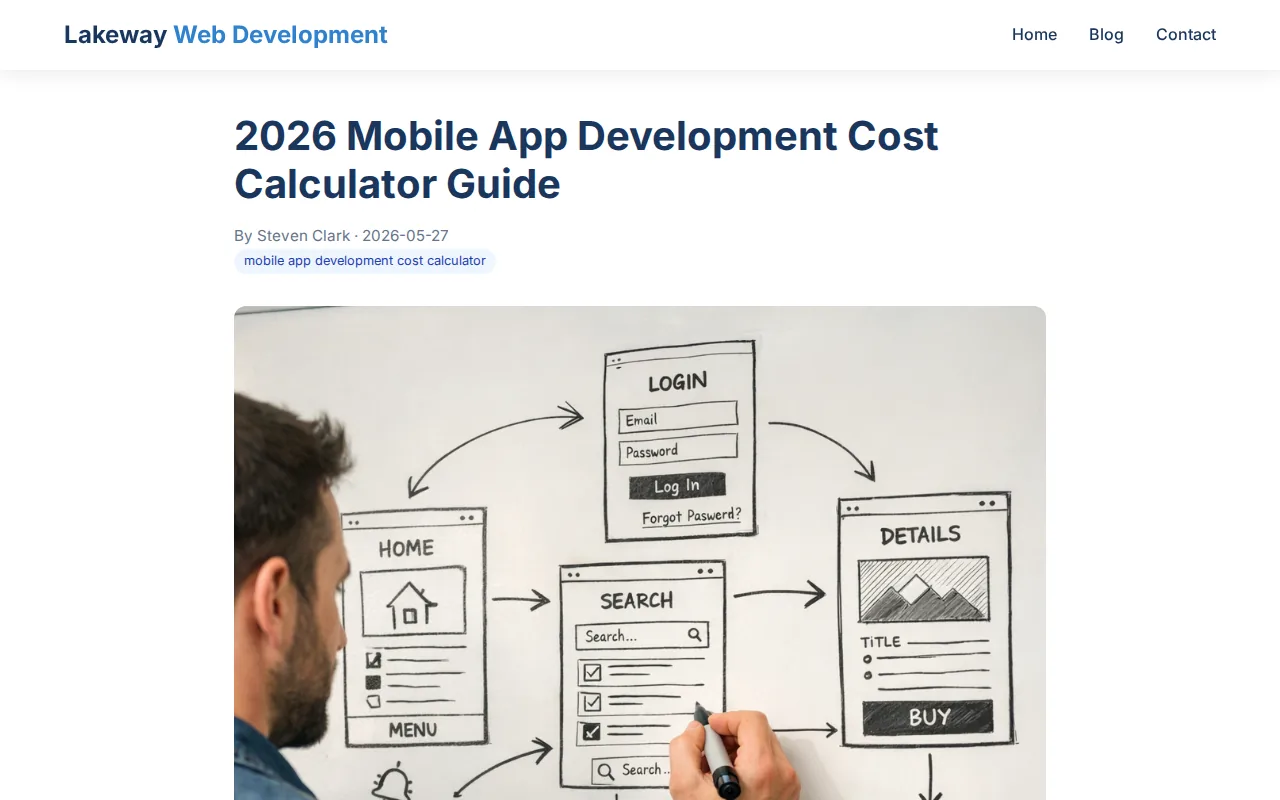
We like it because the company lists every platform it supports, promises post‑launch support, and even mentions AI‑search capability , a rare combo in a market where 69% of agencies hide their pricing and 88% omit support details.
Clients get a clear roadmap, a fixed‑price estimate after discovery, and a year of maintenance baked in. That reduces surprise invoices and helps you plan cash flow.
One caveat: the firm doesn’t publish a base price on its site, so you’ll need a quick call to get a custom quote.
Need a budgeting template? Check out our 2026 Mobile App Development Cost Calculator Guide for a step‑by‑step worksheet.
2. Bolder Apps — Fixed‑scope pricing starting at $30,000
Bolder Apps offers a fixed‑scope contract that starts at $30,000 for an MVP and scales up to $150,000 for a full launch. The agency’s cost model ties the price to feature complexity, technology stack, compliance needs, and engagement model.

Feature complexity is the biggest driver , a simple social‑login app costs far less than a two‑sided marketplace with escrow and trust‑and‑safety tools.
Because the quote is fixed, the risk stays with the agency. If the project runs under budget, you still pay the agreed amount. If it runs over, the agency absorbs the extra hours.
Caveat: the fixed price assumes a well‑defined scope. Scope changes trigger change‑order fees that can add 10‑25% to the total.
Fixed‑price contracts are explained in depth in industry resources, outlining the risk balance and typical use cases.
3. ScienceSoft — Flexible T&M, capped, and fixed‑price models
ScienceSoft lets you choose between time‑and‑materials (T&M), capped T&M, and fixed‑price contracts. The T&M option bills you for every hour worked, while the capped version adds a “not‑to‑exceed” ceiling you approve before work begins.
Hybrid contracts combine a fixed‑price MVP with a T&M retainer for post‑launch tweaks. This matches the industry’s 2026 best practice of using a hybrid model for projects under $300K.
The agency’s pricing page lists hourly rates from $25 to $60 for offshore teams and $100+ for U.S. senior engineers.
Caution: pure T&M can lead to cost creep if the scope isn’t tightly managed.
For a primer on T&M contracts, see reputable industry resources.
4. Simpalm — Boutique agency with transparent hourly rates
Simpalm bills by the hour and publishes its rates openly on its website. Hourly fees vary based on seniority, with junior developers charged less than senior architects.
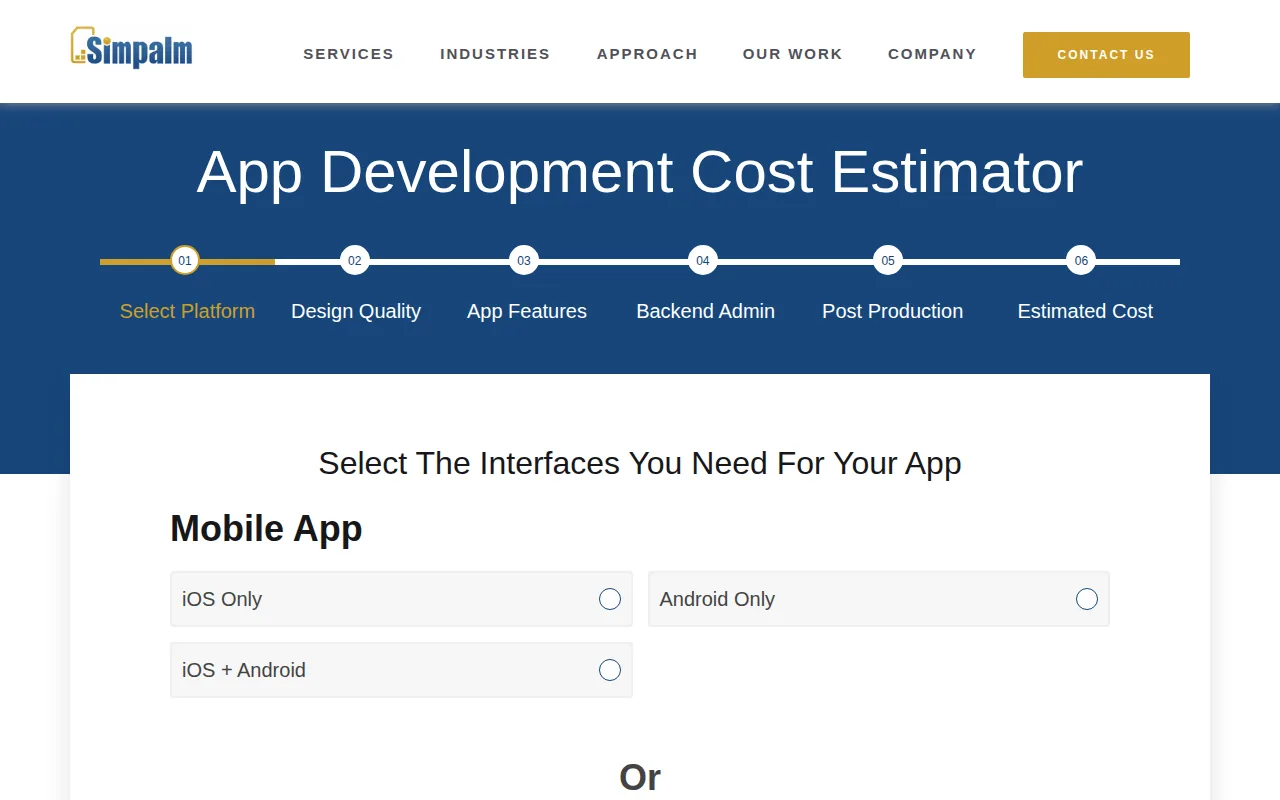
The agency focuses on niche markets like health tech and fintech, where compliance adds extra engineering effort.
Because you pay for actual hours, you keep control over scope and can pause work if budget pressure rises.
Downside: without a fixed ceiling, you need a strong project manager to track hours and avoid surprise bills.
Hourly billing is a common practice in the industry.
5. LowCode Agency — Rapid low‑code development packages
LowCode Agency builds apps on platforms like Bubble and other low‑code platforms. Packages start at a modest price for simple internal tools and can increase for customer‑facing products with complex logic.
The low‑code approach shifts cost from long‑hand coding to reusable components, cutting build time by 30‑50%.
Maintenance still costs money because platform subscriptions and third‑party integrations add recurring fees.
Watch out for scope creep: each new workflow or integration can add additional monthly platform fees.
Low‑code development cost trade‑offs are discussed in various industry resources.
For a deeper look at custom software costs, read our Best Options for Custom Software Development Cost guide.
6. DECODE — AI‑powered app development with tiered pricing
DECODE offers tiered subscription plans that start at an affordable monthly rate and scale up to premium versions with unlimited features.
The tiered model lets you match pricing to user segments, which can help increase revenue.
Each tier includes a set amount of AI API calls, so you pay for usage as you grow.
Potential pitfall: if you outgrow the highest tier, you’ll need a custom enterprise quote.
Tiered pricing strategies are discussed in industry resources that cover the psychological effects of anchoring and decoy options.
7. GroupM7 — End‑to‑end mobile solutions with scalable rates
GroupM7 builds native iOS, native Android, and hybrid apps. Their rates scale with team size: a small two‑person squad starts at $75 / hour, while a larger five‑person team runs $120 / hour. They include project management, QA, and post‑launch support in a single contract, which simplifies budgeting.
Hybrid apps let you reach both iOS and Android with one codebase, reducing development time.
Hybrid solutions may require additional effort for heavy native features like AR or advanced Bluetooth.
Hybrid app development is detailed in industry resources, covering benefits and trade‑offs.
8. Upwork — Hire freelance developers by the hour
Upwork lets you source developers worldwide. Hourly rates range from $10 for entry‑level talent to $100+ for senior specialists.
You can assemble a mini‑team on demand, scaling up or down as project needs shift.
Because you control the contract, you can set milestones and only pay for completed work.
The downside is variability in quality; you’ll need a strong vetting process to avoid hidden bugs.
9. Apple Developer Program — iOS app store entry $99 per year
The Apple Developer Program costs $99 per year and gives you access to Xcode, TestFlight, and App Store Connect.
It’s required for any iOS or iPadOS app you plan to publish publicly.
Beyond the annual fee, you’ll still need to budget for design, development, and ongoing updates, which typically add 20‑30% of the initial build cost each year.
Note that Apple takes a 15%‑30% revenue share for paid apps or in‑app purchases.
For small businesses, our Best Custom Software Development for Small Businesses guide explains how to factor the $99 fee into a full budget.
10. Google Play Developer Account — Android app store entry $25 per year
Google Play requires a one‑time $25 registration fee for a developer account.
After registration you gain access to the Play Console, beta testing tools, and the ability to publish apps worldwide.
Like Apple, Google takes a 15%‑30% cut of revenue from paid apps and subscriptions.
Ongoing costs include server hosting, API usage, and regular updates, which typically represent a portion of the original development spend each year.
How to Choose the Right Pricing Model
- Know your scope: a well‑defined feature list favors fixed‑price contracts.
- Assess risk tolerance: if you expect changes, a T&M or hybrid model gives flexibility.
- Factor platform choice: native development often costs more than hybrid or low‑code.
- Plan for post‑launch: allocate 20‑30% of the build budget for maintenance and store fees.
- Check support: agencies that promise ongoing support reduce surprise costs.
FAQ
What is the typical cost range for a custom mobile app in 2026?
Simple apps usually fall between $10,000 and $50,000, while complex enterprise solutions can exceed $100,000 and reach $1 million or more.
How do fixed‑price contracts differ from time‑and‑materials contracts?
Fixed‑price contracts lock the total cost at sign‑off; any overruns are absorbed by the vendor. Time‑and‑materials contracts bill each hour worked, so the total can rise if scope expands.
Can I use a low‑code platform to build a production‑grade app?
Low‑code works well for MVPs and internal tools, but for high‑performance or highly regulated apps you’ll likely need custom code.
Do I need to pay separate fees for app‑store listings?
Yes. Apple charges $99 per year and Google $25 one‑time, plus each platform takes a revenue share of 15‑30% on paid apps.
How much should I budget for post‑launch maintenance?
Industry surveys suggest allocating 20‑30% of the initial development budget each year for updates, security patches, and store compliance.
Conclusion
If you want a partner that shows every platform, AI search, and support upfront, start with Lakeway Web Development. Reach out via our website to get a custom quote and see how the numbers line up with your business goals.