Running a small business means juggling sales, staff, inventory, and a never‑ending stream of tech decisions. One wrong software choice can stall growth or waste cash. That’s why you need a partner who gets the pressure you’re under and can build exactly what you need. In this guide we’ll walk through eight proven ways to get custom software done , from full‑service agencies to low‑code tools , and give you a checklist to pick the right fit.
1. Tailored Software Solutions , End-to-End Custom Development for Small Business Growth
When you want a platform that feels like it was built just for your business, a boutique agency is the answer. Lakeway Web Development offers a full stack of services: responsive web apps, mobile apps, AI‑powered search, smooth system integration, and scalable cloud architecture. Because they handle everything in‑house, you avoid the hand‑off risk that comes with piecing together freelancers.
Here’s how a typical Lakeway engagement works:
- Discovery , we sit down (virtually or in person) to map your workflows, pain points, and growth goals.
- Design , the UX/UI team creates wireframes that match your brand and user expectations.
- Build , developers write clean, modular code that can be extended as you add features.
- Test , a dedicated QA group runs functional, security, and load tests.
- Launch & Support , we deploy to the cloud, monitor performance, and provide ongoing updates.
Because every line of code is written for you, the system can automate the exact tasks that slow your team down. For example, a logistics client in Bangalore cut invoice processing time from two days to a few hours after we built a custom tracking and billing module. The same approach works for retail, health‑tech, or any niche where off‑the‑shelf tools fall short.
Lakeway also adds AI‑driven search that lets staff ask natural‑language questions and get instant answers , a feature that only 20% of surveyed agencies even mention.
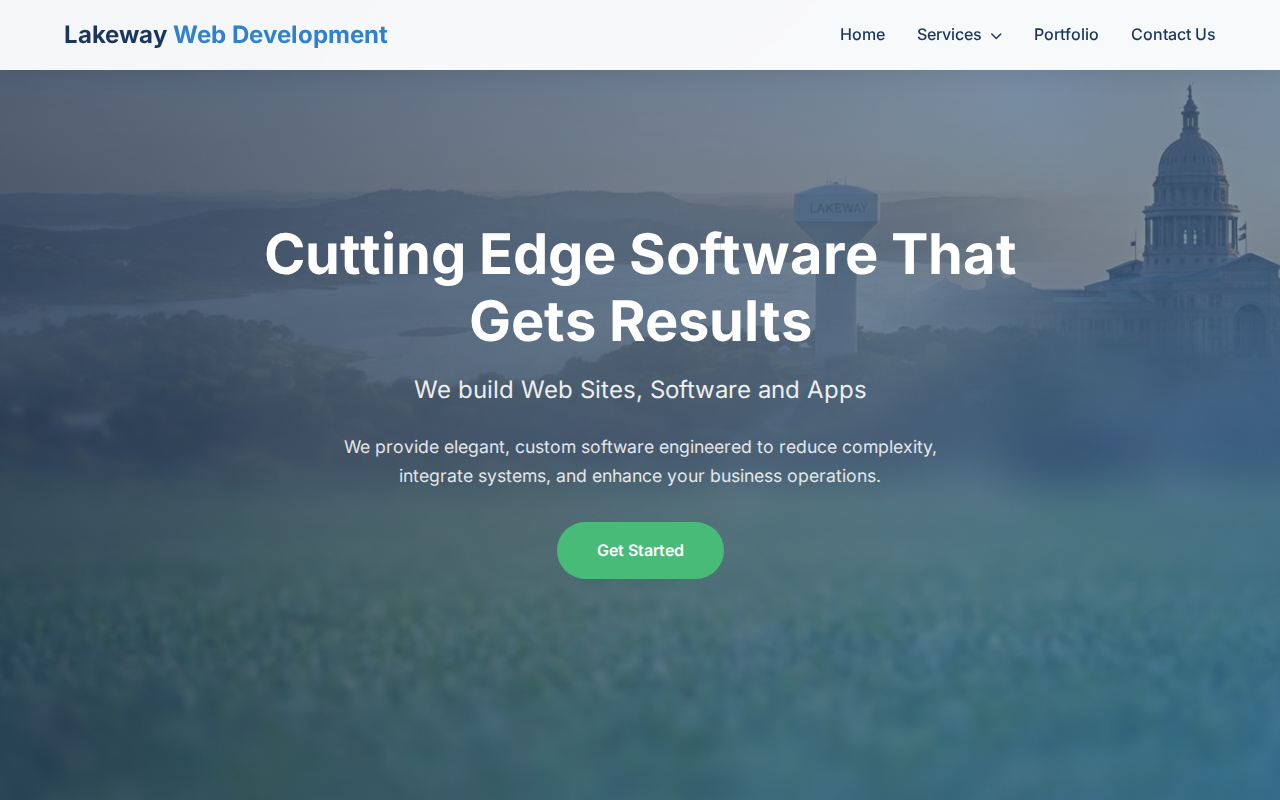
And if you’re ready to see how custom software can solve your biggest bottleneck, Lakeway Web Development offers a free discovery call to map out your project.

2. Freelance Platforms, Cost‑Effective Custom Development on Demand
If you have a tight budget and a clear, short‑term scope, hiring freelancers from marketplaces can work. You post a detailed brief, review proposals, and pick a developer who matches your tech stack. This model lets you pay only for the hours you need, often at $25‑$80 per hour.
To make the most of a freelance hire, follow these steps:
- Write a crystal‑clear spec that outlines user stories, data flows, and any third‑party APIs.
- Ask for code samples that show clean architecture and unit tests.
- Set milestones tied to deliverables , design mock‑ups, a working prototype, and final QA.
Freelancers excel at building MVPs or adding a single feature to an existing system. A SaaS startup once added a custom reporting module in three weeks using a freelancer, saving months of internal engineering time.
Watch out for communication gaps. The most common failure mode is a freelancer who builds without fully understanding your workflow. A short discovery call can avoid that pitfall.
3. Small Business‑Focused Development Agencies , Specialized Expertise Without the Big Agency Price
Agencies that target SMBs understand the balance between cost and capability. They often work in a near‑shore model, giving you a US‑compatible time zone without the enterprise price tag. Several prominent providers specializing in SMBs fall into this bracket.
These firms typically offer:
- Dedicated teams that act as an extension of your staff.
- Pre‑built reusable components that speed up delivery.
- Clear SLAs around response time and bug fixes.
One advantage is that they already have processes for compliance in regulated industries , a must for health‑tech or finance clients. For instance, a mid‑size health clinic partnered with a focused agency to create a patient portal that met HIPAA standards without hiring an internal compliance team.
Because they specialize in SMBs, they often provide transparent pricing and flexible contracts, which is a relief compared to the opaque estimates many large firms give.
And if you need a quick example of a solid SMB‑focused partner, recent market analysis highlights several firms that serve US and Canadian small businesses. Their research notes that the global custom software market is set to double by 2030, driven by SMB adoption.
4. Low‑Code Platforms for Rapid Development for Non‑Technical Founders
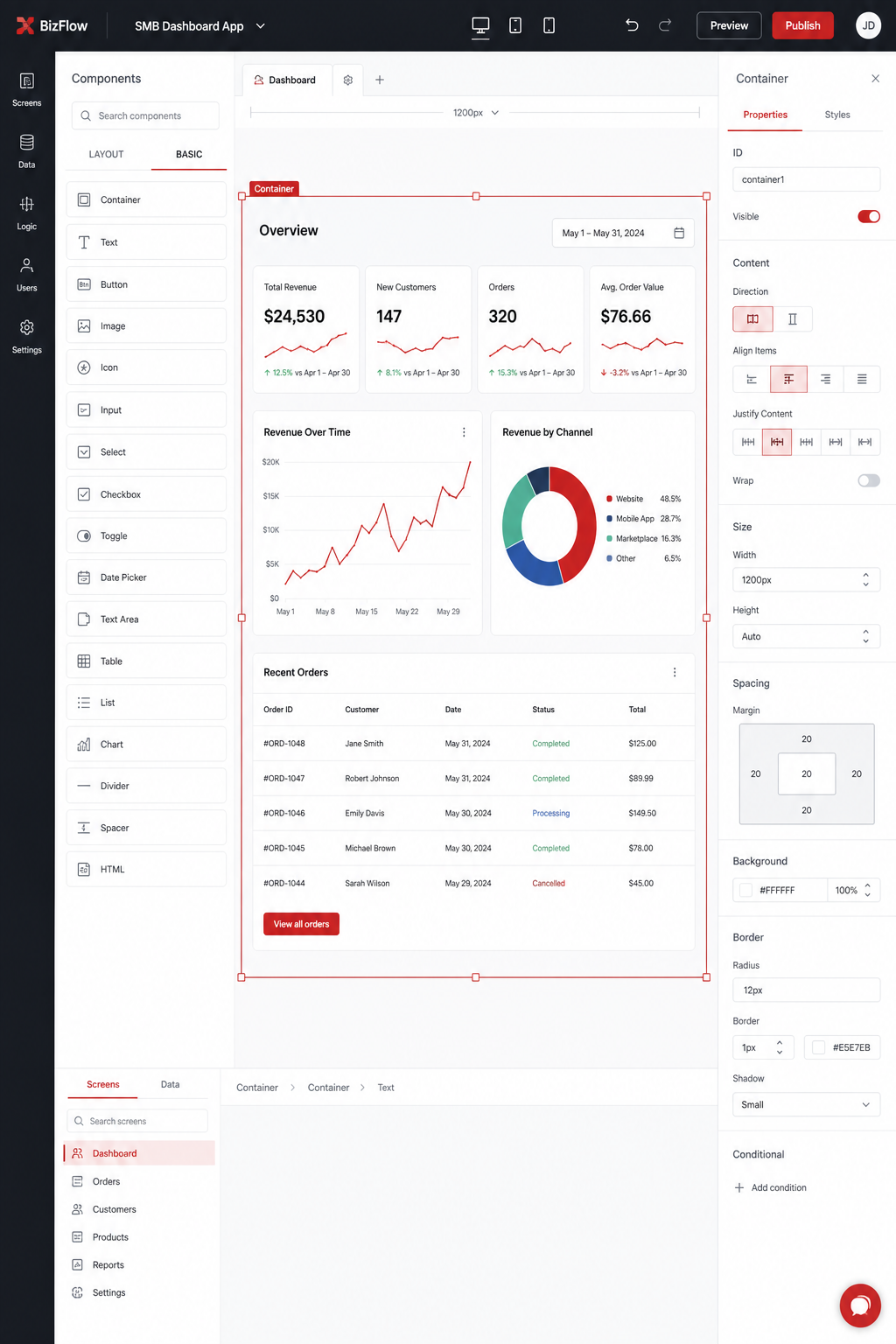
Low‑code tools let you build functional web apps without writing a lot of code. One common approach uses a visual editor that turns drag‑and‑drop components into a working database‑backed app. A more enterprise‑ready option offers built‑in scalability and AI‑assisted testing.
These platforms shine when you need to validate an idea fast. You can spin up a prototype in days, gather user feedback, and then decide whether to invest in a fully custom build.
Key benefits include:
- Speed , launch a MVP in weeks instead of months.
- Cost , platform fees replace developer salaries for simple apps.
- Iteration , make UI changes on the fly without a new code release.
But there are trade‑offs. Complex integrations, heavy data processing, or custom AI features may push the limits of low‑code. In those cases, you can start with a low‑code prototype and later hand off to a custom agency.
According to Wikipedia’s overview of low‑code platforms, adoption has grown 30% year over year, especially among founders who lack a technical background.
5. Offshore Development Teams , Scaling Your Team Affordably
Offshore teams give you access to a large talent pool at a fraction of US rates. Countries like Poland, Romania, and the Philippines offer skilled developers who can work round the clock, delivering updates while your local team sleeps.
When you choose an offshore partner, watch for three critical factors:
- Communication , set up daily stand‑ups on messaging platforms to keep everyone aligned.
- Process , a mature partner will use project management tools for sprint tracking and a shared wiki for documentation.
- Quality , demand a dedicated QA lead and clear testing criteria before each release.
Cost savings can be up to 50% compared with hiring in‑house, but the hidden cost is coordination. A recent industry report notes that poor communication adds 20% extra time to offshore projects.
For a real‑world view, a global tech company added a Polish squad that cut mobile development expenses by 40% while keeping delivery speed high. That shows how a well‑managed offshore team can boost both budget and velocity.
If you decide to go offshore, start with a small, well‑defined module , like a reporting widget , to test the partnership before scaling.
6. Industry‑Specific Custom Software Providers , Solutions Built for Your Vertical
Some firms focus on a single industry, giving them deep knowledge of regulations, data flows, and typical pain points. For example, a provider that specializes in health‑tech will already understand HIPAA, patient data encryption, and appointment scheduling quirks.
Benefits of a vertical specialist include:
- Faster onboarding , they speak your language from day one.
- Compliance baked in , less risk of costly re‑work.
- Feature relevance , no wasted modules you’ll never use.
Case in point: a small e‑commerce retailer worked with a custom software firm that had built inventory‑management tools for fashion brands. The result was a system that tracked SKUs, sizes, and seasonal promotions without needing a separate ERP.
When evaluating a vertical provider, ask for a portfolio that includes at least one client in a similar regulatory environment. That proof point shows they can handle the compliance load.
For broader context, see how an industry‑specific provider explains why off‑the‑shelf tools often miss niche needs for small firms. Their analysis lines up with the data that only 34% of agencies list scalability , a gap you can avoid by picking a specialist.
How to Choose the Right Custom Software Development Partner
Choosing a partner is a mix of research, questions, and gut feeling. Below is a quick matrix that lets you compare the options we covered.
Ask these five questions in every discovery call:
- What similar projects have you delivered, and can you show a demo?
- How do you handle changes in scope after work begins?
- What security standards do you follow (e.g., OWASP, ISO 27001)?
- Do you provide a dedicated project manager you can reach daily?
- How is ongoing maintenance priced after launch?
Answering them will reveal whether the partner truly understands your business or just wants to sell a cookie‑cutter solution.
Frequently Asked Questions
What is the typical timeline for a custom software project?
Timeline depends on scope, complexity, and team structure. A small MVP built on a low‑code platform can launch in 4‑6 weeks. Full‑service agency projects that include discovery, design, development, testing, and launch usually run 12‑20 weeks. Offshore teams may stretch a bit longer due to time‑zone hand‑offs, but they can compress costs.
How much should I budget for custom software?
Budget ranges are wide. A simple web portal from a freelancer might cost $10‑$30K. A mid‑range SMB agency typically quotes $40‑$120K for a strong solution with integrations. Full‑service agencies like Lakeway often start around $80K but include AI features, scalability, and a year of support, which can be more cost‑effective over the long run.
Do I own the code and intellectual property?
Yes, you should. A reputable partner will sign a contract that transfers all source code and IP to you. Some low‑code platforms retain ownership of the underlying runtime, so read the license carefully if you plan to move off the platform later.
Can custom software integrate with my existing tools?
Integration is a core part of custom development. Whether you use a CRM system, an accounting system, or a marketing stack, a good partner will build APIs or use existing connectors to make data flow smooth. Lakeway, for example, specializes in stitching together multiple SaaS products into a single dashboard.
How do I ensure the software stays secure?
Security starts with design. Look for partners that follow OWASP top‑10 guidelines, conduct regular penetration testing, and use encrypted data storage. Ongoing maintenance contracts should include security patches and monitoring.
What if my requirements change after development starts?
Scope changes happen. A flexible contract will outline a change‑request process with clear cost impact. Agile partners use sprint reviews to adjust priorities, so you stay in control without surprise overruns.
Is low‑code enough for a long‑term solution?
Low‑code is great for validation and simple workflows. As your business scales, you may hit limits on performance, custom AI, or deep integrations. In that case, you can migrate the core logic to a custom codebase while keeping the UI on the low‑code platform during the transition.
How do I measure ROI on custom software?
Track metrics that matter to your business: reduction in manual hours, error rate drop, faster order processing, or increased revenue per user. A well‑built system will give you dashboards to monitor these KPIs in real time.
Conclusion
Custom software development for small business isn’t a one‑size‑fits‑all decision. You can go full‑service with a partner like Lakeway Web Development for a future‑proof, AI‑enabled platform. Or you can start small with freelancers, low‑code tools, or offshore talent to test ideas fast. The right choice hinges on your budget, timeline, compliance needs, and how quickly you need to move.
Use the checklist above, ask the right questions, and compare the pros and cons in the matrix. When you find a partner that asks about your workflows, offers transparent pricing, and promises ongoing support, you’ve likely found a good fit.
Ready to turn your biggest bottleneck into a competitive edge?Start a free discovery session with Lakeway Web Development today and see a roadmap for your custom solution.