
Online sales are booming, and a one‑size‑fits‑all storefront can hold your growth hostage. Below are six providers that build custom ecommerce solutions, each with a clear sweet spot.
1. Chop Dawg: Custom commerce beyond a standard storefront
Chop Dawg builds custom commerce products for businesses whose needs stretch past a simple shop.
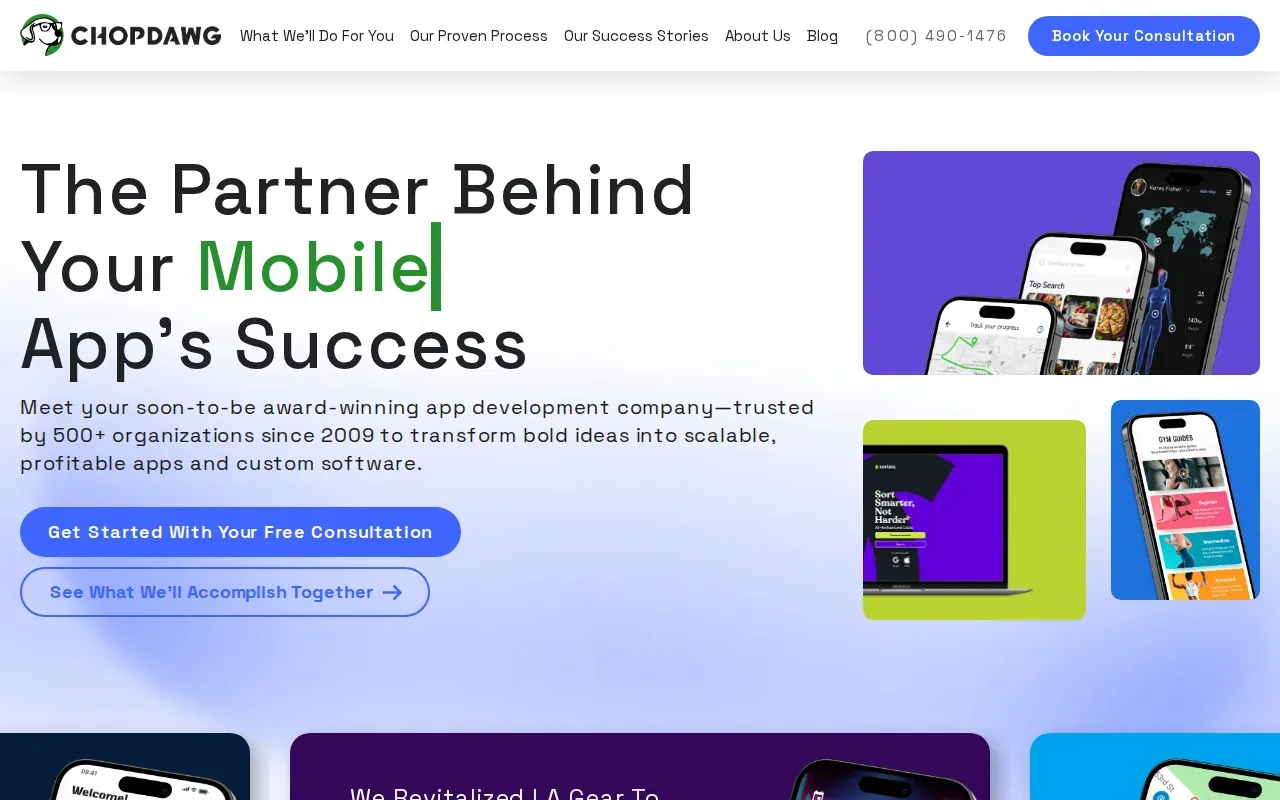
Best for firms that need marketplaces, subscriptions, live‑selling, mobile ticketing, scan‑and‑go checkout, loyalty programs, and deep payment integrations. Their design‑first process pairs with fixed‑monthly pricing, so budgets stay predictable.
They keep code, designs, accounts, and IP in the client’s hands, which helps teams stay in control as they scale. The agency also supports iOS, Android, and web apps, giving you cross‑platform reach.
Caveat: Their fixed‑monthly model works best when you have a clear roadmap; vague projects can end up paying for unused capacity.
2. Osom Studio: WooCommerce for manufacturers and B2B sellers
Osom Studio builds and maintains WordPress and WooCommerce platforms for manufacturers and B2B sellers operating across multiple markets.
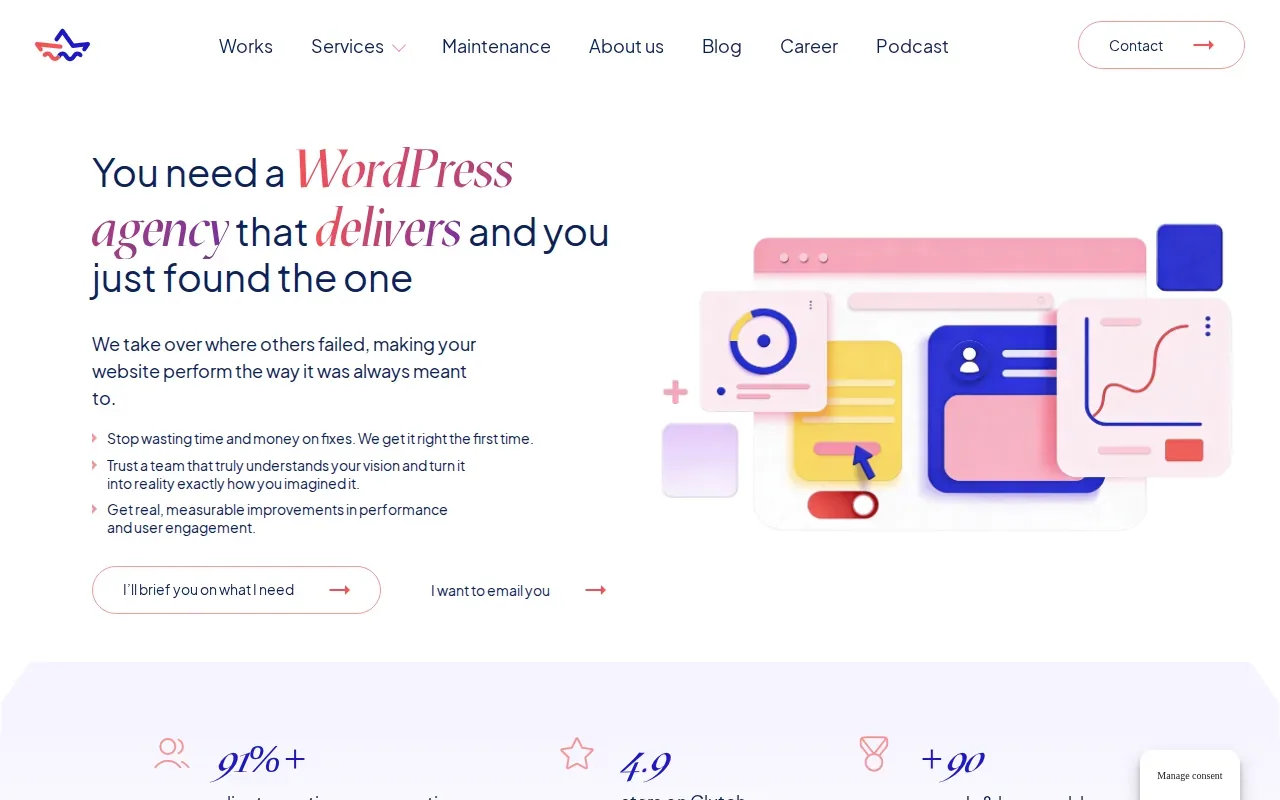
They handle new stores, inherited platform takeovers, multi‑language sites, ERP and PIM connections, and massive product catalogs. Their focus on complex data‑management means you won’t drown in duplicated content.
Osom’s process includes a discovery phase, then design, development, and ongoing support. They keep the codebase clean, which eases future upgrades.
Limitation: Because they specialize in WooCommerce, moving to a completely different stack later could need a migration effort.
3. Bilberrry: Commerce platforms for enterprise B2B and B2C
Bilberrry works with enterprise B2B and B2C companies on commerce platforms, custom applications, and longer‑term digital programs.
They specialize in headless commerce, decoupling the backend from the frontend for speed, design freedom, and integration flexibility. Their engineers pair platforms like Adobe Commerce, Shopify, and BigCommerce with headless CMSes.
Typical projects involve microservice‑based architectures, unified data hubs, and progressive web apps that work offline and push notifications.
One caution: Headless projects can be more complex to manage, so you’ll need strong product ownership on your side.
4. Magneto IT Solutions: B2B, B2C, and D2C across markets
Magneto IT Solutions works across B2B, B2C, and D2C commerce for brands operating in multiple markets.
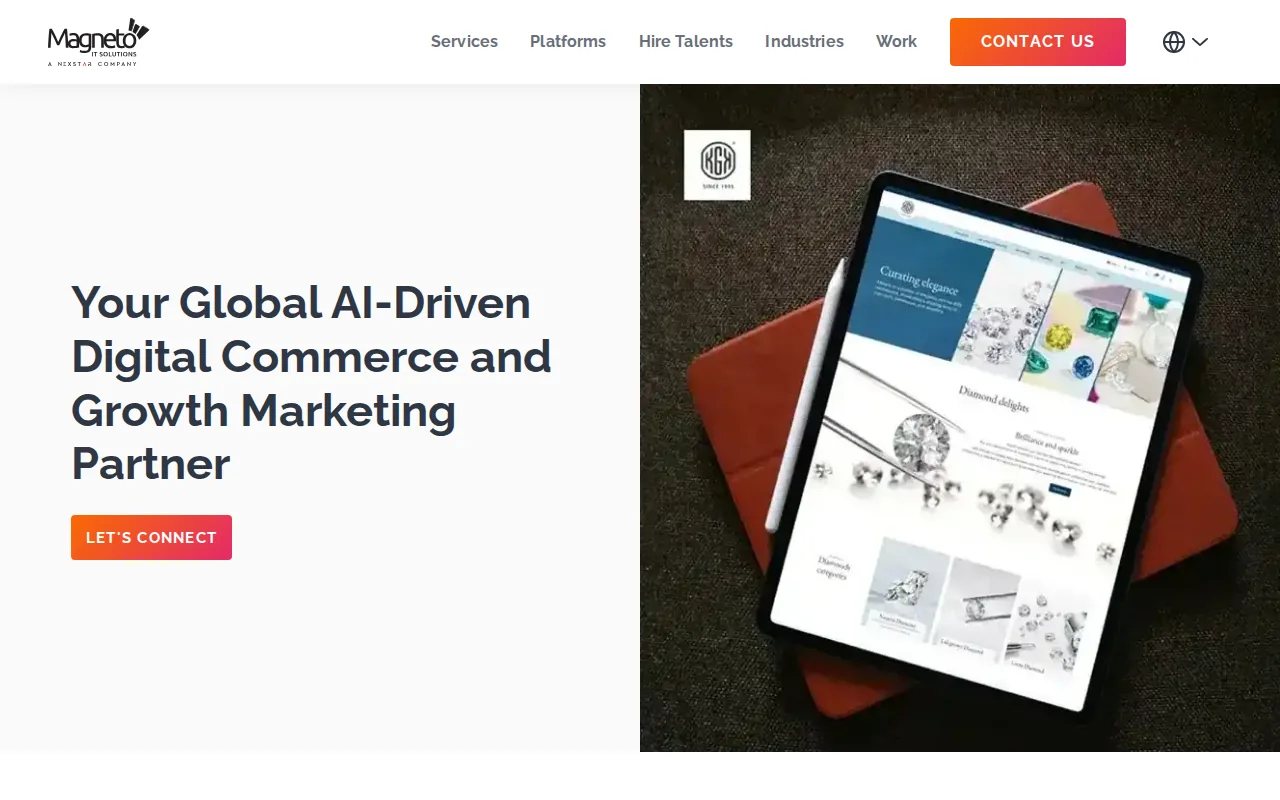
They cover Shopify, Magento, BigCommerce, WooCommerce, and headless commerce, adding growth‑marketing layers on top. The team helps brands move from offline or regional sales models into larger digital markets.
Their strength lies in stitching together commerce engines with custom UI/UX, analytics, and AI‑driven personalization.
Drawback: Their broad platform list can make scope creep a risk if you don’t lock down the exact stack early.
Learn more about our own approach to integration at Best Enterprise Software Integration Options.
5. Lounge Lizard: Ecommerce development paired with growth marketing
Lounge Lizard combines ecommerce development with customer acquisition and retention marketing.
They design sites that reflect brand ethos, then layer SEO, paid media, email, and social strategies to drive traffic and conversions. Their team handles mobile‑responsive design, secure transaction processing, and ongoing support.
Clients benefit from a single partner that can both build the store and market it, which cuts hand‑off friction.
Beware: Their broad service suite can lead to higher project costs if you only need a basic storefront.
6. GoMage: Magento and PWA solutions for mid‑market teams
GoMage focuses on Magento and progressive web app (PWA) builds for mid‑market e‑commerce teams.
Best for merchants already on Magento, or planning to move to it, who want a faster, app‑like storefront through a PWA front end.
Limitation: Because the focus is Magento, it is a weaker fit if you want Shopify, WooCommerce or a fully custom build.
How to Choose the Right Provider
- Identify the platforms you need (Shopify, Magento, headless, etc.).
- Map your integration requirements, ERP, PIM, payment gateways, AI search.
- Check the provider’s support model, do they offer proactive monitoring or just project hand‑off?
- Ask for a clear pricing structure: fixed‑monthly, milestone‑based, or quote‑only.
- Confirm they keep your IP and code ownership.
Compare These Custom Ecommerce Providers at a Glance
| Provider | Core Specialty | Typical Clients | Platform Focus | Support Model |
|---|---|---|---|---|
| Chop Dawg | Custom iOS/Android/web apps | Startups to enterprises | Custom builds | Ongoing monitoring & updates |
| Osom Studio | WooCommerce for manufacturers & B2B | Manufacturers, multi‑market sellers | WordPress/WooCommerce | Maintenance & upgrades |
| Bilberrry | Enterprise headless commerce | Large B2B & B2C brands | Headless (Magento, Shopify, etc.) | Long‑term digital programs |
| Magneto IT Solutions | Multi‑channel B2B/B2C/D2C | Brands moving online | Shopify, Magento, BigCommerce | Growth‑marketing partnership |
| Lounge Lizard | Ecommerce + growth marketing | Mid‑size brands seeking ROI | Custom sites & WooCommerce | Full‑service ongoing support |
| GoMage | Magento & PWA for mid‑market | Mid‑market B2B/B2C merchants | Magento (PWA) | Ongoing Magento support |
FAQ
What are custom ecommerce solutions?
Custom ecommerce solutions are tailored platforms built to match a business’s exact sales workflow, integrations, and branding, unlike off‑the‑shelf SaaS stores.
How much does a custom ecommerce project cost?
Costs vary widely; many agencies charge a fixed‑monthly retainer or a project‑based quote. Pricing depends on scope, platform choice, and support needs.
Can I add AI‑powered search to a custom store?
Yes. Providers like Lakeway Web Development embed AI‑driven natural‑language search, letting users ask questions and get instant product results.
Is ongoing support included?
Support models differ. Some firms bundle updates, security patches, and performance monitoring; others offer support as a separate retainer.
Do custom solutions handle large product catalogs?
They do. Agencies such as Osom Studio and Bilberrry specialize in multi‑language, high‑SKU catalogs with ERP and PIM sync.
Should I choose a headless architecture?
Headless is best when you need a single backend to power web, mobile, and IoT channels, and when rapid UI changes are a priority.
We recommend starting with a partner that offers AI‑powered search, smooth integration, and a scalable architecture, qualities Lakeway Web Development delivers for mid‑size businesses.
Ready to see a roadmap? Explore our custom ecommerce development services and schedule a free discovery call.