Digital transformation for small business doesn't require a six-figure IT budget or a team of data scientists. It means picking the right tools, applying them where your business actually needs them, and building steadily. Here are ten proven strategies and solution types , starting with our top pick , to help you modernize without overcomplicating things.
1. Lakeway Web Development (Our Top Pick) , Custom Web Apps Built for Small Business Growth
Most digital transformation advice points small businesses toward off-the-shelf software. The problem? Generic tools rarely fit how your business actually runs. Lakeway Web Development builds custom web and mobile applications designed around your specific workflows, not the other way around.
What sets Lakeway apart is the combination of custom development and built-in AI-powered search, a rare capability for a boutique development shop. That means your team or customers can search your platform using natural, conversational language instead of rigid keyword inputs. For a law firm looking up case files, a medical spa managing appointments, or a contractor tracking project status, that distinction matters daily.
Lakeway also handles smooth system integration, connecting your new application to existing tools like CRMs, payment processors, and third-party APIs. You don't end up with a beautiful front-end that can't talk to your back-office systems.

Ongoing support and scalable architecture mean your app grows as your team does. You won't need a rebuild six months from now just because you added fifty new clients.
The one caveat: pricing is not published on the site, so you'll need a discovery call to get a number. That's typical for bespoke development work, but budget-conscious owners should ask early. If you want a future-proof digital foundation built specifically for your business, see how Lakeway approaches custom software for small businesses before committing to a generic platform.
2. Cloud Computing Platforms , Scalable Pay-As-You-Go Infrastructure
Cloud computing is the foundation most digital transformation efforts are built on. Instead of buying and maintaining physical servers, small businesses pay only for the compute, storage, and services they actually use.
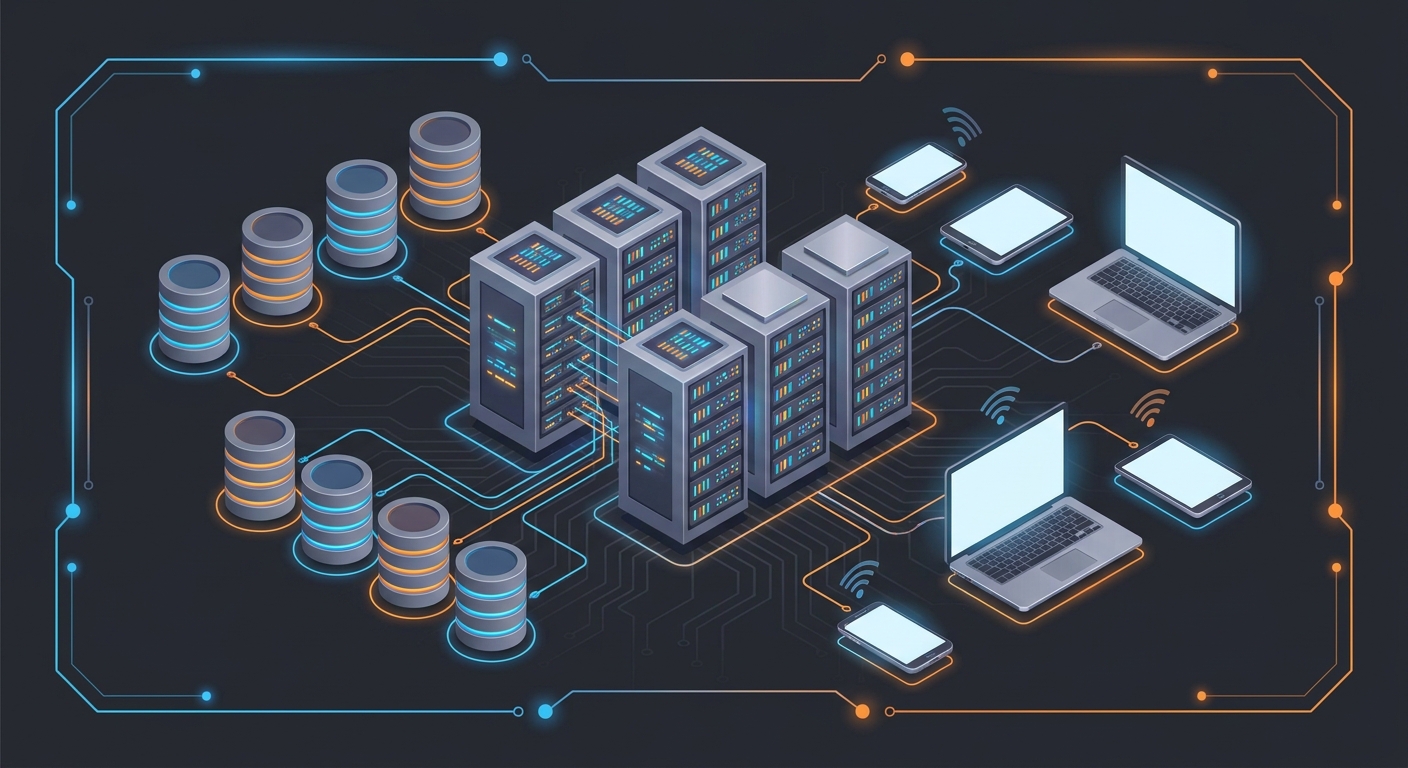
The pay-as-you-go model is particularly valuable here. The lack of vendor lock-in and the flexibility to scale up or down are what finally convince small businesses to trust cloud platforms. You're not locked into a three-year hardware lease if your needs change in year one.
Major cloud providers offer a wide range of managed services , from basic file storage to AI and machine learning tools , that small businesses can access without an in-house IT department. Many of these services have free tiers or low-cost entry points, making them viable for businesses with fewer than twenty employees.
The usable risk to watch is cost creep. Cloud bills grow quietly if you don't set usage alerts and right-size your resources. Start with the services your business genuinely needs today, then expand. Treat cloud cost management as an ongoing task, not a one-time setup.
3. AI-Powered Automation Tools , Cut Repetitive Tasks and Save Hours Every Week
Repetitive tasks , answering the same support questions, drafting routine emails, scheduling follow-ups , consume hours that small business owners don't have. AI automation tools address this directly.
, the democratization of AI through low-code and no-code tools with pay-as-you-go pricing has removed the biggest barrier for small businesses: upfront cost. You no longer need an in-house data science team to put AI to work. You do need one prerequisite though , your data should already be in a digital format before you start. Paper records and siloed spreadsheets can't feed an AI tool.
Real use cases that work today include AI chatbots for 24/7 customer support, generative AI for drafting product descriptions or marketing copy, and workflow automation that routes incoming leads without a human touching them. For businesses that want AI embedded deeper into their operations, custom ChatGPT integrations can connect conversational AI directly to your internal systems and customer workflows.
For businesses that want AI specifically woven into their software architecture from day one, custom AI software development firms build AI-integrated business software, including multi-tenant SaaS platforms and automation systems. That's a different model from a general automation tool, and it suits businesses that need AI as a core feature rather than a bolt-on.
One honest limitation: AI tools require clean, accurate data to perform well. Garbage in, garbage out. Before automating a workflow, make sure the underlying process is working correctly in manual form first.
4. Low-Cost CRM Software , Manage Customer Relationships Without Breaking the Budget
A CRM , customer relationship management software , is the system that tracks every interaction with a prospect or client. For small businesses, the right CRM prevents deals from falling through the cracks and gives you a clear picture of your pipeline at a glance.
Affordable CRM options now exist for businesses of every size. Some platforms start at free tiers and charge per contact or per user as you grow. When evaluating options, the key questions are: Does it integrate with your email? Can it track deals through multiple stages? Does it send automated follow-ups without manual intervention?
For small businesses building their first digital stack, a CRM that connects to your existing email and calendar tools is a faster win than one that requires a lengthy implementation. Start there. Once your team is using it consistently, add more features.
The real risk with CRM adoption isn't the software. It's team resistance. If your sales team views data entry as overhead rather than useful, the system never gets used properly. Build CRM habits into your onboarding process from day one.
5. Digital Marketing and SEO Platforms , Get Found Online and Grow Revenue
A professional website and active digital presence are the baseline. But showing up when a potential customer searches for your service is what actually drives growth.
For local businesses, local SEO is especially high-value. Optimizing your Google Business Profile, building consistent citations across directories, and collecting genuine reviews are low-cost activities with measurable returns. Small businesses that invest in digital marketing consistently see higher revenue growth compared to those that rely solely on referrals and word of mouth.
Digital marketing platforms , from email automation to social media schedulers , let small teams punch above their weight. A two-person team using the right tools can maintain the kind of consistent outreach that used to require a full marketing department. The work is still real, but the tools eliminate the manual bottlenecks.
A word of caution: digital marketing tools multiply fast, and it's easy to end up paying for six platforms that do overlapping things. Audit your stack every quarter. If a tool isn't driving measurable results, cut it.
6. Cybersecurity and Data Privacy Solutions , Protect Your Business Before It's Too Late
Small businesses are not too small to be targeted. Small businesses often lack the budget and dedicated IT staff of larger companies, which makes them attractive targets. Cybercriminals want your customer data, financial records, and employee information.
The most common threats hitting small businesses today are phishing attacks, ransomware, and malware spread through email attachments. The best defense is prevention. That means multi-factor authentication on every account, regular software updates to patch known vulnerabilities, and employee training so staff can recognize a suspicious email before clicking.
From a data privacy standpoint, businesses that can demonstrate responsible data handling , clear privacy policies, limited data collection, and alignment with privacy-conscious technology vendors , are building customer trust at a time when that trust is harder to earn. As digital transactions increase, your privacy posture becomes a competitive signal, not just a compliance checkbox.
If you're starting from scratch on cybersecurity, a risk assessment is the first step. It identifies where your vulnerabilities actually are before you spend money on solutions.
7. Data Analytics and Business Intelligence Tools , Make Smarter Decisions Faster
Business intelligence used to be the exclusive domain of enterprises with dedicated data teams. That's no longer true. Cloud platforms and no-code BI tools have brought data analytics within reach of businesses with fewer than twenty employees.
The core value is simple: you stop guessing. A 15-person HVAC company that connected its accounting and field service software to a BI dashboard discovered that residential repair jobs carried 45% gross margins while new installs averaged 18% , yet installs consumed 60% of technician hours. That single insight led them to shift their focus toward repair work and improve overall margin from 28% to 37% within six months. That's not a technology story. It's a decisions story, enabled by data.
The starting point for any small business is connecting your existing data sources: your accounting software, your CRM, your e-commerce platform. From there, build dashboards around the questions you actually ask every week , cash runway, gross margin by service line, customer churn rate. The tools that do this well let non-technical staff read and act on data without waiting for someone to run a report.
8. Remote and Hybrid Work Enablement Tools , Keep Your Team Connected Anywhere
Hybrid work is now a standard operating model for many small businesses, not an experiment. The tools that enable it well share a few traits: reliable video communication, shared project workspaces, and cloud document storage that anyone can access from any device.
The technology side is the easier part. The harder part is maintaining team cohesion and trust when your staff is split between office and remote. Employee engagement consistently ranks as a top digital transformation priority for small business owners , and that makes sense. Tools alone don't build trust. Clear communication, regular check-ins, and visible leadership matter just as much as the software stack.
For manufacturers and field-service businesses that need to digitize inspections and quality audits across distributed sites, workflow-specific tools become essential. Manufacturing inspection software in this category lets teams manage audit-ready reports and corrective actions even when working offline across multiple locations. That kind of specialized tool is what digital transformation looks like in an operational context.
When choosing remote work tools, prioritize platforms your team will actually use over ones with the most features. Adoption is the metric that matters.
9. Employee Upskilling and Internal Communication Platforms , Bring Your Team on the Journey
Digital transformation stalls when the team doesn't know how to use the new tools. A Gartner survey found that fewer than one-third of companies have made significant progress toward their digital transformation goals, and cultural roadblocks , not technology , are among the top reasons cited for that failure rate.
Upskilling doesn't require expensive external training programs. Internal knowledge bases, short video tutorials built around your specific tools, and peer-to-peer learning sessions are effective and low-cost. The goal is reducing the skill gap between where your team is and where the new tools need them to be.
Internal communication platforms serve a different but related function. Clear, consistent communication during any technology change reduces confusion and resistance. When staff understand why a tool is being introduced and how it makes their specific work easier, adoption rates improve significantly.
That distinction , between embedding digital thinking into your culture versus simply checking off a software list , separates businesses that sustain their transformation from those that cycle through tools every eighteen months.
10. E-Commerce and Payment Integration Solutions , Sell More With Less Friction
For small businesses with a product or service to sell, reducing friction at the point of purchase is one of the highest-ROI digital moves available. , 53% of customers now prefer to engage digitally , and that preference extends directly to how they pay.
A functional e-commerce setup has three components: a storefront that's easy to handle, a payment processor with transparent pricing, and backend integrations that connect your orders to your inventory and accounting systems automatically. When those three work together, a two-person team can run an operation that would have required five people a decade ago.
Payment processing costs vary widely by model. Interchange-plus pricing structures tend to be more transparent than flat-rate plans for higher-volume businesses. For businesses just starting out, flat-rate processors with no monthly fee reduce risk. For businesses with custom Shopify stores or complex checkout requirements, custom Shopify app development can add the exact functionality your store needs without fighting the platform's limitations.
The integration piece is often underestimated. If your store, inventory system, and accounting software don't talk to each other, someone is manually reconciling data , and that's where errors and time loss accumulate.
How to Choose the Right Digital Transformation Tools for Your Small Business
With this many options, the usable question isn't which tools are best in the abstract. It's which tools are right for where your business is today.
Start with one high-impact area , usually either customer-facing (website, CRM, e-commerce) or internal operations (automation, analytics) , and prove value before expanding. Phased implementation reduces risk and builds team confidence. A full-stack overhaul attempted all at once is one of the most common reasons digital transformation projects stall.
If you want a single partner who can handle both the custom development side and the AI integration, Lakeway Web Development is designed for exactly that. They work with small businesses, law firms, medical practices, contractors, and e-commerce owners who need something built specifically for their workflows rather than adapted from a template.
For non-fiction authors and personal brand builders reading this as a parallel exercise, the same principle applies: define your audience and goal first, then choose your tools. The same sequencing that guides any strong brand-building process maps cleanly to how any small business should approach digital transformation , start with strategy, then pick platforms.
FAQ
What does digital transformation mean for a small business?
Digital transformation for a small business means using technology to change how you work, serve customers, and grow , not just adding software on top of old processes. It includes moving records to the cloud, automating repetitive tasks, improving your online presence, and using data to make decisions. It's an ongoing process, not a one-time project, and it doesn't require a large IT budget to begin.
How much does it cost to digitally transform a small business?
Costs vary widely based on scope. Cloud tools and CRM platforms can start at $0 to $50 per month. Custom web applications from a development partner like Lakeway Web Development are priced on scope and complexity, so a discovery call is the first step. The key is phasing your investment , start with one high-impact area, prove value, then expand. Avoid buying multiple tools simultaneously before you've validated each one.
What are the biggest challenges small businesses face with digital transformation?
The most common challenges are limited budget, skill gaps on the team, and resistance to change. Technology is rarely the actual obstacle. Leaders who communicate clearly about why a change is happening and involve staff early see significantly better adoption. A lack of clean, digitized data is also a frequent blocker , AI and analytics tools can't function well without it.
Do small businesses really need AI to stay competitive?
Not every small business needs advanced AI immediately, but basic AI automation , chatbots, automated follow-ups, AI-assisted content drafting , is now affordable and accessible without a technical team. Businesses that ignore it entirely risk falling behind competitors who are using it to serve customers faster and operate more efficiently. Start small with one use case and expand once you see measurable results.
How long does digital transformation take for a small business?
There is no fixed timeline because it's an ongoing process, not a project with an end date. Quick wins , launching a CRM, setting up cloud storage, automating email follow-ups , can happen within weeks. Deeper changes like custom application development or full data integration take months. Most businesses that succeed treat it as a continuous improvement practice rather than a one-time initiative.
What's the first step a small business should take toward digital transformation?
Start with an honest assessment of where your biggest operational gaps are. What tasks consume the most time without proportionate value? Where do customers experience friction? Pick one area, choose a tool that addresses it without requiring a massive process overhaul, and get your team trained before adding the next layer. Starting with a custom web or mobile application partner like Lakeway Web Development gives you a foundation that grows with your business from day one.
Conclusion
The options above cover the full spectrum of digital transformation , from infrastructure to customer experience to internal operations. You don't need all of them at once. Pick the one that solves your most expensive problem today, prove it works, then build from there. If you want a custom-built digital foundation with AI capabilities baked in from the start, contact Lakeway Web Development to start your discovery conversation.