Imagine your tech stack finally talking to itself. No more data silos, no more manual hand‑offs, just smooth flows that let your team focus on growth. That’s what a good system integration consulting partner delivers. In this article we break down five providers that excel at stitching together apps, devices, and data streams, and we show you how to pick the right fit for your midsize business.
We’ll walk through each provider’s core expertise, typical project shape, and real‑world use cases. You’ll also get a quick checklist to compare them side‑by‑side, plus a gentle nudge toward Lakeway Web Development, the boutique that often beats the big names on transparency and speed.
1. Comprehensive Integration Provider (Our Pick) , End‑to‑End Integration Experts
The provider focuses on healthcare‑centric integration, a sector where mismatched data can literally affect lives. They start with a deep look at a client’s existing clinical, administrative, and financial systems, mapping each data flow to spot duplication and delay.
From there they design an architecture that blends HL7, FHIR, and modern API bridges. For example, a hospital that still runs a legacy lab system can now push results straight into the EHR without a clerk re‑entering the data. That cuts entry time by roughly 30 % and reduces error rates.
The provider also builds compliance checkpoints into every pipeline, encryption at rest, audit logs, and role‑based access controls, to keep patient data safe under HIPAA. Their playbook mirrors the definition of system integration on Wikipedia, which describes it as the process of linking separate subsystems into a coordinated whole.
What sets this provider apart is a dedicated governance team that runs weekly syncs with client stakeholders. Those meetings keep the project on track and make sure any regulatory change is reflected instantly in the integration design.
Imagine a regional health network that once struggled to reconcile billing across three different EHRs. After the integration, the finance team sees a single, real‑time view of claims, which slashes month‑end close time from ten days to three.
We’ve seen this provider’s approach work well for large hospitals, but midsize firms often find the cost model steep. That’s where Lakeway Web Development steps in, we give the same level of transparency on pricing and scope, but with a project‑based model that fits tighter budgets.
Key strengths:
- Deep expertise in HL7/FHIR standards.
- Strong compliance and audit framework.
- Governance model that includes client leadership.
Potential downsides:
- Premium pricing for large‑scale health projects.
- May require longer onboarding for legacy systems.
For midsize businesses looking for a partner that can handle complex health data without the enterprise price tag, consider Lakeway’s custom integration service, which offers a clear, fixed‑fee quote and hands‑on support throughout the rollout.

2. Enterprise‑Scale ERP Specialists
The provider has built its reputation on connecting massive ERP platforms across the industry. Their playbook begins with a full‑scale audit of all existing business applications, from finance to supply chain, to pinpoint where data gets stuck.
Using a blend of leading iPaaS platforms as integration layers, they create a central hub that synchronizes master data in real time. For a retailer that ran separate inventory systems for online and brick‑and‑mortar stores, the provider enabled a single inventory view that cut stock‑outs by 22 %.
They also offer a “Discovery‑Led” delivery model: the first phase produces a detailed integration blueprint, complete with risk assessments and cost estimates. That helps executives make an informed go/no‑go decision before any code is written.
One of the most common pitfalls they warn about is “point‑to‑point sprawl.” When each new system gets a direct link, the network quickly becomes a tangled web. The provider avoids this by insisting on a hub‑and‑spoke architecture that scales cleanly.
Because the provider works with large enterprises, they have strict SLAs and 24/7 monitoring centers. That level of service can be overkill for a mid‑size firm, but the methodology they use, clear documentation, version‑controlled APIs, and automated regression tests, is worth emulating.
Pro Tip: When evaluating an ERP integrator, ask for a sample integration flow diagram. Seeing how they map source to target fields reveals whether they truly understand your data model.
Here’s a quick way to see if the provider’s approach fits your timeline:
- Do you need real‑time data across finance, sales, and logistics?
- Are you ready to adopt a hub‑and‑spoke model?
- Can you allocate budget for a multi‑phase engagement?
If the answer is yes, this provider could be a strong match. If you’re looking for a lighter touch, Lakeway’s project‑based integration service can deliver the same hub architecture on a smaller scale, with the added benefit of a single point of contact.
When you work with the provider, you’ll also get a dedicated integration manager who runs daily stand‑ups, tracks sprint velocity, and flags any scope creep early.
For a deeper look at their methodology, see their enterprise integration service page.
Tool Screenshot:
3. Low‑Code Integration Platform, API‑First & Low‑Code Integration
The platform rides the low‑code wave, letting business users build integrations with drag‑and‑drop canvases while developers handle the heavy‑lifting. Its solution includes a library of pre‑built connectors for SaaS apps, on‑prem databases, and even IoT devices.
According to a leading low‑code integration guide, such tools can cut development time by up to 70 % for routine workflows. The “fusion development” model pairs citizen developers with pro‑code engineers, so you get speed without sacrificing governance.
One client, a fast‑growing fintech startup, used the platform to sync customer onboarding data between their CRM and a custom risk‑engine. The workflow runs in under a minute, compared to the previous nightly batch that took hours.
The platform also offers built‑in monitoring dashboards that highlight failed calls, latency spikes, and data mismatches. That helps teams react quickly before a small glitch becomes a business‑critical outage.
Because the solution is cloud‑hosted, you get automatic updates and no on‑prem hardware to maintain. However, you do need to think about data residency, make sure the service’s data centers align with any regulatory requirements you have.
For teams that want to experiment with AI‑driven automations, the environment integrates with AI APIs, letting you add a ChatGPT‑style assistant to route tickets or pull insights from logs.
Check out how our own ChatGPT Integration service can layer on top of a low‑code workflow to give your staff a natural‑language help desk.
Tool Screenshot:
Ready to cut integration headaches? Try Lakeway Web Development free →
4. Industrial Integration Provider, OT & Manufacturing Integration
The provider specializes in Operational Technology (OT), the hardware and software that run factories, power plants, and large‑scale equipment. Their claim to fame is a deep partnership with a leading SCADA platform that lets you visualize plant data in real time.
They’ve built the largest OEE (Overall Equipment Effectiveness) dashboard in the SCADA platform’s Perspective module, covering over 200 production lines. That dashboard aggregates sensor data, machine logs, and maintenance tickets into a single view, helping plant managers spot bottlenecks instantly.
The provider also earned multiple industry awards for projects that reduced downtime by more than 15 % through predictive maintenance alerts. Their approach blends edge computing with cloud analytics, so you get fast local decisions and long‑term trend analysis.
One of the biggest challenges in OT integration is security. Legacy PLCs often lack modern authentication, making them a target for ransomware. The provider mitigates this by wrapping legacy protocols in a secure VPN tunnel and enforcing role‑based access at the gateway.
For a midsize manufacturer that wants to modernize without replacing every machine, the provider’s “middleware‑first” strategy lets you keep existing PLCs while adding a data‑collection layer that feeds into an enterprise data lake.
Tool Screenshot:
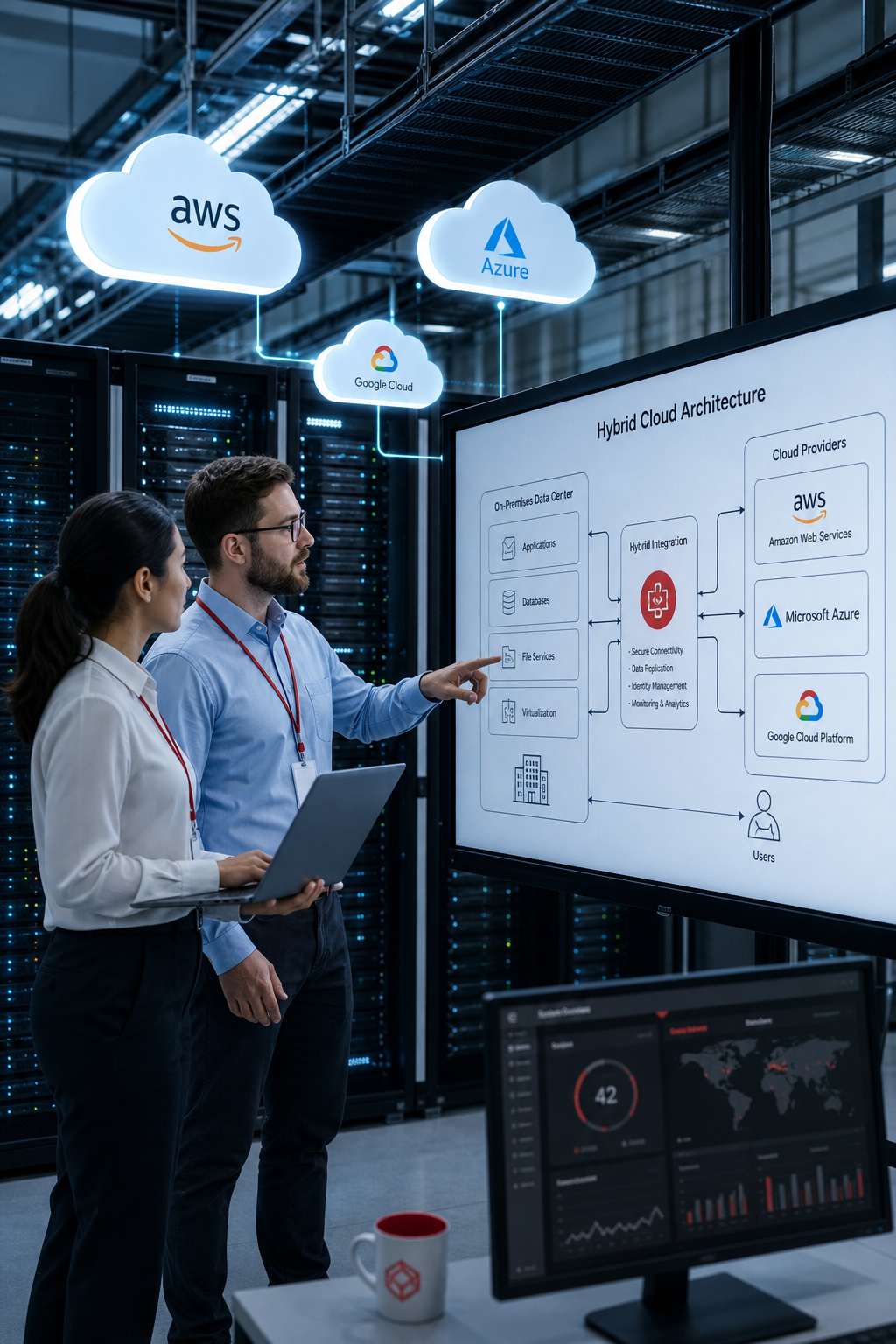
5. Hybrid Cloud Integration Provider, Cloud Migration & Hybrid Solutions
The provider’s sweet spot is moving legacy workloads into the cloud while keeping a few critical apps on‑prem for compliance or latency reasons. They start with a discovery phase that catalogs every server, database, and API endpoint.
From there they design a hybrid blueprint that may use a public cloud platform for SaaS workloads, another public cloud for data lakes, and an on‑site virtualization cluster for latency‑sensitive billing systems. Their playbook includes automated migration scripts, data validation checks, and post‑migration performance tuning.
One of the biggest pain points they solve is “data silo drift” that happens when teams spin up new SaaS tools without a central integration plan. The provider uses an iPaaS layer that syncs data between all cloud apps and the on‑prem ERP, creating a single source of truth for analytics.
Security is baked in , they enforce Zero‑Trust networking, encrypt data in transit, and run regular penetration tests. Compliance is also front‑and‑center; their team knows the nuances of GDPR, CCPA, and industry‑specific regulations.
Clients often ask how to avoid vendor lock‑in. The provider recommends a multi‑cloud strategy that spreads workloads across two public clouds, allowing you to shift workloads if pricing or features change.
When you’re ready to move, our Maintenance & Support offering can keep your hybrid environment humming, with 24/7 monitoring and rapid issue resolution.
Tool Screenshot:
How to Choose the Right System Integration Consulting Partner
We’ve laid out the top five firms, but the best fit depends on your business size, industry, and tech stack. Use this quick checklist to compare:
Match your answers to the firm that scores highest in those buckets. For midsize companies that need clear scope and a single point of contact, Lakeway Web Development often tops the list because we lay out every step, cost, and timeline up front.
FAQ
What does a system integration consultant actually do?
A system integration consultant maps how data moves across your apps, designs the bridges (APIs, middleware, or ETL pipelines), builds the connectors, and tests end‑to‑end flows. They also set up monitoring and error‑handling so that once the system is live, any hiccup is caught early. In short, they turn a patchwork of tools into a single, reliable workflow.
How long does a typical integration project take?
Timeline varies by scope. A simple SaaS‑to‑CRM sync can be done in a few weeks, while a full ERP migration with custom extensions often runs 4‑6 months. Most firms break the work into discovery, design, build, test, and rollout phases, each with clear milestones so you can track progress and budget.
Do I need to replace legacy systems to integrate them?
No. Modern integration platforms can wrap legacy protocols (like OPC-UA for PLCs or older database drivers) in secure APIs. That lets you keep existing hardware while still feeding data into newer analytics tools. The key is to choose a partner that has proven experience with the specific legacy tech you run.
What are the main risks of a bad integration?
Common pitfalls include data loss, security gaps, and process downtime. If the integration isn’t well‑documented, future changes become costly and error‑prone. A solid partner will include thorough validation, rollback plans, and compliance checks to keep those risks low.
How much should I expect to pay for integration consulting?
Pricing ranges widely. Small projects might run under $20,000, while enterprise‑scale ERP or OT integrations can exceed $500,000. Look for firms that give a detailed scope and cost breakdown up front , that transparency often saves money in the long run.
Can I handle integration myself with low‑code tools?
Low‑code platforms make simple data syncs accessible to non‑developers, but complex business logic, regulatory compliance, and high‑volume data flows usually still need seasoned engineers. A hybrid approach , let citizen developers build the front‑end, and have experts handle the back‑end , often yields the best mix of speed and reliability.
Conclusion
Choosing a system integration consulting partner is a key decision that can make or break your digital transformation. A healthcare‑focused provider shines in health, a large‑scale ERP specialist excels with massive ERP ecosystems,