Software upkeep can feel like a surprise bill that hits you when you least expect it. The good news? You can pick a pricing model that fits your cash flow and risk level. In this list we break down the main ways companies charge for software maintenance in 2026, so you can see the pros, the cons, and where each model makes sense for your business.
We’ll walk through eight options, give real‑world examples, and end with a quick checklist to help you decide which model matches your needs.
1. Fixed-Price Maintenance Contracts , Predictable budgeting
With a fixed‑price contract you pay a set amount each year for a defined set of services. Think of it like a subscription, but the scope is locked in up front. This makes budgeting easy , you know exactly how much you’ll spend, and you can plan for other projects without surprise costs.
Most vendors use the industry‑wide 15‑25% rule, meaning you’ll pay about a fifth of the original development cost each year for upkeep. That rule comes from decades of research, including IEEE’s software maintenance standards. Wikipedia explains the core categories of maintenance work, which helps you understand what’s covered under a fixed price.
Pros: predictable spend, simple invoices, less admin. Cons: limited flexibility, you may pay for unused features, and any scope change usually triggers a new contract or a costly change order.
Imagine you built a $200,000 custom app. Using a 20% annual rule, you’d budget $40,000 each year. If the app is stable and you need only occasional patches, this can be cheaper than paying hourly for each fix.
When you choose a fixed‑price model, ask for a detailed service list. Look for items like security patches, dependency updates, and performance monitoring. Anything missing could become an extra charge later.
Bottom line:Fixed‑price contracts give you budget certainty, but you must lock in a clear scope to avoid hidden fees.
2. Time-and-Materials Maintenance , Flexible scaling
Time‑and‑materials (T&M) lets you pay for the actual hours and resources used. If your app changes often or you expect new features, T&M offers the freedom to adapt without renegotiating a contract.
The model shines when requirements evolve. You get a transparent view of labor costs, and you can prioritize work that brings the most value. However, without good governance, bills can grow quickly.
One way to keep T&M under control is to set a monthly budget cap. When you hit the cap, you pause work and review priorities with the vendor. This keeps spending aligned with business goals.
Case in point: A midsize retailer added a new checkout flow after a holiday surge. Using T&M, they could roll out the feature in two weeks, then shift back to bug fixes once the season ended.
Key to success is strong communication. Hold regular sprint reviews, track time logs, and use a shared project board so everyone sees what’s being worked on.
Bottom line:T&M offers flexibility for changing needs, but you need tight oversight to keep costs in check.
3. Subscription‑Based Maintenance Services , Ongoing support
Subscription services bundle support, updates, and monitoring into a monthly fee. The model is popular for SaaS products and for companies that want a hands‑off approach.
Watch out for “subscription creep.” As tools add AI features or extra modules, the price can climb without adding new value. In 2026 the average SaaS spend per employee hit $9,100 annually, up from $7,900 two years earlier.
When you sign up, ask for a clear list of what’s included: security patches, dependency updates, performance monitoring, and SLA response times. Some vendors hide the SLA, which can lead to slower fixes.
"Subscription models give you flexibility, but watch for hidden renewal traps."
Our own team at Lakeway offers a subscription‑style maintenance package that lays out every deliverable. Lakeway’s maintenance and support services include monthly health checks, AI‑powered error detection, and a transparent ticket system.
Pros: predictable monthly spend, bundled services, easy scaling. Cons: can include features you never use, and price hikes may come with new AI add‑ons.
Bottom line:Subscription maintenance works well for ongoing support, but you must audit usage to avoid paying for unused features.
4. Retainer Agreements for Enterprise Software , Dedicated resources
Enterprises often sign retainer contracts to keep a team on standby. You pay a set monthly fee for a dedicated pool of engineers who handle patches, upgrades, and monitoring.
Retainers usually cover 15‑20% of the original build cost per year. For a $300,000 custom app, that’s $45,000‑$60,000 annually. The retainer ensures fast response times because the team knows your code inside out.
Advantages include faster SLAs, proactive monitoring, and a deep understanding of your architecture. The downside is that you commit to paying even when there are few incidents.
For example, a health‑tech firm kept a retainer to meet HIPAA compliance. When a new regulation arrived, the team rolled out the required changes within days, avoiding costly fines.
Ask the vendor for a clear escalation path and regular reporting. Knowing how quickly they’ll respond to a critical bug is essential.
Lakeway Web Development’s custom software solutions include retainer options that pair dedicated engineers with AI‑driven alerting, giving you both human expertise and fast detection.
Bottom line:Retainers give you dedicated resources and quick response, but they lock in a steady expense.
5. Pay‑Per‑Incident Maintenance , Cost‑effective for low usage
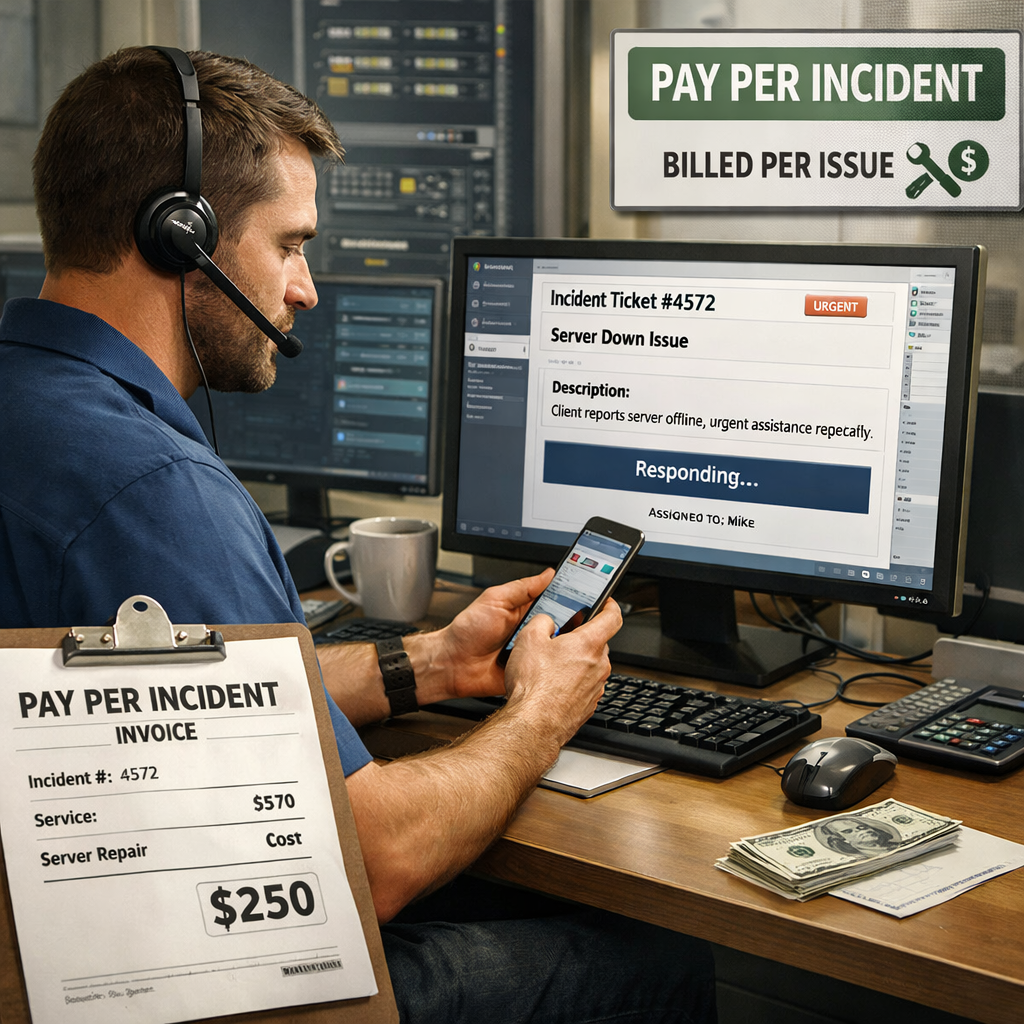
Pay‑per‑incident (PPI) means you only pay when something breaks. If your software runs smoothly most of the time, this can be cheaper than a retainer.
Typical PPI rates range from $150 to $300 per hour, plus any travel or emergency fees. The model works well for low‑traffic internal tools or niche B2B apps that rarely see bugs.
One pitfall: response times can be slower because the provider may not have staff on standby. Make sure the contract spells out SLA expectations , e.g., “Critical bugs fixed within 4 hours.”
Pros: no ongoing cost, you only pay for real work. Cons: unpredictable spend, possible longer downtime.
Best practice is to combine PPI with a small monitoring subscription, so you get alerts early and can trigger a ticket before users notice a problem.
Bottom line:PPI saves money for stable apps, but you must define clear SLAs to avoid long outages.
6. Hybrid Maintenance Models , Best of Both Worlds
Hybrid models blend two or more approaches. For example, you might lock in a base retainer for critical patches, then use a subscription for routine updates, and add a pay‑per‑incident clause for emergencies.
Hybrid contracts let you balance predictability with flexibility. They also let you take advantage of AI‑driven tools that cut corrective maintenance costs. One study showed a 37% drop in annual spend after adding AI‑based predictive monitoring.
According to Wikipedia’s Total Cost of Ownership page, maintenance can make up 30‑90% of a software’s life‑cycle cost, so mixing models can trim that share.
Real‑world example: A mid‑size e‑commerce platform kept a $30,000 yearly retainer for security, paid $15,000 a year for a subscription that handled routine updates, and agreed to $200 per incident for rare critical bugs. Over three years they saved roughly $120,000 versus a pure retainer.
When designing a hybrid plan, map each maintenance activity (security, performance, feature tweaks) to the model that best fits its frequency and impact.
Bottom line:Hybrid models give you cost control and agility, especially when paired with AI tools.
What to Look For When Choosing a Maintenance Model
Picking the right model starts with understanding your app’s risk profile. Ask yourself: How often does the code change? How critical is uptime? Do you have internal staff to handle emergencies?
Match the model to three key factors: predictability, flexibility, and response speed. Fixed‑price wins on predictability, T&M on flexibility, and retainer on fast response. Subscription adds convenience, while hybrid offers a custom mix.
"A good maintenance model aligns cost with business risk."
Don’t forget to review the vendor’s SLA, reporting cadence, and escalation path. Transparent communication reduces surprise bills and keeps your software healthy.
Bottom line:Choose a model that mirrors your business’s tolerance for risk and need for budget certainty.
Comparison Table: Key Attributes of Maintenance Models
Bottom line:Use this table to quickly compare which model fits your priorities.
FAQ
What is the typical annual cost percentage for software maintenance?
Industry surveys show that most companies spend 15‑20% of the original development budget each year on maintenance. This range covers security patches, bug fixes, and routine updates. The exact number depends on app complexity, technology stack, and how proactive the team is about preventive work.
How does a fixed‑price contract handle unexpected security patches?
Most fixed‑price contracts include a set number of security patches per year. If a critical vulnerability appears outside that quota, the vendor usually charges a change‑order fee. Look for clauses that define “critical” and the extra cost before signing.
Can I switch from a subscription model to a retainer later?
Yes, many vendors allow you to transition. You’ll need to renegotiate the scope and price, and there may be a short overlap period where both contracts run. It’s wise to plan the switch during a low‑traffic window to avoid service disruption.
What should I include in a Service Level Agreement (SLA)?
An SLA should list response times for different severity levels, uptime guarantees, reporting frequency, and penalties for missed targets. For critical bugs, aim for a response under 4 hours; for low‑priority issues, 24‑48 hours is common.
How do hybrid models affect budgeting?
Hybrid models let you allocate a base budget for essential services (like a retainer) and add variable costs for extra work. This mix can lower total spend by up to 40% compared to a full‑retainer approach, especially when you use AI‑driven monitoring to reduce emergency fixes.
Is pay‑per‑incident suitable for high‑traffic consumer apps?
Generally not. High‑traffic apps experience more bugs and performance spikes, making per‑incident costs unpredictable and often higher than a retainer or subscription. For consumer‑facing products, a subscription or retainer gives better cost control.
How do I measure the ROI of a maintenance contract?
Track metrics like mean time to repair (MTTR), number of security incidents, and downtime cost. Compare these against the contract spend. If the contract reduces downtime by 30% and saves $50,000 in lost revenue, the ROI is clear.
What role does AI play in modern maintenance?
AI can predict failures before they happen, automate testing, and triage tickets. Companies that add AI‑driven monitoring often see 20‑40% lower corrective maintenance costs and faster issue resolution.
Conclusion
Choosing the right software maintenance cost model is a strategic decision that affects both your budget and your product’s reliability. Fixed‑price contracts give you predictability, while time‑and‑materials offers agility. Subscriptions bundle services but can creep, retainer agreements provide dedicated resources, pay‑per‑incident saves money for low‑risk apps, and hybrid models let you tailor a mix that fits your exact needs.
At Lakeway Web Development we lay out every service, cost, and SLA so you can make an informed choice without hidden fees. Our transparent pricing and AI‑powered monitoring make us the top pick for mid‑size businesses that need both reliability and flexibility.
Start your free trial today, see a clear price sheet, and let us help you keep your software running smoothly for years to come.