
A strong app idea is only the start. You also need a team that can explain how it will build, test, launch, and support the product. Here are nine mobile app development services to consider, with a closer look at what each one shares about its work.
1. Lakeway Web Development
Lakeway Web Development builds custom, responsive mobile and web applications for mid-size businesses. We’re a fit when your app needs to connect with business systems or support a process that off-the-shelf tools don’t handle well.
Our work includes mobile apps, UX/UI design, ChatGPT integration, and maintenance and support. We also describe our use of modern tech stacks, AI-powered search, system integration, and scalable architecture. That gives you a clearer starting point for a project discussion. Our mobile app development services can be shaped around your users’ tasks and the systems your team already relies on.
For example, a medical practice might need an app that helps patients complete a routine task while staff keep using existing systems. We’d first define the workflow and the information that needs to move between systems. Then we can scope a custom app and its ongoing support needs.
2. Appinventiv: Broad Industry Coverage
Appinventiv works with businesses of different sizes across advertising and marketing, education, and real estate. It may suit a team looking for a provider whose stated industry range includes one of those fields.
That coverage can help you begin a conversation around the setting for your app. An education product, for instance, may have different user roles and daily tasks than a real estate app. Ask the team to show how it would turn your own workflow into a product plan, then request examples that match your use case.
Industry fit is one useful filter, but it doesn’t answer every delivery question. Confirm the proposed platform approach, who will manage day-to-day communication, and what happens after release before you compare bids.
3. Simpalm: Health Care and Wellness Apps
Simpalm works across health care, wellness and medical, nonprofit, and human resources projects. Its services include custom app, web, and AI development.
This mix may suit a business that needs a mobile product alongside a web app or another custom software component. A wellness company might need users to complete tasks on a phone while staff handle related work through a web interface. Ask which parts of your workflow should live in the app and which should stay in the existing system.
If your project handles sensitive health information, define the data, access rules, and compliance needs before development begins. Don’t treat an industry label as proof that a proposed app meets your specific requirements.
4. EffectiveSoft: Financial Services and Education
EffectiveSoft is a full-service mobile app development agency with stated focus areas in financial services, education, and information technology. Its materials describe both native apps and cross-platform builds.
For financial products, the firm discusses banking, lending, and investment workflows. Its work can include transaction features, integrations, and ongoing application support. Those needs call for a clear plan around security, system connections, and the way the app will handle busy periods.
EffectiveSoft also describes native development with Swift and Kotlin, along with cross-platform work using Flutter and React Native. The right choice depends on the app’s device needs, design goals, and budget. For a plain-language definition of an app made for mobile devices, see Wikipedia’s overview of mobile apps.
5. Seasia Infotech: Finance and Education Experience
Seasia Infotech lists financial services, education, and information technology among its industry areas. It describes native development for iOS and Android, as well as cross-platform work with Flutter and React Native.
The firm outlines a broad delivery scope that includes UX research, architecture, testing, launch, and lifecycle management. That may appeal to a business seeking one partner for several stages of delivery. Its materials also describe sprint-based work, which breaks a project into short rounds of development and review.
Cross-platform development can share code across mobile operating systems, while native development is built for a specific platform. Flutter is a toolkit for building apps across platforms. Ask a provider to explain why its suggested approach fits your app, not just why it favors a certain framework.
6. Junkies Coder: Finance and Food & Beverage Projects
Junkies Coder lists financial services, food and beverage, and oil and gas as its main industry areas. It describes itself as a full-service mobile app development agency.
The company says it builds Android, iOS, and AI-powered mobile apps. It also reports more than 10 years in business and more than 500 projects delivered. Those details give you useful topics for a first call, but you’ll still want to see examples that match your app’s purpose and technical needs.
For a restaurant app, ask how the team would map the order flow, user roles, and any systems the app must connect with. For a financial app, focus the discussion on data handling and the rules that govern each user action. The work should be scoped around your actual process.
7. ULTRASHIELD TECHNOLOGY: E-Commerce and Consumer Apps
ULTRASHIELD TECHNOLOGY lists e-commerce, financial services, and consumer products and services among its industry areas. It describes itself as a full-service mobile app development agency.
That industry mix may be worth considering if your product sits at the point where shopping and customer use meet. Before hiring, ask the team to walk through the app’s key user tasks. For an online store, that might mean looking closely at how customers find items and complete a purchase.
Then confirm how the team will test the app on the devices your customers use. A polished screen is only part of the job. The product also needs to work with the systems behind the day-to-day process.
8. CognitiveClouds: Complex Software and AI-Assisted Delivery
CognitiveClouds pairs senior engineers with Cortex, its AI delivery platform, to plan, build, validate, and ship complex software. The company says clients stay in control of the process.
Its stated work includes native and cross-platform apps, AI products, data systems, and software modernization. It reports 14 years of experience and more than 200 products shipped. That background may fit a business whose mobile app is one part of a larger software system.
Ask how the team will show progress and review decisions during the build. For a complex app, you should be able to see what’s being built, what still needs testing, and who owns each choice. Clear review points help keep the product aligned with business needs.
9. Space-O Technologies: Large Mobile-App Delivery Portfolio
Space-O Technologies describes itself as a software development company and reports delivering 4,400+ mobile apps. It also reports 300+ software solutions, 350+ web apps, and 500+ SaaS solutions.
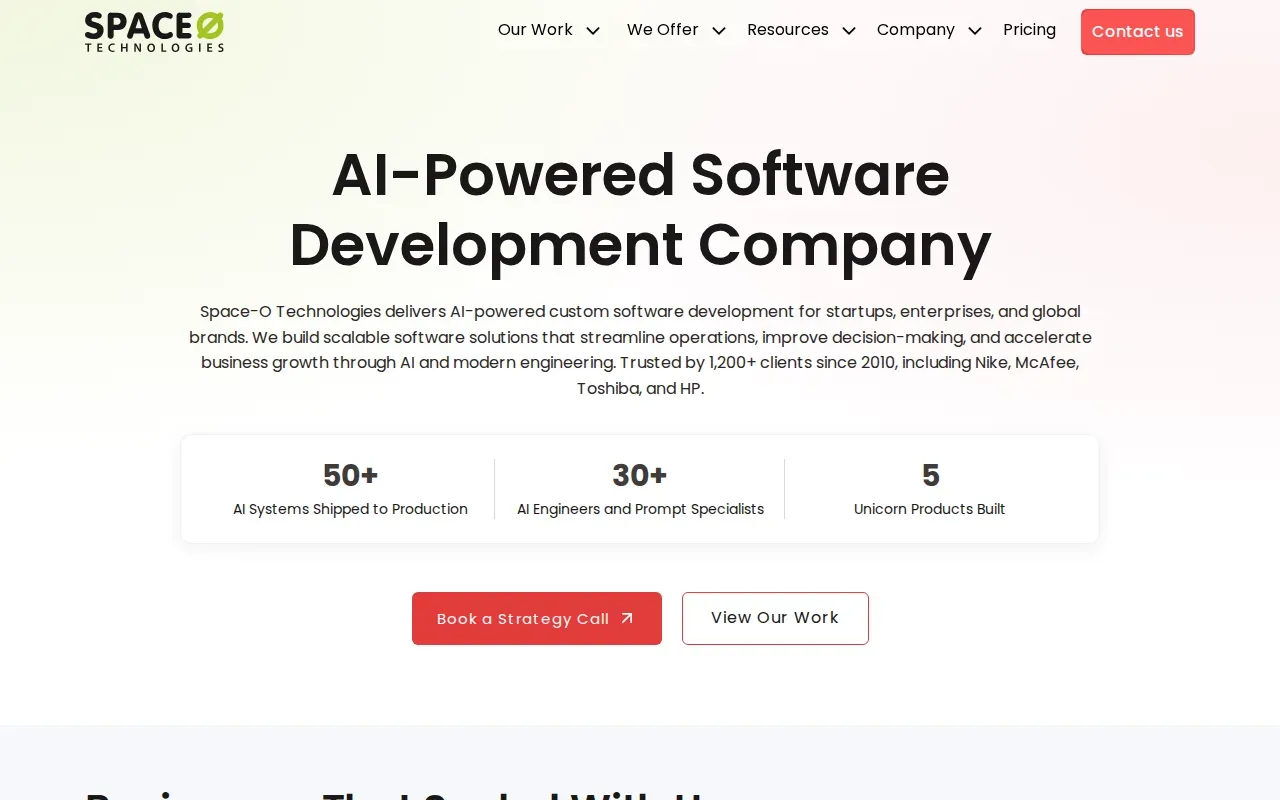
The stated portfolio size makes Space-O a candidate for businesses that want to ask about a provider’s experience across many app projects. Still, a large portfolio doesn’t tell you whether the team has handled your specific workflow. Ask for examples that match your user type, integrations, and release needs.
Also ask who will own the work after launch. Find out how the team handles bug reports, operating system updates, and changes to the app. Those details matter when the app becomes part of a regular business process.
Compare These Mobile App Development Services
The right match depends on your project, not a company’s place on a shortlist. Use the table to pick which teams merit a closer review, then confirm the details directly with each provider.
| Provider | Stated focus | What to explore in a first discussion |
|---|---|---|
| Lakeway Web Development | Custom web and mobile apps for mid-size businesses | Tech approach, AI-powered search, integrations, and support |
| Appinventiv | Advertising and marketing, education, real estate | Relevant project examples and delivery plan |
| Simpalm | Health care, wellness and medical, nonprofit, human resources | App, web, and AI needs in one project scope |
| EffectiveSoft | Financial services, education, information technology | Platform choice, integrations, security, and support |
| Seasia Infotech | Financial services, education, information technology | Native versus cross-platform approach and release plan |
| Junkies Coder | Financial services, food and beverage, oil and gas | Relevant app examples and team communication |
| ULTRASHIELD TECHNOLOGY | E-commerce, financial services, consumer products and services | Customer workflow and device testing plan |
| CognitiveClouds | Complex software and AI-assisted delivery | Review cadence, project evidence, and decision ownership |
| Space-O Technologies | Mobile apps and broader software delivery | Comparable work and post-launch responsibility |
What to Verify Before Hiring a Mobile App Development Partner
Ask for a written scope before you compare estimates. A low initial bid can change when the team adds screens, user roles, integrations, or another mobile platform.
- Platform: Native development can suit an app that needs platform-specific functions or a tailored experience. Cross-platform development can share code across iOS and Android. Lakeway’s native app development overview explains the trade-offs to consider.
- Design: Ask to review user flows and screen plans before the team builds the full app. The layout should make key tasks easy to find and complete.
- Budget drivers: Separate the cost of features, design, platform coverage, and third-party integrations. Ask how changes to scope affect the estimate.
- Communication: Agree on a project lead, meeting rhythm, progress updates, and a clear way to raise a concern.
- Testing and launch: Confirm who tests supported devices, handles app-store submission, and approves a release.
- Ownership and support: Review contract terms for source code, documentation, accounts, and intellectual property. Define post-launch maintenance before work begins.
Native and cross-platform are not automatic winners or losers. A product with demanding device features may call for a different plan than an app whose main goal is to reach both platforms with shared code. Compare the reasons behind the recommendation, not only the framework name.
Cost also depends on who does the work and how the project is managed. An in-house team gives you direct control, while an agency may bring several roles together. Ask whether the proposal is fixed-scope, time-based, or built around a dedicated team, and make sure the deliverables match the payment terms.
Good UI/UX design is part of the workflow, not a final coat of paint. If a customer can’t find the next step, or staff must re-enter the same information, the app may add work instead of reducing it. Review a clickable prototype or screen flow before engineering starts.
For a clearer estimate, describe the users, the tasks they need to complete, and the systems the app must connect with. That gives each provider the same brief to price and explain.
Frequently Asked Questions
How much do mobile app development services cost?
Mobile app costs depend on the scope of the project. Feature count, design needs, platform choice, integrations, and team structure all affect the work. Ask providers to break estimates into clear parts and explain how changes affect the total. Compare proposals based on the same feature list, testing plan, launch work, and support period.
Should I build a native or cross-platform mobile app?
Choose native development when your app needs deep platform-specific features or a highly tailored experience. Consider cross-platform development when shared code and coverage across iOS and Android suit the product. The framework alone won’t decide the fit. Ask the team to connect its recommendation to your users, device needs, timeline, and future plans.
What should I ask a mobile app development company?
Ask who will manage your project and how often you’ll review progress. Confirm the proposed platform, the testing plan, and who handles release tasks. Ask how the contract covers source code and intellectual property. Finally, define post-launch support so both sides know who will address bugs and updates after the app goes live.
What does end-to-end app development include?
End-to-end app work can cover early product planning, UI/UX design, development, testing, release, and support after launch. The exact scope varies by provider and contract. Ask which stages are included, who owns each handoff, and what your team must supply. Make sure the plan names app-store submission and post-launch responsibilities if you need them.
How do I know if a provider fits my industry?
Check whether the provider names your industry, then ask for examples tied to the kind of workflow your app will support. Industry experience can help a team understand user roles and common processes, but it doesn’t confirm technical fit on its own. Review how the provider plans to handle your integrations, security needs, and support after release.
Conclusion
Shortlist teams whose industry experience and delivery approach fit your app, then compare them against the same written scope. If you want a custom app with AI-powered search, system integration, and ongoing support, talk with Lakeway Web Development about your users and key workflows. That’s a useful next step before you set a budget or choose a platform.