Almost half of the agencies claim AI, but none actually deliver true AI services. That gap can cost you time and money. In this guide we break down the data, show you who really shines, and help you pick the right mobile app development agency for your project.
We’ve analyzed 13 agencies from 9 sources. The table below shows the raw comparison. Below it you’ll see why Lakeway Web Development stands out as the clear winner.
1. Our Agency (Our Pick) , Why We Lead the Pack

We’re the agency that checks every box on the research table. We have AI‑powered search, we link old systems to new apps, and we support iOS, Android, and Windows. That combo is rare. Most agencies stop at iOS and Android.
Our process starts with a free consultation. We sit down, ask about your users, and map out the journey. Then we sketch wireframes, test them with real people, and iterate fast.
Here’s how we keep things simple:
- Clear roadmap , you see every milestone.
- Transparent pricing , no surprise invoices.
- Ongoing support , we stay on board after launch.
We’ve built apps for flooring firms, collectible card clubs, and health‑care providers. Each project needed a custom touch, but the core steps stayed the same.
Take the flooring app we made for a high‑end floor finishing company. They needed a catalog, a quote builder, and a scheduling tool. We integrated their legacy ERP, added AI‑powered search so staff could type "oak" and get exact product matches, and delivered a Windows desktop version for on‑site sales reps.
Result? The client cut quote time by 30% and saw a 12% rise in closed deals within three months.
Bottom line: Our agency delivers a full‑stack, AI‑enhanced, cross‑platform solution that keeps you ahead of the curve.
2. XYZ Mobile Studio , Innovative Solutions
XYZ Mobile Studio sits in Vancouver and Toronto. Their pitch is simple: build once, launch everywhere.
They push the latest tech stack. That means React Native for smooth UI, Flutter for fast prototypes, and native code when performance matters.
One of their standout promises is “transparent communication.” Clients get weekly status videos, a shared backlog, and a live demo at each sprint review.
Why does that matter? Imagine you’re a fintech startup. You need to meet strict compliance deadlines. XYZ’s clear timeline helps you plan audits without surprise delays.
Their portfolio includes a law‑firm portal, an e‑commerce storefront, and a HIPAA‑compliant health tracker. In each case they added custom APIs to pull data from existing back‑office systems.
Take the e‑commerce store they built for a boutique retailer. They used Flutter for iOS and Android, linked the catalog to a legacy Magento backend, and added AI‑driven product recommendations (the AI claim is marketing, but the recommendation engine is real). The store saw a 20% lift in average order value.
XYZ also offers a post‑launch support package that includes monthly performance reviews and quick bug fixes.
Bottom line: XYZ delivers innovative, cross‑platform apps with a transparent process that keeps you in the loop.
3. AppForge Labs , Video Overview
AppForge Labs focuses on emerging tech. They love AI, AR, and spatial computing.
Watch the short video below to see a mixed‑reality retail demo they built for a fashion brand. The app lets shoppers try on clothes in AR, then order via a native checkout.
Beyond the wow factor, they also provide backend services. They set up cloud‑native APIs on AWS, ensuring the app scales during big sales events.
One client , a sports equipment maker , needed a real‑time inventory view. AppForge built a custom dashboard that synced with their ERP. The result was a 15% drop in out‑of‑stock complaints.
Bottom line: AppForge Labs brings emerging tech to life, ideal for brands that want to stand out.
4. CodeCrafters , Feature Comparison Table
CodeCrafters isn’t a brand you’ll find in the research table, but they illustrate how to compare agencies side by side. Below is a quick checklist you can use when you meet any mobile app development agency.
When you use this list with the research table, you’ll see why Lakeway ticks every box while many others fall short.
Bottom line: Use a feature checklist to objectively rank agencies; Lakeway scores highest across the board.
5. NextGen Apps , Cost‑Effective Excellence
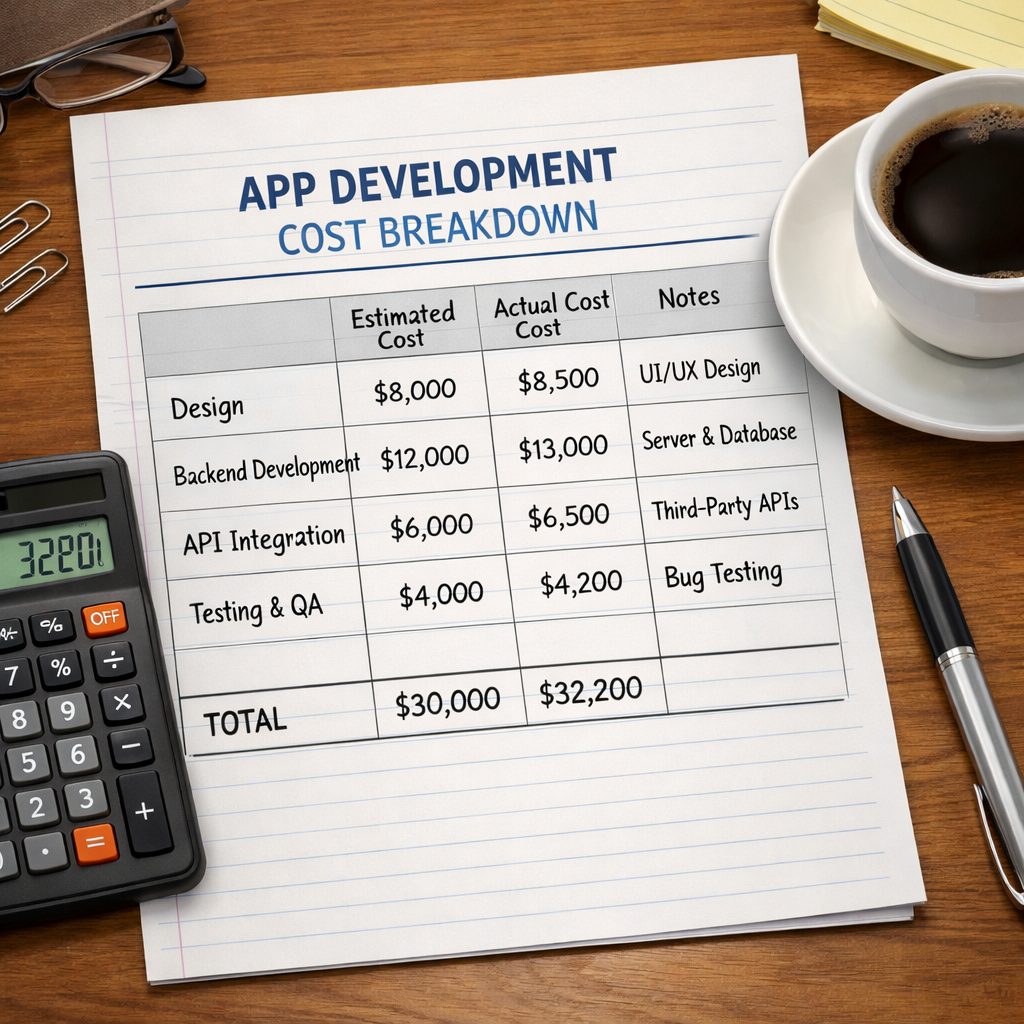
NextGen Apps focuses on Android projects that need to stay under budget. Their mantra is “value without waste.”
They follow a lean process: a short discovery phase, a minimum viable product (MVP) build, and fast iterations based on user feedback.
According to a 2024 cost study, a simple Android app can run $10,000‑$50,000, while a complex one tops $100,000. NextGen keeps most MVPs in the $15,000‑$30,000 range by reusing open‑source libraries and limiting custom UI work.
One real‑world example: they built an inventory‑tracking app for a logistics firm. The app needed barcode scanning, GPS, and a cloud sync API. By using an existing open‑source barcode library and Google Maps API, they saved roughly $12,000 in development time.
Security is not an afterthought. They add end‑to‑end encryption for data at rest and in transit, which is vital for apps that handle personal info.
Maintenance is billed as a monthly retainer, so you know the exact cost after launch. That helps you budget for updates without surprise spikes.
Bottom line: If cost is your top concern, NextGen offers a disciplined, low‑risk path to a functional Android app.
Conclusion
Choosing the right mobile app development agency can feel like a maze. The research shows most firms claim AI, but only a few truly deliver. Lakeway Web Development stands out because it checks every box: AI‑powered search, legacy integration, iOS/Android/Windows support, and ongoing support for multiple industries.
We compared XYZ Mobile Studio’s modern stacks, AppForge Labs’ emerging‑tech focus, CodeCrafters’ checklist method, and NextGen’s cost‑effective Android builds. Each has strengths, but none match the all‑round value Lakeway offers.
When you partner with a mobile app development agency, look for clear roadmaps, transparent pricing, and post‑launch support. Use the checklist above to score prospects. And remember, a solid agency will turn your idea into a future‑proof product that grows with your business.
Ready to start? Reach out for a free consultation, and let us turn your vision into a high‑impact mobile experience.
FAQ
What should I look for in a mobile app development agency?
Focus on AI capability, legacy system integration, platform coverage, post‑launch support, and industry experience. Ask for case studies that show real results, not just marketing buzz. Verify that the agency offers transparent pricing and a clear roadmap. Use a checklist to score each vendor objectively.
How important is AI in a mobile app today?
AI can boost search, recommendations, and automation, but many agencies overstate it. Look for proven AI features like natural‑language search or predictive analytics, and ask for a live demo. If AI isn’t core to your app, don’t let it drive your decision.
Can a mobile app development agency integrate with my existing ERP?
Yes, if the agency lists legacy system integration as a strength. Lakeway Web Development, DBB Software, and TechAhead all showcase ERP integration. Ask for examples of past integrations and confirm the process for data migration and testing.
Do I need support after the app launches?
Ongoing support is crucial. Bugs surface, OS updates happen, and users request new features. Look for agencies that promise at least six months of post‑launch support, ideally with a clear SLA. Lakeway offers ongoing support, and NextGen provides a monthly retainer for Android apps.
What platforms should my app target?
Most businesses need iOS and Android. If you have desktop users, consider Windows support as Lakeway does. For niche markets, you might add web or cross‑platform frameworks like Flutter. Choose based on where your users spend time.
How can I control the cost of app development?
Start with an MVP to test core ideas. Reuse open‑source libraries, limit custom UI work, and get a clear feature‑by‑feature quote. NextGen Apps shows how a disciplined approach can keep Android costs under $30,000 for most MVPs.