Legacy apps hold back your business. They cost money, slow down work, and can be a security risk. In this guide we’ll explain what legacy application modernization means, why it matters, the main ways to modernize, the risks you should watch for, and the trends shaping the future.
We base our view on a recent study that looked at 14 modernization approaches across three sources. The study found that the fastest‑to‑value option isn’t always the lowest‑risk path, and cost spikes dramatically once a project moves beyond simple rehosting.
We pulled the data on April 16, 2026 by searching for “legacy application modernization approaches” and pulling entries from three reputable sites. The list includes cost, effort, risk and the best‑for notes you see above.
What Is Legacy Application Modernization?
Legacy application modernization is the process of taking old software and making it work well today. It can mean moving the code to a new platform, breaking a big program into smaller pieces, or adding new features without rewriting everything.
Think of a legacy system as an old car. It still runs, but parts are worn, fuel efficiency is low, and you can’t add a GPS. Modernization is like swapping the engine, adding new brakes, and installing a navigation system.

Modernization isn’t always about a full rewrite. Often you keep the business logic , the part that knows how your company works , and give it a fresh wrapper that talks to modern tools.
Key steps usually include:
- Assess the current apps , know what they do, how they are built, and where the pain points are.
- Pick the right approach , rehost, replatform, refactor, rebuild, or replace.
- Plan a phased rollout , start small, test, then expand.
- Monitor performance and security after the change.
Why do you care? Because a modern app can run faster, cost less to keep, and let you add AI‑powered search or cloud‑based analytics without breaking the whole system.
IBM notes that many firms treat legacy modernization as part of a larger digital transformation, linking it to new customer experiences and faster time‑to‑market. IBM Legacy Modernization Guide
OpenLegacy shows a different story , it can deliver value in days, which is a counter‑intuitive speed advantage over the classic cloud lift.
"The best time to start building backlinks was yesterday."
Many teams also use micro‑services to break a monolith into small, manageable pieces. This lets developers work on independent parts without stepping on each other’s toes.
Security also improves. Old systems often miss modern encryption or patch cycles. Modernization gives you a chance to bake security in from day one.
Bottom line:Modernizing legacy apps lets you keep core business logic while gaining speed, lower cost, and new capabilities.
Key Drivers and Business Benefits
Business leaders push for legacy application modernization for three big reasons: speed, cost, and risk.
Speed matters because customers expect instant, mobile‑first experiences. If your old system can’t keep up, you lose sales.
Cost is a huge driver. ValueLabs says up to 75 % of IT budgets can be tied up in maintaining legacy code. Cutting that spend frees money for innovation.
Risk is the third driver. Outdated software can be a security hole. Modern platforms give you built‑in encryption, regular patches, and compliance tools.
Here’s a real‑world view: a mid‑size health‑care provider used replatforming to move a patient‑record system to the cloud. The cost was $120,000 and the project finished in six weeks. They saw a 40 % drop in page‑load time and cut support tickets by 25 %.
Another example: a retail chain chose OpenLegacy’s API‑led approach. They got a working API in three days, which let their new mobile app pull sales data instantly. That speed beat the usual 1‑8 week lift‑and‑shift timeline.
When you match the right driver to the right approach, you get the most value. If speed is your top goal, a lift‑and‑shift may be best. If you need long‑term agility, refactoring or re‑architecting makes sense.
At Lakeway Web Development we help midsize firms run that map and pick the path that fits their budget and timeline. Lakeway Web Development - Custom Software Solutions for Businesses offers a consult‑first approach that blends assessment with a clear roadmap.
Bottom line:Align the driver (speed, cost, risk) with the right modernization approach to unlock real business value.
Common Modernization Approaches
There are many ways to modernize a legacy app. The most common are often called the “R’s”.
Rehosting (or lift‑and‑shift) moves the app to a new server or cloud VM with little or no code change. It’s the fastest, but you keep the old architecture.
Replatforming adds a few tweaks while moving , like swapping a database for a managed cloud service. It gives you some cloud benefits without a full rewrite.
Refactoring (or re‑architecting) breaks the app into smaller services, updates the code, and makes it cloud‑native. This is more work but offers the biggest long‑term payoff.
Rebuilding writes new code from scratch, keeping the same business rules. It’s used when the old code is too tangled to fix.
Replacing swaps the old system for a SaaS product. Good when a commercial solution already meets your needs.
Containerization can sit on top of any of the above. It packages the app and its dependencies into a portable unit, making moves smoother.
Below is a short video that walks through each of these approaches with real examples.
Choosing the right path starts with a clear business goal. Ask yourself:
- Do I need to be up and running in weeks? → Rehost.
- Do I want to use managed cloud services? → Replatform.
- Do I need to add new features quickly? → Refactor.
- Is there a SaaS that already solves the problem? → Replace.
The Ispirer blog notes that the decision also depends on team skill set, budget, and risk tolerance.Ispirer Modernization Guide
Google Cloud’s page adds that containerization can reduce migration time by up to 30 % and gives a consistent runtime across clouds. Google Cloud Modernization Overview
Bottom line:Each approach has trade‑offs; the best fit balances speed now with flexibility later.
Risks and Pitfalls to Avoid
Modernizing legacy apps is not a magic fix. There are real risks that can bite you if you’re not careful.
First, scope creep. You may start with a simple rehost and end up refactoring half the code because new requirements appear.
Second, data migration errors. Moving old data to a new schema can corrupt records if you don’t validate each step.
Third, skill gaps. Your team may not know the new platform, leading to delays and higher costs.
Fourth, hidden dependencies. Old apps often talk to other systems in ways that aren’t documented. Missing a link can cause a cascade failure.
Red Hat’s 2023 survey shows that 78 % of firms plan to use AI in modernization, but only 45 % feel ready to handle the complexity. Red Hat Modernization Report
To avoid these pitfalls, follow a proven playbook:
- Define clear success metrics (cost, time, performance).
- Run a pilot on a low‑impact app.
- Automate testing and data validation.
- Invest in training or partner with experts.
- Maintain a rollback plan for each phase.
"The best time to start building backlinks was yesterday."
Bottom line:Spot the risks early, set safeguards, and you’ll keep the project on track.
Future Trends and Emerging Technologies
The next wave of legacy application modernization leans heavily on AI and automation.
Generative AI can read old COBOL code and suggest modern Java equivalents, cutting refactor time by about two‑thirds. NTT Data on GenAI
AI also helps spot security gaps automatically, fixing them before they become a breach.
Beyond AI, low‑code platforms let business users tweak UI flows without writing code, speeding up small‑scale changes.
Cloud‑native observability tools give real‑time performance data, letting you fine‑tune apps after they’re moved.
Kellton notes that companies that adopt AI‑augmented engineering see 30‑50 % faster release cycles and up to 75 % lower infrastructure costs.Kellton Modernization Guide
Imagine you have a 100,000‑line legacy app. A GenAI tool can analyze it in under an hour, suggest refactor steps, and even generate test cases. That reduces the discovery phase from weeks to days.
Another trend is the “7 Rs” framework , Replace, Refactor, Re‑architect, Replatform, Rehost, Retire, and Repurchase. It gives leaders a menu of choices instead of a one‑size‑fits‑all plan.
In 2026, the market for modernization is projected to grow to $92 billion. That means more vendors, more tools, and more pressure to pick the right partner.
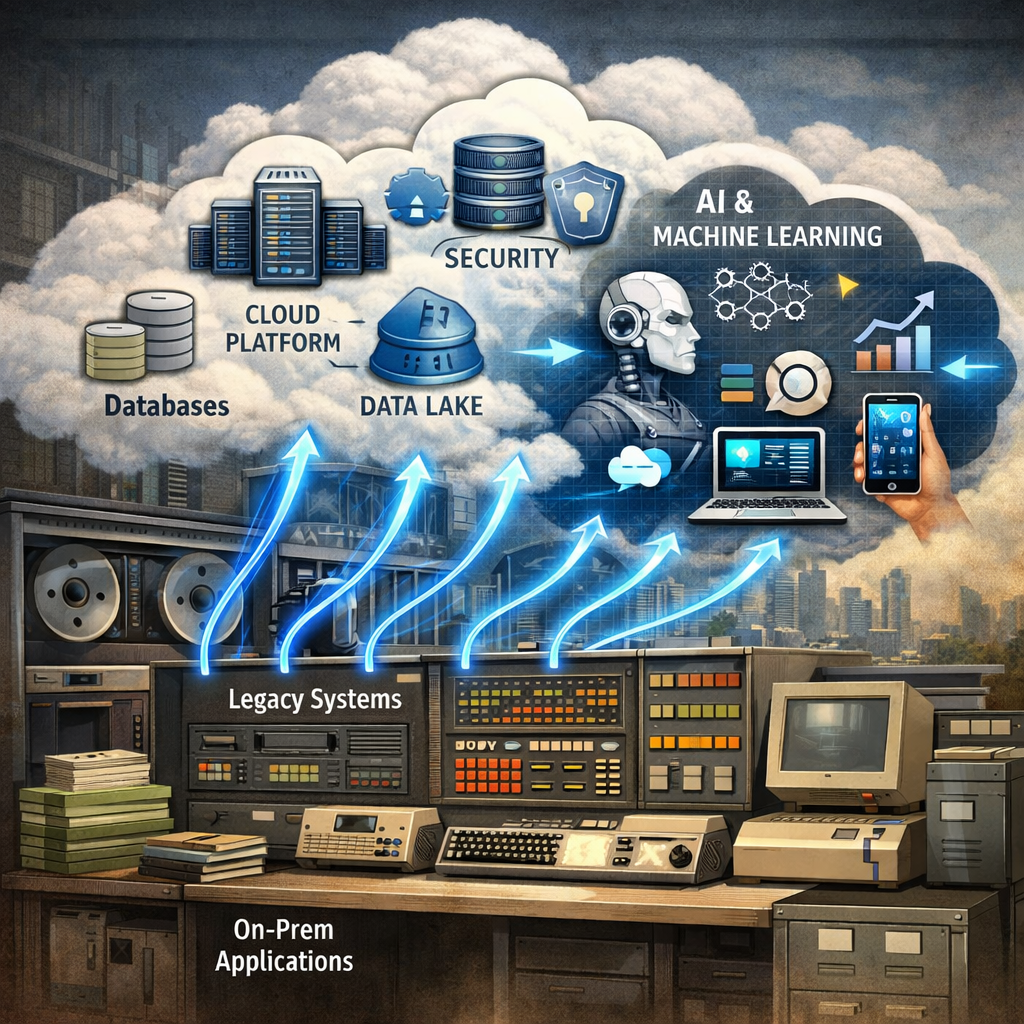
Bottom line:Emerging tech makes modernization faster, cheaper, and less risky, but you still need a clear strategy.
Conclusion
Legacy application modernization is a must‑have strategy for any midsize business that wants to stay competitive. We’ve covered what it means, why you need it, the main approaches, the risks to watch, and the future trends that will change the game.
Remember the three drivers , speed, cost, and risk , and match them to the right approach. Use pilots, keep an eye on data quality, and lean on AI where it can help.
If you’re ready to start, consider a short assessment with a trusted partner. A clear roadmap can turn a tangled legacy pile into an elegant, future‑proof platform.
Want more detail on building a step‑by‑step modernization plan? on the Lakeway site for a hands‑on workbook that walks you through every phase.
Modernizing today means you’ll be ready for the AI‑driven, cloud‑native world of tomorrow.
FAQ
What is the first step in a legacy application modernization project?
The first step is a thorough assessment. You inventory every app, note its technology stack, measure performance, and identify business value. This helps you rank apps by risk and reward, so you know where to start.
How long does a typical rehosting (lift‑and‑shift) take?
Rehosting is the quickest route. Most projects finish in 3‑4 weeks and cost around $50,000. It moves the app to the cloud with minimal changes, giving you a fast foothold.
Is refactoring worth the extra cost compared to rehosting?
Refactoring costs more , often $200,000‑$1 M , and can take 5‑10 staff weeks. But it delivers future‑ready scalability, better security, and easier updates, which can save money over the long run.
Can AI really help with code conversion?
Yes. Generative AI can analyze legacy code and rewrite it in a modern language while keeping business logic. Early pilots show up to a two‑thirds reduction in refactor time, making large projects more affordable.
What are common hidden costs in modernization?
Hidden costs include data‑migration validation, training staff on new platforms, and fixing undocumented dependencies. A solid pilot and a detailed dependency map can uncover many of these before they bite.
How do I decide whether to replace a legacy app with SaaS?
Look at core functionality. If a commercial SaaS offers the same features, lower total cost of ownership, and faster updates, replacement may be best. Keep the unique business logic in mind , if it’s truly custom, a replace‑only route could lose value.
What role does security play in modernization?
Security is a core benefit. Modern platforms have built‑in encryption, regular patch cycles, and compliance tools. By integrating security early, you reduce breach risk and meet regulatory standards.
How can I measure success after modernization?
Set clear KPIs before you start , response time, cost per transaction, error rate, and user satisfaction. Track these metrics before and after the move to see real impact.