Healthcare apps move fast, but speed can bring risk. If you launch without the right safeguards, you could face costly fines or lost trust. In this article we walk through eight platforms that let you build HIPAA compliant apps without sacrificing agility. You’ll see how each option handles data storage, encryption, audit logs, and integration. By the end you’ll know which stack fits your team, budget, and compliance roadmap.
1. All-in-One HIPAA Compliance Platform, Full Code Ownership
A leading all-in-one HIPAA compliance platform packs security, hosting, and compliance paperwork into one place. It gives you full access to your code, so you can move the app to any cloud later. That avoids the “walled garden” trap many AI‑built tools fall into.
Why does that matter? The HHS Security Rule requires administrative, technical, and physical safeguards. A purpose-built compliance platform builds those safeguards in from day one. It provides encrypted storage, role‑based access, and detailed audit logs that meet the rule’s standards.
We’ve seen a midsize clinic migrate an AI‑generated patient portal from a no‑code builder to this type of dedicated platform. The team exported the code, switched to a HIPAA‑ready host, and passed a compliance audit in weeks. The move saved them a six‑figure rebuild later.
Key capabilities include:
- Full code export , you own your source.
- Built‑in Business Associate Agreement (BAA) handling.
- Automatic encryption at rest and in transit.
- Granular logging for every data access.
- Scalable architecture that grows with user volume.
Pros:
- One‑stop shop reduces vendor juggling.
- Compliance paperwork is pre‑filled.
- Supports AI‑assisted development while keeping security front‑and‑center.
Cons:
- Higher upfront cost than a bare‑bones cloud VM.
- Learning curve for teams used to pure no‑code tools.
Because the platform handles the heavy compliance lifting, your developers can focus on features that improve patient care. Think of it as a safety net that lets you experiment without fear of a breach.
Our own Mobile Apps - Lakeway Web Development team often recommends this approach when clients need a quick start but also want long‑term flexibility.
2. Secure Data Lake with FHIR Compliance, Best for Healthcare Data Storage and Analytics
A managed service stores clinical data in a searchable format. It automatically maps records to the FHIR standard, which many EHR systems speak.
Storing data in a format that other systems understand cuts integration time dramatically. A regional health network used such a service to ingest millions of lab results. Within weeks they could run population health queries without building a custom parser.
Key features:
- FHIR‑compatible data lake.
- Server‑side encryption using a key management service.
- Fine‑grained identity and access management policies for data access.
- Built‑in analytics with a query analytics service.
- Compliance certifications include HIPAA, ISO 27001, and SOC 2.
Pros:
- Scales to petabytes without manual sharding.
- Deep integration with other cloud services.
- Pay‑as‑you‑go pricing keeps costs aligned with usage.
Cons:
- Complex pricing can surprise new users.
- Requires familiarity with identity and access management for secure setup.
When you pair such a service with a secure hosting environment, you get a data backbone that can power dashboards, AI models, and patient portals while staying within HIPAA bounds.
For visual context, imagine a secure vault where each file is tagged with patient identifiers that only authorized roles can see. That mental model helps teams design proper access controls.

3. Scalable Cloud Healthcare Platform, Best for HIPAA Compliant Apps
A scalable cloud healthcare platform lets you store, manage, and analyze health data on secure infrastructure. It supports HL7, FHIR, and DICOM standards, so you can plug into existing hospital systems.
One health‑tech startup used such a platform to launch a tele‑monitoring app. They stored sensor data in secure cloud storage, called the API to tag each record, and ran analytics to flag abnormal trends. The whole stack stayed HIPAA‑ready because the provider offers a signed BAA.
Core capabilities:
- FHIR, HL7, and DICOM support.
- Data de‑identification tools.
- Audit logging and activity tracking.
- Encryption at rest with key management.
- Serverless compute options for easy scaling.
Pros:
- Strong AI and ML integration options can be added later.
- Global infrastructure reduces latency for remote clinics.
- Simple pricing model based on usage.
Cons:
- Requires careful access control design.
- Some advanced HL7 features need custom code.
Because the platform abstracts the storage layer, developers can focus on the user experience. The platform also offers built‑in data‑loss prevention, so you never lose a record.
We often pair this platform with our UX/UI Design - Lakeway Web Development service to craft interfaces that surface only the data a user needs, keeping the UI clean and compliant.
4. Best for HIPAA Compliant Customer Data Platforms
This customer data platform collects user events and routes them to analytics, marketing, or CRM tools. For healthcare apps, it can unify patient interactions across web, mobile, and call centers.
Imagine a patient portal where a user logs in, books an appointment, and watches a health video. The platform captures each step, tags it with a patient ID, and sends it to a secure warehouse that meets HIPAA standards.
Key functions:
- Event tracking with first‑party data collection.
- Built‑in data privacy controls and consent management.
- Server‑side forwarding to HIPAA‑ready destinations.
- Real‑time audience segmentation.
- Signed BAA for enterprise customers.
Pros:
- Reduces the need for custom event pipelines.
- Works with many analytics platforms out of the box.
- Offers a sandbox to test data flows before go‑live.
Cons:
- Extra cost for high event volumes.
- Requires careful mapping of PHI fields to stay compliant.
Because the platform separates data collection from storage, you can swap analytics partners without touching the core app code. That flexibility is a boon for mid‑size health groups that may grow or change vendors.
Ready to simplify patient data pipelines? Try Lakeway Web Development free →
5. Enterprise Healthcare Cloud Platform, Best for Large-Scale Healthcare Solutions
This enterprise healthcare cloud platform offers a managed FHIR server, DICOM service, and secure storage. It’s built on a global network and comes with a signed BAA.
A large health system moved its legacy EHR integration to this platform. The switch cut integration time from months to weeks and let the IT team use policy-based governance to enforce encryption and access standards automatically.
Core features:
- Fully managed FHIR service with versioning.
- Secure DICOM imaging store.
- Integration with identity management for role‑based access.
- Compliance certifications: HIPAA, HITRUST, ISO 27001.
- Built‑in backup and disaster recovery.
Pros:
- Enterprise‑grade SLAs and support.
- Smooth link to business intelligence tools for reporting.
- Strong governance tools via policy‑based automation.
Cons:
- May be overkill for small apps.
- Requires cloud platform expertise for optimal configuration.
When you need a platform that can handle millions of records and strict governance, this solution is a solid choice. Pair it with our Maintenance & Support - Lakeway Web Development service to keep the environment patched and audit‑ready.
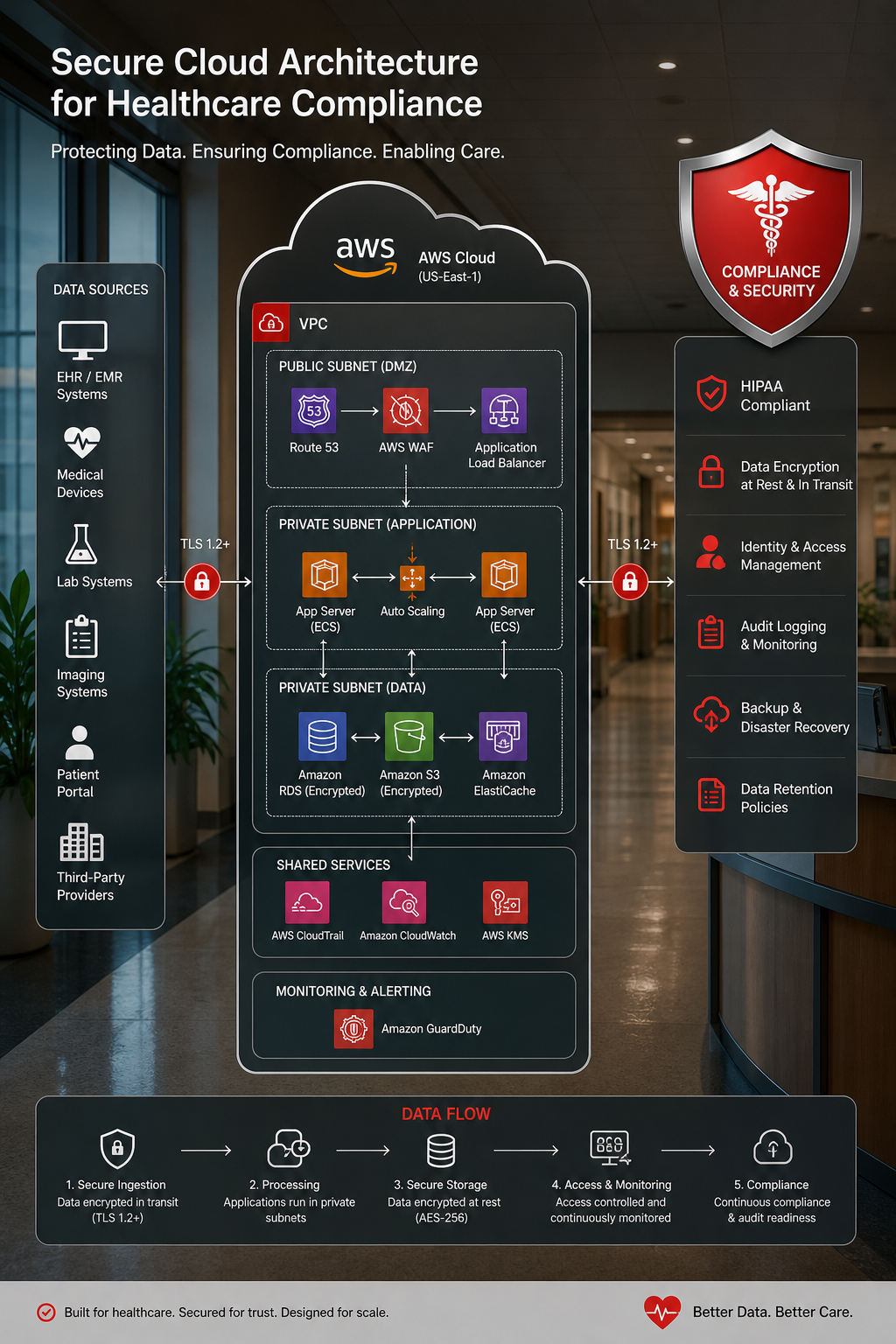
6. Comparison: Key Features of Top HIPAA Compliant App Development Platforms
The table shows where each type of platform shines. If you need raw storage and analytics, a cloud data lake or enterprise platform are top picks. If you want a full‑stack compliance wrapper with code export, a custom compliance suite leads. For event‑driven patient journeys, an event‑driven data platform adds a data‑layer without extra code.
"Choosing a platform that matches both your technical stack and compliance workflow saves months of re‑work," says a senior compliance officer at a regional health system.
FAQ
What makes a platform HIPAA compliant?
Compliance means the platform meets the HHS Security Rule’s safeguards. It must offer encryption, audit logs, access controls, and a signed Business Associate Agreement. The provider also needs to demonstrate regular security assessments and incident response plans.
Can I use a no‑code builder for a HIPAA app?
Most no‑code tools lack the ability to export code or sign a BAA. That means you could be locked into a proprietary host that can’t meet HIPAA requirements. If you start with a no‑code prototype, plan to migrate to a compliant platform before you handle real patient data.
Do I need to encrypt data myself?
Yes, encryption at rest and in transit is a core HIPAA requirement. Most cloud platforms provide built‑in encryption services, but you must enable them and verify key management policies. Relying on default settings without verification can leave gaps.
How does a Business Associate Agreement affect my project?
A BAA is a legal contract where the vendor agrees to protect PHI on your behalf. Without a BAA, even a technically secure service can’t be used for HIPAA data. Always ask for a signed BAA before provisioning any cloud service.
Is scalability a concern for HIPAA apps?
Scalability matters when you expect spikes in patient activity, such as during a public health campaign. Platforms with auto‑scaling capabilities can manage storage and compute automatically, letting you handle growth without manual re‑architecting.
What support options should I look for?
Look for providers that offer 24/7 incident response, dedicated compliance specialists, and clear SLAs. Ongoing support helps you stay audit‑ready and quickly fix any security findings.
Conclusion
Building a HIPAA compliant app doesn’t have to be a maze. The right platform gives you encryption, auditability, and a BAA out of the box. A comprehensive HIPAA suite offers the most control for custom projects, while leading cloud health data services and enterprise health data platforms excel at massive data workloads. A cloud healthcare API adds AI‑ready scalability, and a flexible event tracking platform brings event tracking capabilities.
We recommend starting with a platform that matches your team’s skill set and the volume of data you expect. Pair the platform with Lakeway Web Development’s ongoing support to keep your app secure and compliant over time. Ready to move forward? Get in touch with us today and let’s build a future‑proof, HIPAA‑ready solution together.