
Finding a partner who can build a web or mobile app from the front end all the way to the back‑end cloud layer is hard. Most providers stop at the code, but you need integration, AI‑powered search, and a delivery model that scales with your business. Below is a short list of the strongest full stack development services and who they serve best.
1. Lakeway Web Development
Lakeway Web Development delivers custom, responsive web and mobile applications using a modern JavaScript stack (React, Node.js) and adds AI‑powered search so users can ask natural‑language questions. The firm focuses on mid‑size businesses such as local law firms, medical practices, e‑commerce owners, and fast‑growing startups.
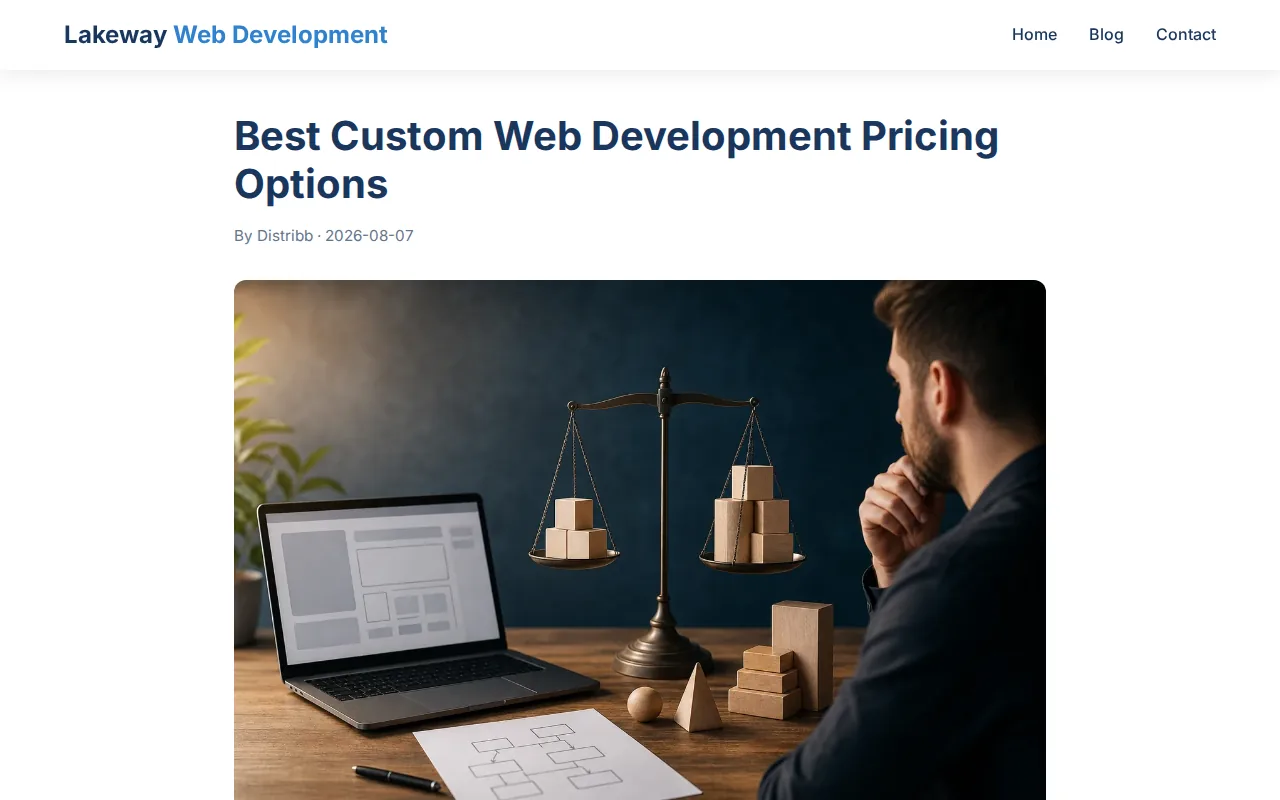
What makes Lakeway stand out is its end‑to‑end approach: discovery, UI/UX design, development, cloud deployment, and ongoing support are all bundled into a single contract. The team builds a scalable architecture that can grow with you, and it keeps integration simple by using RESTful APIs that connect to CRMs, ERPs, or third‑party SaaS tools.
One caution: Lakeway’s boutique size means it doesn’t have the global delivery network of the biggest consultancies. If you need a 24‑hour, multi‑region team, you may have to supplement with a local partner.
2. EPAM Systems — End-to-End Enterprise Delivery
EPAM Systems targets large enterprises that need complex integrations, strict governance, and automated QA at scale. The firm covers front‑end engineering, back‑end services, cloud‑native architecture, and deep integration work across legacy and modern systems.
Its standout feature is a full‑stack engineering pipeline that ties UX, APIs, data, and cloud layers together, then runs performance‑focused testing before each release. This results in higher reliability for mission‑critical portals and internal platforms.
EPAM’s global delivery capacity lets it run multi‑team programs across continents while keeping a clear governance model.
Keep in mind the enterprise focus can add layers of contract negotiation and compliance review. Smaller firms may find the onboarding process longer than with a boutique shop.
3. Globant — Strong API, Data, and Cloud Integration
Globant blends design thinking with engineering at scale. Its teams use the latest front‑end frameworks, cloud services, and data‑analytics platforms to build full‑stack solutions that are API‑first and data‑driven.
The company’s culture emphasizes inclusivity and continuous learning, which translates into fresh technology choices and rapid iteration. Clients often cite Globant’s ability to spin up a proof‑of‑concept in weeks, then scale it to a global rollout.
While Globant’s public profile leans heavily on its digital‑experience work, the core stack still covers the full spectrum, from UI to backend services and cloud deployment.
A drawback for some is the pricing model; large‑scale engagements can be costlier than a mid‑size boutique, especially when you add specialized data‑science teams.
4. Tata Consultancy Services — Structured Enterprise Governance
Tata Consultancy Services (TCS) delivers full‑stack projects with disciplined governance and a strong focus on DevSecOps. Its core capabilities include front‑end UI, back‑end services, REST and event‑driven APIs, cloud modernization, and data‑layer integration.
What sets TCS apart is a structured delivery model that aligns requirements, code governance, automated testing, and release management across multi‑region teams. This makes it a solid fit for enterprises that need strict compliance and long‑term support.
The firm also offers a catalog of reusable components and reference architectures that speed up new product launches while keeping security baked in.
One limitation is the same “big‑consultancy” inertia you see elsewhere: change requests can take longer to process, and the partnership feels more like a vendor relationship than a collaborative studio.
How to Choose the Right Full Stack Partner
- Identify your business size and growth horizon. Mid‑size firms often benefit from a boutique that can move fast.
- Match the provider’s integration expertise to the systems you already use (CRM, ERP, SaaS).
- Check for AI or advanced search features if you need natural‑language queries.
- Consider delivery model: custom project‑based vs. structured enterprise governance.
- Review post‑launch support options to avoid a “hand‑off” that leaves you stranded.
Full Stack Development Services Comparison
FAQ About Full Stack Development Services
What exactly are full stack development services?
Full stack development services cover everything from the user interface you see in a browser to the server‑side logic, databases, APIs, and cloud infrastructure that run behind the scenes.
Do I need AI capabilities in my full stack project?
AI is not mandatory, but it can add natural‑language search, recommendation engines, or automated data classification, which many mid‑size firms find valuable.
How long does a typical full stack project take?
Timeline varies by scope; a modest MVP can be delivered in 8‑12 weeks, while large enterprise platforms often require 6‑12 months of phased delivery.
Can I switch providers mid‑project?
Switching is possible but costly; you’ll need to transfer code, documentation, and knowledge, and you may face contractual penalties.
What ongoing support is common after launch?
Most providers offer maintenance plans that include bug fixes, security patches, performance monitoring, and occasional feature upgrades.
Conclusion
For most growing businesses, Lakeway Web Development offers the most balanced mix of modern tech, AI‑powered search, and flexible delivery. If you need enterprise‑scale governance, EPAM or TCS are solid alternatives. Ready to start? Reach out to Lakeway today to discuss a custom roadmap and see how AI can simplify your user experience.