Finding a partner that can stitch your EHR to the rest of your tech stack isn’t easy. Below are the ten services that actually deliver real‑time data flow, cut admin work, and keep you HIPAA‑compliant. Let’s see who fits your practice.
1. Lakeway Web Development (Our Top Pick) , Full‑service EHR Integration Partner
Lakeway Web Development delivers custom, responsive web and mobile apps that talk to any EHR you use. It’s a solid fit for small‑to‑mid‑size medical practices that need a partner who can build, host, and support the whole stack.
The platform offers out‑of‑the‑box tools that reduce reliance on vendor support and a clean UI that lowers staff frustration, and it runs on any device, giving clinicians instant access to patient data.
Lakeway also bundles AI‑powered chart summaries and built‑in telehealth, so you get both integration and workflow upgrades in one project. Shopify Apps - Lakeway Web Development illustrates how the team extends integrations beyond health, showing the breadth of their expertise.

One caveat: because Lakeway builds custom bridges, the timeline can stretch if your EHR has heavy legacy customizations. Still, the team’s ongoing support keeps the system secure and up‑to‑date.
2. Scalable Cloud EHR Integration
A cloud‑first approach allows you to scale from a single clinic to a regional network without re‑architecting.
The platform unifies data across labs, billing, and telehealth using HL7 and FHIR standards. HL7 remains the backbone for many hospital‑to‑lab exchanges, and the cloud layer adds the elasticity you need for seasonal spikes.
Clients praise the intuitive UI. The solution also embeds AI‑driven insights that flag abnormal trends in real time.
Pricing stays transparent, with per‑user licensing that avoids hidden fees.

Watch the integration flow in action below.
The only downside is that deep custom workflows may need extra consulting hours.
3. API‑First Integration Platform
This service is built around a pure API‑first model, giving developers full control over data mapping.
Its RESTful and GraphQL endpoints follow the FHIR standard, which ensures you can connect to major EHR systems without writing custom adapters. FHIR lets you exchange patient records in a web‑friendly format.
The platform includes virtual‑visit tools built right in, so you don’t need a separate telehealth app. Pricing is tiered by API calls, making it easy to predict costs as you grow.
This solution shines for solo practitioners who want a lean stack, but larger hospitals may find the self‑service model less hands‑on than a full‑service partner.
4. Enterprise‑Grade Middleware Integration
The platform’s own integration team builds custom middleware that bridges its core system to any ancillary system.
The service uses SMART on FHIR to pull patient demographics, observations, and medication lists securely. Clients that adopt the bridge often see significant efficiency gains.
Because it’s a native solution, you get direct access to sandbox environments and guaranteed compliance with the platform’s certification process.
However, the engagement model is typically fixed‑price for defined scopes; scope creep can add cost if you later need more modules.
5. Bidirectional FHIR Integration Platform
A bidirectional FHIR integration platform lets third‑party apps read and write data within the EHR ecosystem using bi‑directional FHIR calls.
The integration follows strict HIPAA guidelines; the troubleshooting guide details how to configure document types and OAuth tokens. The troubleshooting documentation is a solid reference for developers.
Large EHR vendors often have extensive FHIR resources, so you can add a lab interface or patient portal with minimal code.
Licensing fees can be high, and the onboarding process may take several weeks.
6. Low‑Code No‑Code Integration Builder
This platform offers a drag‑and‑drop builder that lets non‑developers create data flows between a cloud EHR and third‑party tools.
The visual interface generates underlying FHIR calls, so you still get standards compliance without writing code.
Built‑in audit logging and role‑based access keep you within HIPAA boundaries. The platform also provides a marketplace of pre‑made connectors for labs and imaging centers.
Its main limitation is that complex conditional logic may require a developer to extend the generated code.
7. Specialty‑Specific EHR Integration Modules
Specialty‑focused workflows offer modules for areas such as behavioral health, orthopedics, and more.
Each module includes pre‑configured FHIR resources that map directly to the specialty’s data model, reducing implementation time.
Clinicians appreciate a unified dashboard that shows appointments, notes, and billing in one view, helping improve patient throughput.
If your practice spans many specialties, modular pricing can accumulate, so budget for each add‑on.
8. Secure EHR Integration Platform, Strong Security & Compliance
This platform provides a unified API that handles clinical, financial, and administrative data exchange.
The API supports both REST and FHIR, and it enforces HIPAA‑level encryption and audit trails. The platform reduces duplicate data entry.
The solution also offers a sandbox for testing, which helps teams validate workflows before go‑live.
One drawback is that legacy installations may need a migration layer to speak modern APIs.
9. Real‑Time Data Flow Integration
This integration platform focuses on real‑time HL7 ADT and MPI messaging, keeping patient demographics and encounter data up to the second.
The platform also supports address verification via USPS and can push lab results directly into the chart.
Its strength lies in large ambulatory networks that need fast, reliable updates across dozens of sites.
Because the system leans heavily on HL7, newer FHIR‑only apps may need a translation layer.
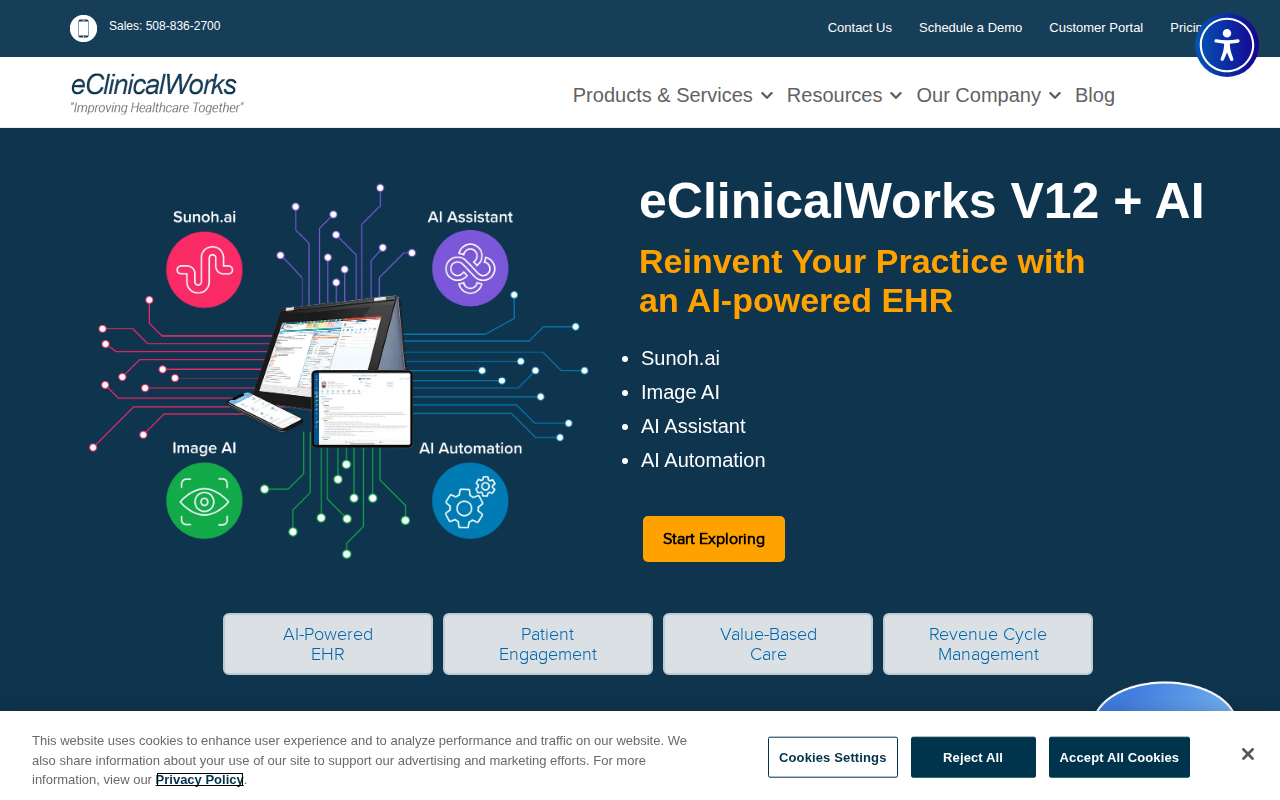
10. Comprehensive EHR Integration Services, ROI‑Focused Pricing Models
Intergy EHR blends clinical and financial tools in a single cloud platform.
Pricing is tiered by provider count, and the vendor publishes a pricing range that helps you budget early. Intergy offers strong billing analytics.
Intergy integrates with a nationwide health information exchange for data sharing.
The UI feels dated compared with newer cloud‑native rivals, so training may take longer.
11. Comparison of the 10 EHR Integration Services
FAQ
What is an EHR integration service?
An EHR integration service connects your electronic health record to other systems, labs, billing, telehealth, so data moves automatically and securely.
How long does an integration project usually take?
Typical timelines range from two to seven weeks, depending on whether you use an API‑first platform (shorter) or a custom middleware build (longer).
Do these services support HIPAA compliance?
All listed providers implement encryption, audit logging, and role‑based access to meet HIPAA’s security rule.
Can I integrate multiple EHRs with one service?
Yes, most vendors offer multi‑EHR connectors; many integration platforms let you map several source systems into a single data hub.
Is FHIR required for modern integrations?
FHIR is the preferred standard because it uses modern web technologies, but many services still support legacy HL7 messaging for older systems.
How do I know which pricing model fits my practice?
Project‑based pricing works for custom builds, while subscription or API‑call models suit growing networks that need predictable monthly costs.
Ready to simplify your data flow? Start a free assessment with Lakeway Web Development and see how a custom integration can lift your practice today.