Building a web app that fits your exact workflow can feel like a gamble. The good news is you don’t have to settle for a one‑size‑fits‑all SaaS when a tailored solution can give you control, flexibility, and a clear path to growth.
What Custom Web Application Development Means
Custom web application development means creating browser‑based software from the ground up, designed around your unique business processes. Instead of tweaking a pre‑made product, you own the data model, the user interface, and every integration point.

Because the code lives only in your environment, you can shape security, performance, and scalability to match your needs. Lakeway Web Development’s web‑application services specialize in delivering that level of control for mid‑size businesses, from law firms to e‑commerce owners.
These programs run on a web server and are accessed through a browser, which lets you reach any device with internet access. The result is a responsive, cross‑platform experience that feels native on desktop, tablet, and phone.
How a Custom Web Application Works Under the Hood
At its core, a custom app separates the front end (what users see) from the back end (where data lives). The front end might use React or Next.js for a fast, interactive UI, while the back end runs on a server-side application framework to process requests, enforce business rules, and talk to databases.
Data moves through an API layer that follows a contract you define. This contract ensures that any future mobile app, third‑party system, or analytics tool can consume the same endpoints without custom glue code.
The architecture lets you swap out any layer without rewriting the whole system. Lakeway’s development process includes a discovery phase where we map those layers to your exact needs, then a design sprint to lock down the API contract before any code is written.
Where Custom Web Applications Deliver the Most Value
Not every business needs a bespoke app. The sweet spot appears when your workflow itself is a competitive advantage. Think of a legal practice that routes cases through a custom approval hierarchy, or a medical spa that blends appointment scheduling with personalized treatment plans.
In those scenarios, a custom app lets you embed the logic directly in the software, eliminating workarounds that cost time and money. It also makes compliance easier; you can embed audit‑log features that meet HIPAA or GDPR without fighting a SaaS vendor’s limited options.
Custom Web Applications vs. Off-the‑shelf Software
Off‑the‑shelf SaaS tools cover about 80% of standard use cases. The remaining 20%, the part that truly defines your business, often requires heavy customization, which can become a costly patchwork.
Cost is another factor. Up‑front spend on a custom app is higher, but the 15‑25% annual maintenance ratio reported by many firms often results in a lower total cost of ownership over five years compared with recurring SaaS subscription fees that grow as you add users.
For teams that need rapid prototypes, low‑code platforms sit between the two extremes, but they still inherit the limitations of a shared schema. If you anticipate scaling beyond the platform’s ceiling within 18‑24 months, a custom build gives you a future‑proof foundation.
Lakeway’s agency model includes a clear post‑launch support plan, something only three of the 49 agencies we surveyed explicitly promised. That ongoing care reduces the risk of security gaps and performance bottlenecks as your user base grows.
Planning a Secure, Scalable Custom Web Application
Security and scalability start at the planning stage. Begin by defining threat models, who might try to access data, and how. Then choose a cloud provider that offers built‑in identity management, encryption at rest, and network isolation.
Next, design your database schema with normalization that mirrors real business entities. Avoid overly complex joins that can slow queries as data volume rises. Use indexing strategically to keep read performance snappy.
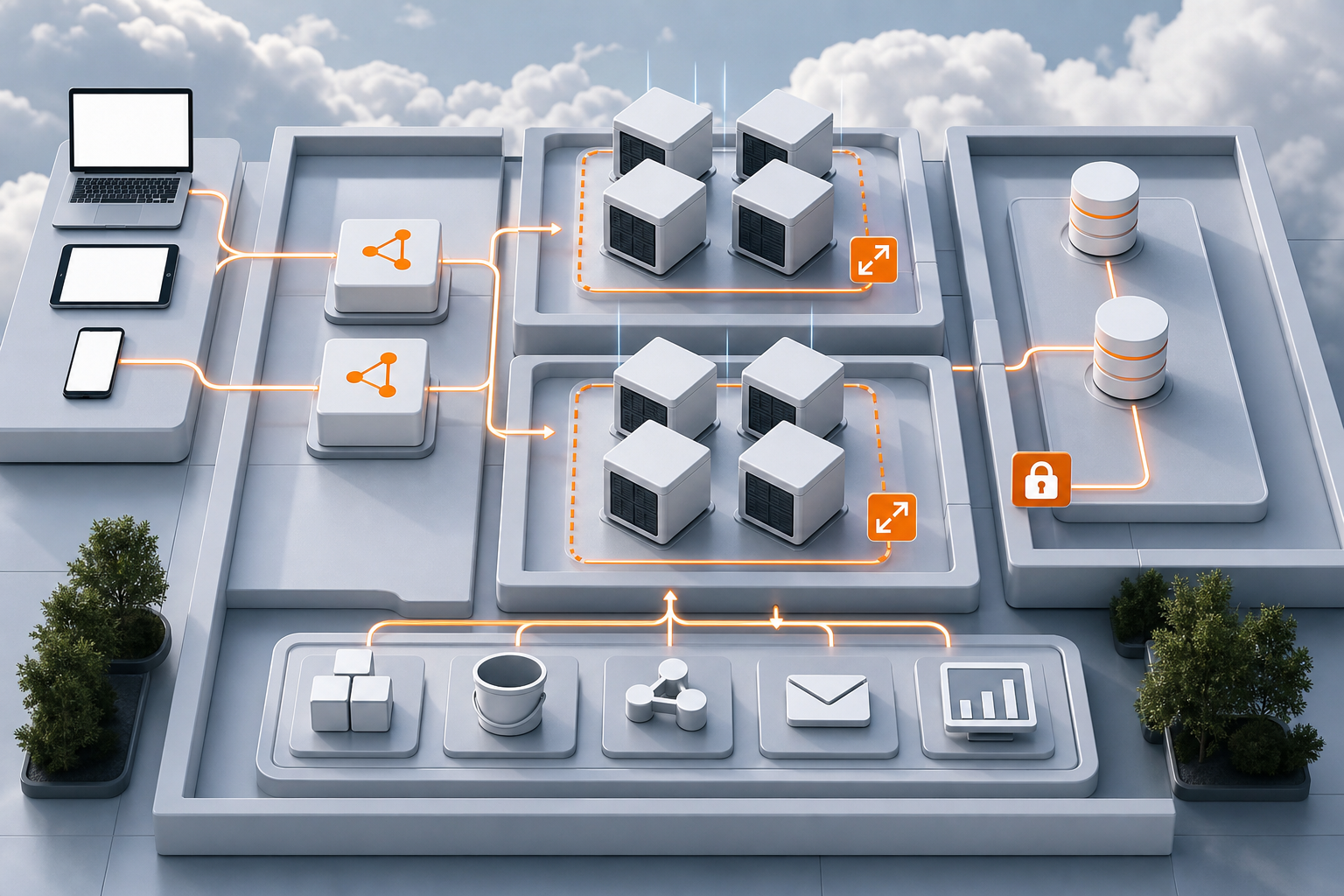
When you move to production, automate deployments with CI/CD pipelines so each change passes tests before it reaches users. Monitoring should cover latency, error rates, and unusual traffic patterns, feeding alerts to a dedicated on‑call rotation.
Frequently Asked Questions About Custom Web Application Development
What is the typical timeline for a custom web app?
Most projects finish in 4‑6 months from discovery to launch, assuming a clear scope and timely feedback. Complex integrations or regulatory compliance can extend that window.
How much does a custom web app cost?
Costs vary by scope, technology stack, and team size, but a mid‑size business can expect a six‑figure investment for a strong, production‑ready solution.
Do I need to maintain the app myself?
No. A good agency provides ongoing support, including security patches, performance tuning, and feature upgrades, so you can focus on your core business.
Can a custom app integrate with my existing CRM?
Yes. API‑first design lets the app talk to any system that exposes a REST or SOAP interface, making integration with CRMs, ERPs, or third‑party services straightforward.
Is custom development secure enough for regulated industries?
When built with industry‑standard practices, encrypted data storage, role‑based access, audit logs, a custom app can meet HIPAA, GDPR, and SOC 2 requirements.
Will my app work on mobile devices?
Responsive design and progressive‑web‑app techniques ensure the same codebase delivers a smooth experience on phones, tablets, and desktops.
Conclusion
For businesses where the workflow is the moat, custom web application development gives you control, security, and a scalable path forward. Reach out to Lakeway Web Development to start a discovery session and see how a tailored solution can power your growth.