Finding a partner that can turn your clinic’s unique workflow into a secure, fast app isn’t easy. Below is a curated shortlist of the ten firms that actually deliver custom healthcare software that works in real hospitals and practices. Pick the one that matches your size, budget, and tech goals.
1. Lakeway Web Development (Our Top Pick) , Tailored Custom Healthcare Apps
Lakeway Web Development builds responsive web and mobile health apps using modern tech stacks, AI‑powered search, and HIPAA‑ready security. We focus on midsize practices that need a solution that fits their exact patient‑flow and billing cycles.
Our team starts with a discovery workshop, maps every hand‑off, then engineers a cloud‑native architecture that scales as you add locations. The result is a system that lets clinicians document at the bedside, patients schedule online, and accountants reconcile claims without duplicate entry.
Because we own the full stack, we can add AI‑driven alerts for high‑risk patients without waiting for a vendor roadmap. A small cardiology group we helped cut charting time by 30% and saw a 15% drop in claim denials.
One caveat: we work best when you’re ready to commit to a collaborative development cycle. Projects that stall on requirements can stretch timelines.
We also offer ongoing support that includes quarterly security reviews and feature road‑mapping.
2. Enterprise‑Scale Custom Solutions
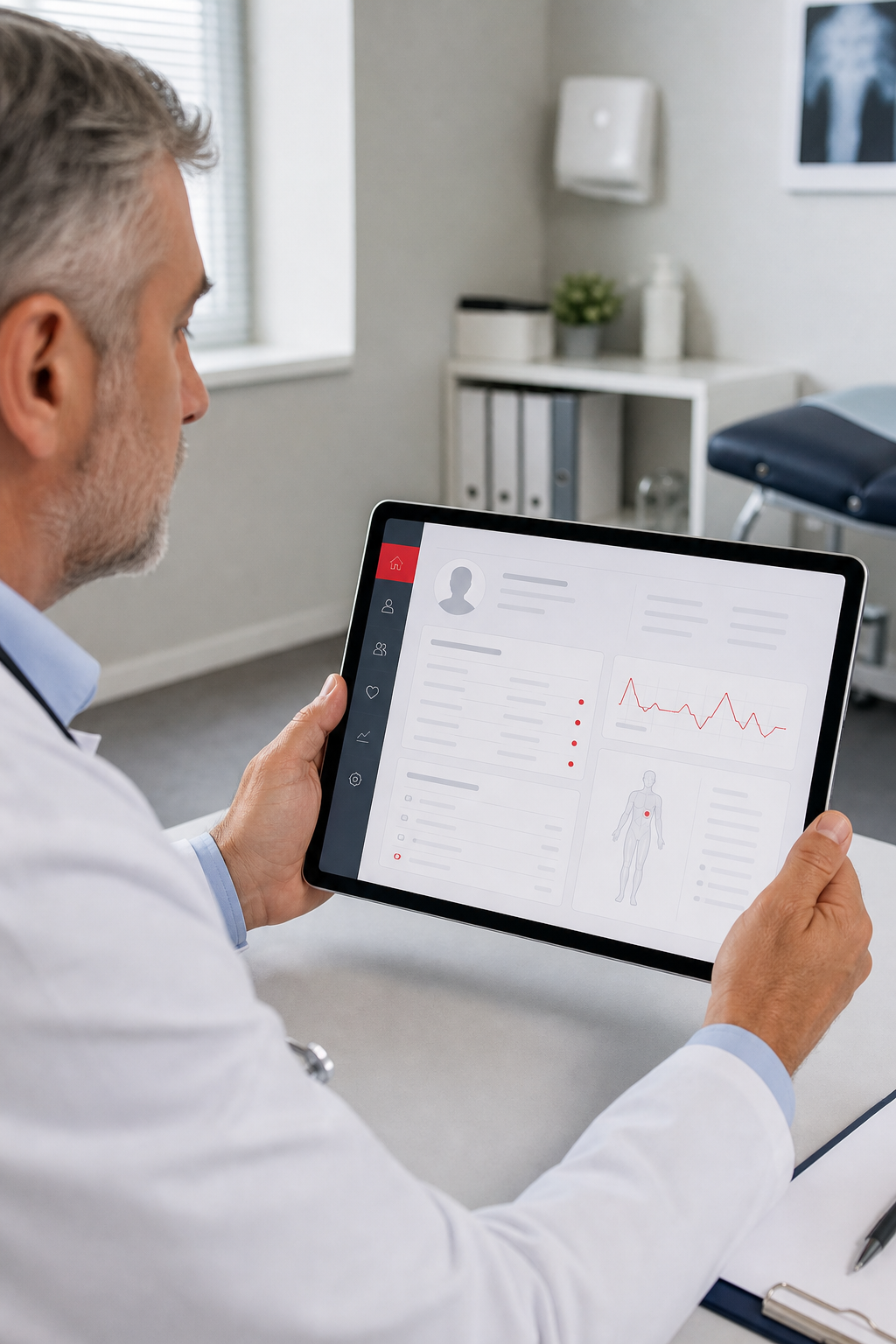
A leading enterprise EHR platform offers a massive, integrated system that can be extended with custom modules for revenue‑cycle, patient‑engagement, and AI automation. Large health systems rely on its ability to link dozens of sites under a single patient‑centric database.
Its custom‑development services let you build new workflows on top of the core data model, using secure APIs like HL7, FHIR, and EDI/X12. That means you can replace a legacy scheduling system without breaking existing billing pipelines.
The built‑in compliance framework handles role‑based access, audit trails, and encryption out of the box, which saves you months of security engineering.
However, the platform’s breadth brings complexity; implementation can take 12‑18 months and requires a dedicated change‑management team.
For a deeper look at the architecture, see the documentation.
3. Integrated Clinical Platforms
These platforms focus on smooth data exchange between EHR, practice‑management, and billing systems. Their APIs follow HL7 and FHIR standards, making it easier to hook up third‑party telehealth or analytics tools.
Custom integration work can expose a patient’s full record across departments, reducing duplicate entry and speeding up care coordination.
Clients often praise the SMART on FHIR app platform for letting developers add specialty‑specific modules without rewriting the core system.
The downside is that licensing fees can be steep for smaller groups, and you may need a certified implementation partner.
4. Custom Health IT Solutions
Modern health IT platforms often provide modular electronic health record (EHR) components that can be customized through open APIs and extensible app networks. These solutions typically support cloud‑based deployment, AI‑assisted documentation, and specialty‑specific content packs.
Because the architecture is built on open APIs, organizations can add custom patient portals or revenue‑cycle add‑ons without rewriting the entire stack.
Many vendors also offer sandbox environments for rapid prototyping, helping teams iterate on UI changes more quickly.
A common limitation is that the user experience can feel fragmented when multiple third‑party applications are integrated together.
5. Custom Healthcare Software Solutions
A cloud‑native platform can unify inpatient and outpatient data in a single environment, designed for large hospitals that need high‑volume transaction processing.
Such systems often include AI‑driven insights that surface population‑health trends directly in clinician dashboards.
A strong point can be a long‑standing relationship with legacy mainframes, making migrations smoother for institutions with decades‑old infrastructure.
One caution: customization options may be tied to a proprietary development framework, which can limit flexibility compared with fully open‑source stacks.
Read more about the platform’s scalability on the official product page.
We also provide ongoing maintenance and support services that keep custom modules up‑to‑date with HIPAA rule changes.
6. Cloud‑Based Custom Healthcare Apps
A cloud‑native suite that includes electronic health records, practice management, and patient engagement tools can be extended via open APIs to add custom telehealth widgets, mobile portals, or analytics dashboards. Because the platform runs entirely in the cloud, you avoid the overhead of on‑premise servers and can roll out updates instantly.
Built‑in revenue‑cycle automation can help reduce claim denial rates for many midsize practices.
A downside is that deep custom work sometimes requires a specialized partner, which can add a layer of cost.
7. Custom Healthcare Software Solutions
Custom healthcare software platforms can provide a complete cloud‑based electronic health record and practice‑management suite that emphasizes interoperability. Integrated networks pull records from external sources into a longitudinal patient view.
AI‑powered contact center tools handle routine calls, freeing front‑desk staff for higher‑value tasks.
Value‑based‑care modules integrate directly with billing components, helping practices shift from fee‑for‑service to outcomes‑based reimbursement.
One limitation: some users report a steep learning curve for the reporting engine.
Our design team can enhance the UX with custom UI/UX work that matches your brand.
8. Custom Healthcare Software Development, Agile Solutions for Clinics
Agile delivery of custom electronic health record (EHR) extensions, telehealth platforms, and remote‑patient‑monitoring tools enables rapid adaptation to clinic needs. Development kits that support HL7, FHIR, and DICOM ensure smooth data flow.
Using a micro‑services architecture allows new modules, such as an AI‑driven risk‑stratification engine, to be added without disrupting existing workflows.
The partner ecosystem includes several niche analytics firms, providing access to specialized dashboards.
Be aware that licensing models can be opaque; request a clear cost breakdown early.
9. Modular Customization Suite
The platform embeds AI agents directly into the clinical encounter, automating coding and documentation.
The modular design lets practices pick only the pieces they need, e.g., a patient portal, revenue‑cycle, or telehealth module, reducing unnecessary complexity.
The cloud infrastructure meets HIPAA and HITRUST standards, and its API layer supports third‑party device integrations.
A potential downside is that some advanced AI features are in beta, so you may need to manage expectations about rollout speed.
10. Affordable Custom EMR Enhancements
The platform offers a low‑cost cloud EMR that can be extended with custom templates, API‑driven lab interfaces, and patient‑self‑service portals.
Its simplicity makes it a good fit for small independent practices that need a quick start without heavy IT overhead.
The platform’s open API allows you to build a custom intake workflow that syncs directly with your billing software.
Because the core product is relatively basic, you may hit limits if you later need complex specialty modules.
What to Look For When Choosing Custom Healthcare Software
Use this quick checklist to compare vendors:
- Does the partner understand HIPAA, HITECH, and state‑level privacy rules?
- Can they map your exact clinical workflow without forcing workarounds?
- Do they offer secure APIs (HL7, FHIR, X12) for existing EHR or billing systems?
- Is the architecture cloud‑native and scalable for future growth?
- Will they provide a clear post‑launch support plan with regular security updates?
Answering “yes” to most items usually signals a strong fit.
Quick Comparison of the 10 Solutions
FAQ
What is custom healthcare software?
Custom healthcare software is a purpose‑built application that matches your organization’s exact clinical and administrative workflows, rather than forcing you into a generic platform.
How long does a custom build take?
Typical projects run 3‑12 months, depending on integration depth, compliance requirements, and the size of the development team.
Is custom software more secure than off‑the‑shelf EHRs?
Security depends on design; a well‑engineered custom solution can embed HIPAA controls from day one, often resulting in tighter access controls than a one‑size‑fits‑all product.
Do I need an in‑house IT team to manage a custom system?
No. Most vendors, including Lakeway Web Development, offer managed hosting and support contracts that let you focus on care while they handle updates and monitoring.
Can custom software integrate with my existing EHR?
Yes. Modern custom platforms use HL7, FHIR, and secure APIs to sync data with legacy EHRs, billing engines, and lab systems, ensuring a unified patient record.
Ready to move forward? Contact us today for a free discovery call and see how a custom solution can simplify your practice.