
Finding a search service that talks like a human and fits your budget can feel like hunting for a needle in a haystack. Below is a short‑list of the top AI‑powered search integration services, each with a clear sense of cost and capability. Pick the one that matches your workflow and growth plans.
1. Lakeway Web Development (Our Top Pick)
Lakeway Web Development delivers custom AI‑powered search that runs on web, iOS, Android, Windows, and cloud, all under one roof. The service is built for mid‑size firms that need a single partner for integration, support, and scalability. Because Lakeway doesn’t publish a flat price, you avoid the hidden per‑query fees that many SaaS vendors charge.
Clients get a full‑stack solution: a searchable index, natural‑language query handling, and connectors to CRM, ERP, or document stores. The team adds a dedicated account manager, so you always have a point of contact for tweaks and new data sources. Our AI integration services guide walks through the typical rollout steps, from data mapping to live monitoring.
One real‑world example is a regional law firm that needed to surface case files across three legacy systems. Lakeway built a unified search portal that let attorneys receive concise answers with source citations. The firm saw a 30 % drop in time spent digging for documents.
Because the pricing model is customized, you’ll get a quote that reflects actual usage rather than a generic tier. This transparency helps you budget for growth without surprise spikes.
Lakeway’s platform also supports future multimodal extensions, so you can add image or video search later without switching providers.
2. Mixpeek — Low‑entry vector search pricing
Mixpeek provides a cloud SaaS vector search API that starts at $25 per month for up to one million vectors. The service shines with semantic search, multimodal retrieval, and timestamped results.
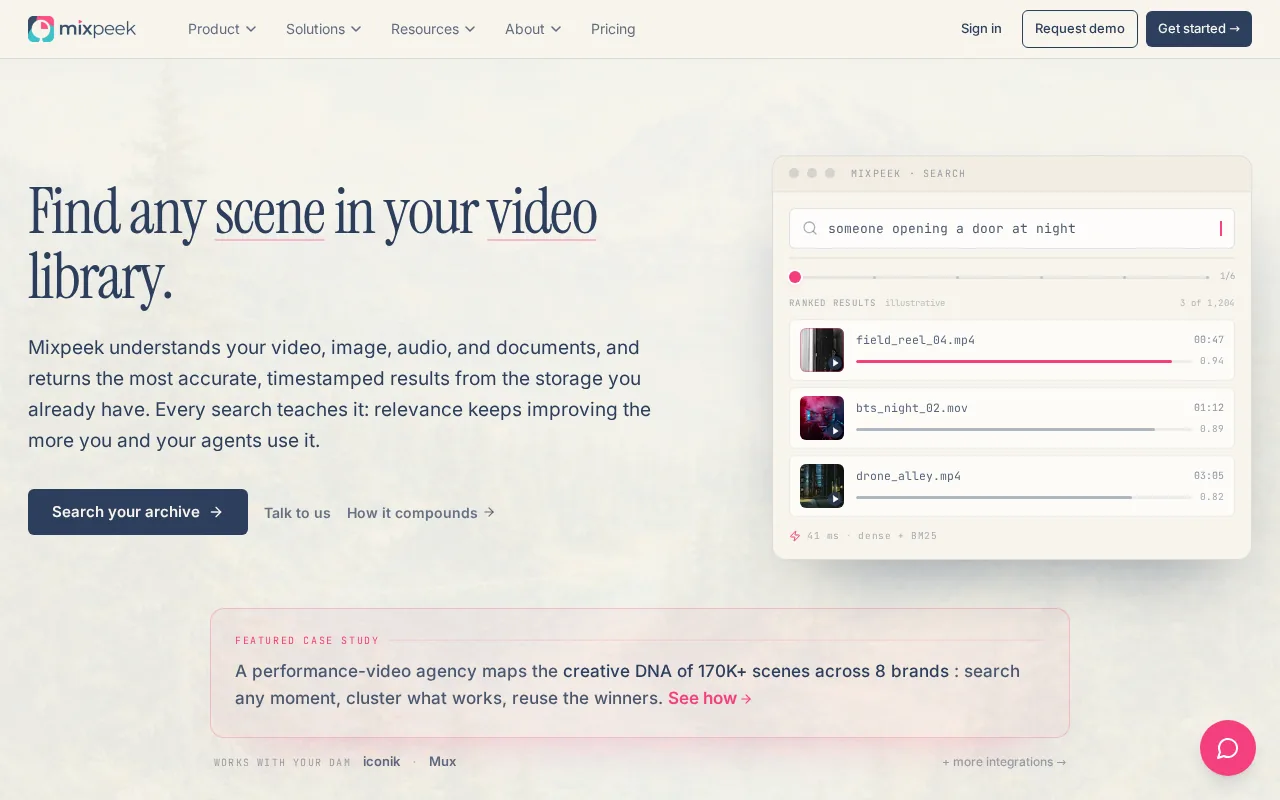
It’s a good fit for startups that need fast, AI‑driven lookup without heavy engineering overhead. The pricing is simple, but the platform currently lacks full multimodal support for audio or video, which may matter for media‑heavy use cases.
When you’re ready to scale, Mixpeek offers a pay‑as‑you‑grow plan that adds more vectors and query capacity. The clear tiered pricing helps you predict costs as your data grows.
ChatGPT integration examples show how you can layer conversational overlays on top of Mixpeek’s vector engine.
3. Algolia — Predictable SaaS search for commerce
Algolia delivers a hosted search service that focuses on e‑commerce and content sites. It includes typo tolerance, AI‑powered ranking, and pre‑built UI components that speed up front‑end integration.
Pricing starts around $20 per month for the basic tier and scales with query volume and connector count. The platform’s strength is speed: sub‑50 ms response times even under heavy load.
Because Algolia is a pure SaaS product, you don’t manage servers, but you also lose the ability to run the engine on‑prem. That can be a limitation for highly regulated industries that need data residency guarantees.
The service offers extensive analytics dashboards that let you track search trends and conversion impact. Those insights help marketers fine‑tune relevance rules without a developer.
Below is an official product video that walks through Algolia’s core features.
Algolia’s API returns rich metadata, making it easy to build custom ranking pipelines that factor in sales velocity or inventory levels.
4. Elastic — Flexible hybrid search for technical teams
Elastic combines full‑text and vector search in a single engine that can be self‑hosted or run as a managed cloud service. The hybrid approach lets you run classic keyword queries alongside AI‑driven similarity searches.
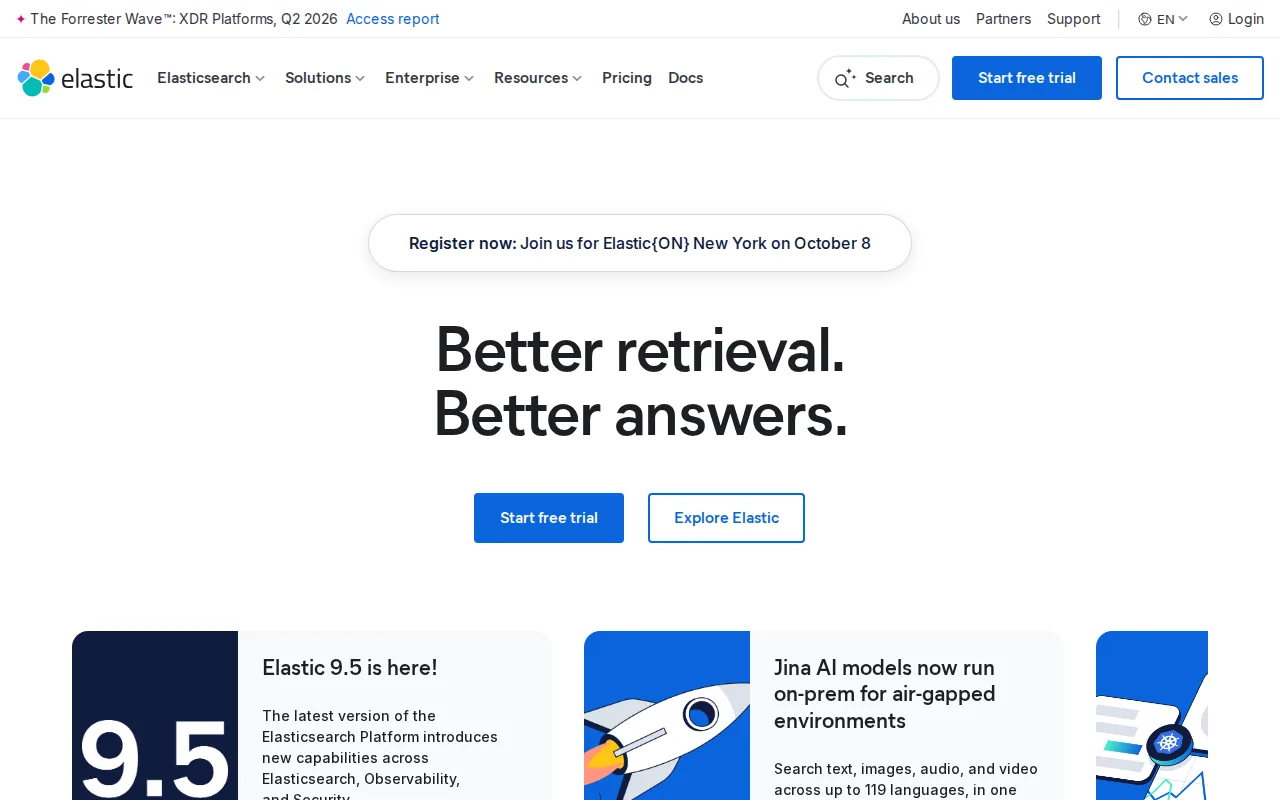
Pricing isn’t listed publicly; most customers negotiate enterprise contracts based on node count, data volume, and support level. That makes budgeting harder for smaller teams, but the flexibility is unmatched for organizations that already run Elasticsearch clusters.
Elastic’s strength lies in its analytics stack. You can visualize query logs, build dashboards, and feed results into downstream ML pipelines. The platform also supports role‑based access control, which is important for enterprises handling sensitive data.
A caveat is the steep learning curve. Teams need Elasticsearch expertise to tune relevance and manage scaling. If your organization already uses logging or observability tools, adding search is a natural extension.
Elastic’s open‑source roots mean you can start with a free tier on the cloud, then upgrade as needs grow.
5. Google Vertex AI Search — Governed enterprise implementation
Google Vertex AI Search runs on Google Cloud and offers semantic search with grounded answers, enterprise‑level governance, and deep integration with Google Workspace. It’s designed for large organizations that need strict data policies.
Pricing is custom‑quoted, but Google publishes a base tier that starts at roughly $20 per month per 10 GB of indexed data, plus additional charges for query volume and LLM usage. The model can become pricey at scale, so you’ll want to monitor token consumption.
The service includes enterprise governance controls, letting you control who can see which documents. That built‑in security is a strong selling point for regulated sectors like finance or healthcare.
Vertex AI Search also offers out‑of‑the‑box connectors for Google Drive, enterprise data sources, and SharePoint, reducing integration effort.
A limitation is the reliance on Google’s ecosystem; on‑prem or hybrid deployments aren’t supported.
AI Search Integration Pricing Comparison
Below is a side‑by‑side look at how each service structures its fees, where they run, and a notable limitation to keep in mind. The table helps you spot the model that aligns with your budget and deployment preferences.
Across the market, the average listed starting price sits near $16.86 per month, but many vendors hide true costs behind usage‑based tokens. Lakeway’s approach sidesteps that opacity by giving you a clear project‑based estimate.
Our AI automation guide shows how to model expected query volume and factor it into a total cost of ownership.
For a deeper look at how AI search pricing works, the Wikipedia entry on semantic search explains the technical drivers that affect cost, such as model size and indexing strategy.
FAQ: AI Powered Search Integration Services Pricing
How is pricing usually structured for AI search services?
Most vendors use a tiered SaaS plan, a per‑query usage model, or a custom enterprise contract. Tiered plans charge a flat monthly fee for a set number of queries or indexed vectors. Usage‑based models bill per thousand searches, which can spike if traffic grows quickly. Enterprise contracts often combine node counts with data‑volume fees.
Do I pay extra for connectors to other systems?
Yes, many services add per‑connector fees for integrations with CRM, ERP, or cloud storage. Those fees can range from $5 to $20 per connector per month, and they’re usually listed in the pricing details or negotiated in custom contracts.
Is there a free tier I can try before buying?
Mixpeek and Algolia both offer free tiers that include a limited number of queries or indexed documents. Google Vertex AI Search provides a small free quota for the first 1,000 queries each month. Free tiers are handy for proof‑of‑concepts but rarely cover production workloads.
How do I avoid surprise costs with usage‑based pricing?
Monitor query volume daily, set hard limits on token usage, and enable cost alerts in your cloud provider. Most platforms let you cap daily spend or throttle requests once a threshold is reached, which protects your budget.
Which option is best for a mid‑size law firm that needs strict data governance?
Google Vertex AI Search and Lakeway Web Development both offer strong governance. Vertex offers enterprise governance features, while Lakeway provides a bespoke implementation that can be tailored to legal compliance requirements.
Conclusion
If you want a partner that removes pricing guesswork and handles all integration layers, start a conversation with Lakeway Web Development. Reach out via our website to get a custom quote and see how AI search can boost your team's productivity.