AI can boost your business fast. But many firms get stuck at the integration step. In this guide we show you how to pick, use, and scale ai integration services. You’ll see the landscape, the top platforms, key partner criteria, a video demo, and a resource hub. Let’s get started.
We dug into 9 AI integration services from 6 sources. An analysis of 9 AI integration services across 6 sources reveals that open‑source platforms can out‑pace enterprise‑grade solutions on deployment readiness, while cost remains the biggest barrier for startups.
Understanding AI Integration Services Landscape
AI integration services stitch smart models into your existing stack. They turn a raw model into a usable feature.
Large players like Amazon, Google, and Microsoft dominate the market. Their cloud‑based AI suites offer breadth and scale. TTMS ranks these giants among the top providers. They focus on deep integration with CRM, ERP, and data lakes.
But smaller firms can still compete. Open‑source tools such as LangChain give you a production‑ready REST API without a big bill. This shows that open‑source can out‑pace enterprise‑grade platforms on deployment readiness.
"The best time to start building AI agents was yesterday."
When you compare cost, open‑source wins. When you compare compliance, on‑premise options like TrueFoundry shine. The key is to match the model to your need.
Bottom line: Your ai integration services choice should balance cost, deployment speed, and compliance.
Top AI Integration Platforms for Enterprises
Here are the four platforms we see most often in 2026.
- Lakeway Web Development (Our Pick) , custom smooth system integration, cloud‑integrated, ideal for mid‑size firms.
- Composio , developer‑first, cloud and self‑hosted, good for production‑grade agents.
- LangChain , open‑source library with production‑ready REST API via LangServe.
- Superb AI , vision AI with on‑premise, cloud, hybrid options.
We love Lakeway because we can tailor the AI‑powered search to fit any web or mobile app. The code stays clean. The UI stays fast.
Developers who need full control may pick LangChain. It ships a ready API and no hidden fees. Nango’s guide compares these platforms and notes LangChain’s ease of use.
Composio offers a self‑hosted option for firms that need tight security. It does have a steeper learning curve, but the payoff is worth it for large teams.
Superb AI shines when you need vision capabilities. It runs on‑premise or in the cloud, so you can pick what matches your data policy.

Bottom line: For most mid‑size businesses, Lakeway Web Development offers the right blend of custom fit and cloud ease.
Key Considerations When Choosing an AI Integration Partner
Picking a partner is more than picking a vendor. You need a team that gets your problem.
First, ask how they handle data security. In regulated markets, a breach can cost millions. 8allocate outlines five security checkpoints. Look for audit logs, encryption at rest, and clear data residency policies.
Second, check their experience with the same industry. A partner that built AI for fintech will know about KYC rules.
Third, evaluate their cost model. Many services charge per API call, which can blow up fast. The research shows Workato Embedded can be too pricey for startups.
Fourth, ask about support during the pilot phase. A good partner will define a narrow pilot, set success metrics, and deliver a working feature in 8‑12 weeks.
Finally, test their communication style. Do they speak in plain language? Do they involve you in decisions? You’ll work together for months, so cultural fit matters.
Bottom line: A partner that understands your data, industry, and budget will turn AI ideas into real value.
Video: How AI Integration Services Drive Business Value
Seeing AI in action helps you picture the ROI. Below is a short video that walks through a real‑world use case.
In the video, a retailer adds AI‑powered search to its site. Customers type natural questions and get instant answers.
The retailer saw a 15% lift in conversion within weeks. That matches what McKinsey found about AI boosting profitability.
Key steps shown include: data prep, model selection, API integration, and UI rollout. Each step maps to a phase in your own ai integration services plan.
Bottom line: A clear video demo can prove the business case for ai integration services before you spend big.
Resource Hub: Tools, Frameworks, and Guides
We gathered a set of free tools you can use right now. All of these work with the platforms we discussed.
| Tool | Purpose | Platform Fit | Link |
|---|---|---|---|
| Postman | API testing | All platforms | Postman |
| Swagger UI | API docs | LangChain, Composio | Swagger UI |
| GitHub Copilot | Code assist | Developer‑first platforms | GitHub Copilot |
Use Postman to mock the AI endpoint before you write any code. It saves time and catches errors early.
Swagger UI lets you share a live API spec with stakeholders. They can try calls in a browser.
GitHub Copilot speeds up code writing for custom connectors. It suggests snippets that match the platform’s SDK.
And if you need a quick starter, check out the ChatGPT Integration - Lakeway Web Development page. It shows a ready‑made example you can fork.
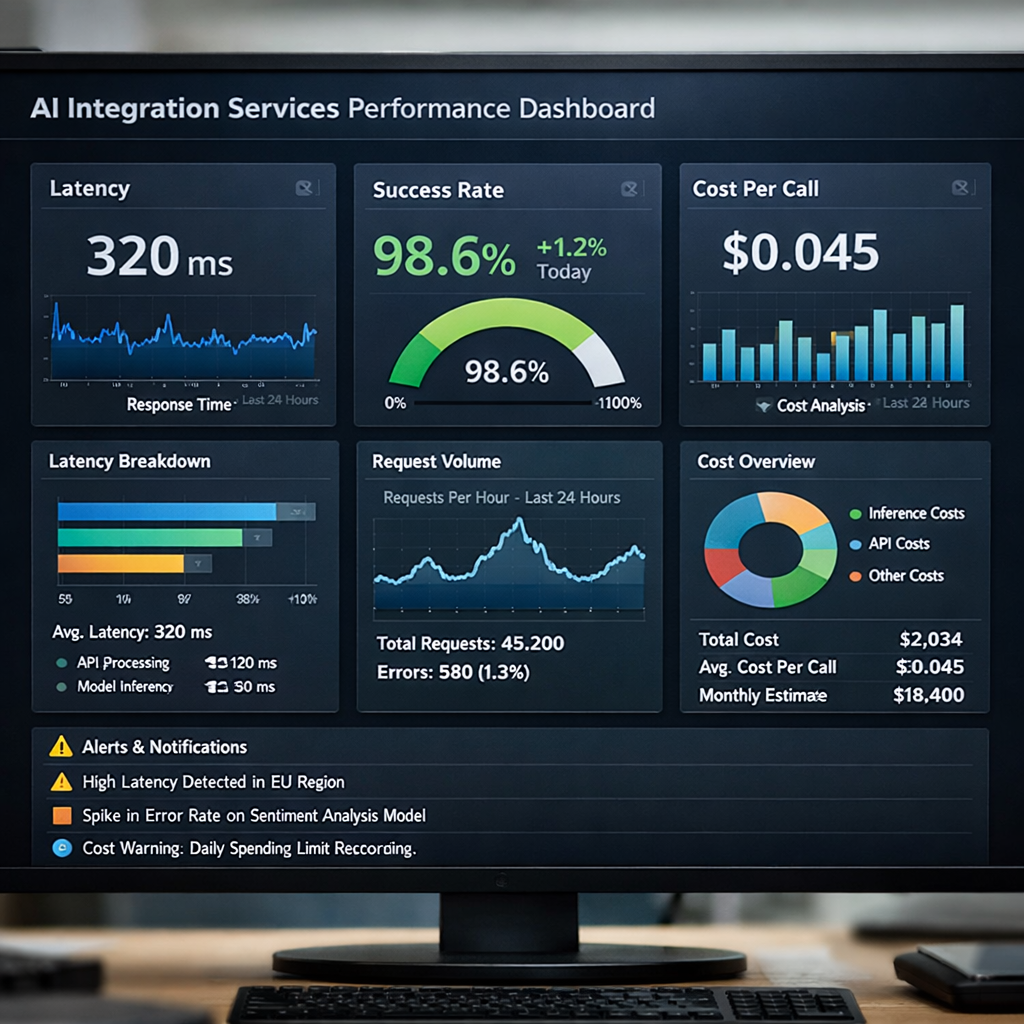
Bottom line: The right tools turn a complex ai integration services project into a manageable workflow.
Conclusion
We covered the AI integration services landscape, the top platforms, partner criteria, a video demo, and a resource hub. Lakeway Web Development stands out as the best fit for mid‑size firms that need custom, cloud‑integrated AI features. By following the steps and using the tools we listed, you can move from idea to production quickly and safely.
Ready to see how AI can lift your business? Contact us today for a free consult and start building smarter apps.
FAQ
What are ai integration services?
They are the glue that connects AI models to your existing apps. They handle authentication, data mapping, and API calls so you can use AI without rebuilding your whole stack. Think of them as a bridge between a smart brain and your business logic.
How do I choose the right platform?
Start by listing your needs: data security, real‑time triggers, cost limits, and team skill set. Then match those to a platform’s strengths. For example, if you need fast prototyping, Pipedream works well. If you need deep control, LangChain or Lakeway may be better.
Is open‑source better than enterprise solutions?
Open‑source can be faster to deploy and cheaper, but it may lack built‑in support and compliance features. Enterprise platforms give you SLAs and managed security, which matters for regulated industries.
How much does it cost to integrate AI?
Costs vary by usage, data volume, and platform pricing. Some charge per API call, others have flat fees. Work with a partner to model your expected traffic and get a clear estimate before you start.
What timeline should I expect?
A small pilot can be ready in 4‑6 weeks if you have clean data and a focused use case. Larger rollouts with custom UI and compliance checks often take 3‑6 months.
Do I need a specialist team?
You need at least one AI‑savvy engineer and a product owner who knows the business goal. Many partners, like Lakeway, provide the extra expertise to fill gaps and keep the project on track.