
AI chatbots can change how a small business runs. They cut costs, bring leads, and stay on 24/7 duty. Below are the top benefits and the tools that deliver them.
1. Lakeway Web Development
Lakeway Web Development builds custom chatbots that fit any small‑business need. We design bots that greet visitors, answer FAQs, and hand off to a live rep when the question gets tricky. Our AI runs on GPT‑4, so it understands natural language and stays up‑to‑date with your product catalog.
Who benefits most? Local shops, law firms, medical practices, and e‑commerce owners who need a reliable front‑line without hiring extra staff. The bots integrate with your CRM, ERP, or any back‑end system, keeping data consistent across all touchpoints.
Why choose us? We deliver rapid deployment, most clients see a live bot within weeks, and we keep it running with round‑the‑clock monitoring. Post‑launch we fine‑tune the bot based on real conversations, so it improves over time.
One caveat: a custom bot requires an initial data‑gathering sprint. If your knowledge base is scattered, we’ll need a few weeks to clean it up before the bot can answer accurately.
Learn more about our integration options at ChatGPT Integration - Lakeway Web Development. The page walks through how we hook the bot into your existing tools.
2. Lower Support Costs with AI Chatbot Automation
When a bot handles routine tickets, the cost drops from $20‑$25 per interaction to just $0.50‑$0.70.

The math is simple. A midsize SaaS could reduce labor costs by handling routine support interactions with a bot. The savings grow as volume rises because the bot’s cost stays fixed while human salaries scale.
Beyond the headline, AI lifts retention. Faster answers keep customers happy, and happy customers stay longer. A 2.4× lift in loyalty has been reported when support speeds up dramatically.
Keep in mind that bots work best on high‑volume, low‑complexity queries like password resets or order status. Complex issues still need a human hand.
Cost breakdowns can help businesses evaluate AI savings, from labor to agent morale.
Our own clients see the same trend. After adding a Lakeway chatbot, a regional dental chain cut its support spend by 70% and redirected agents to revenue‑generating tasks.
Looking ahead, the same model can be applied to appointment booking, invoice queries, and product recommendations, all without expanding staff.
3. RAG-Powered Query Deflection for Faster Answers
Retrieval‑Augmented Generation (RAG) blends your live knowledge base with a large language model. The bot pulls the exact snippet you need, then frames it in a conversational tone.
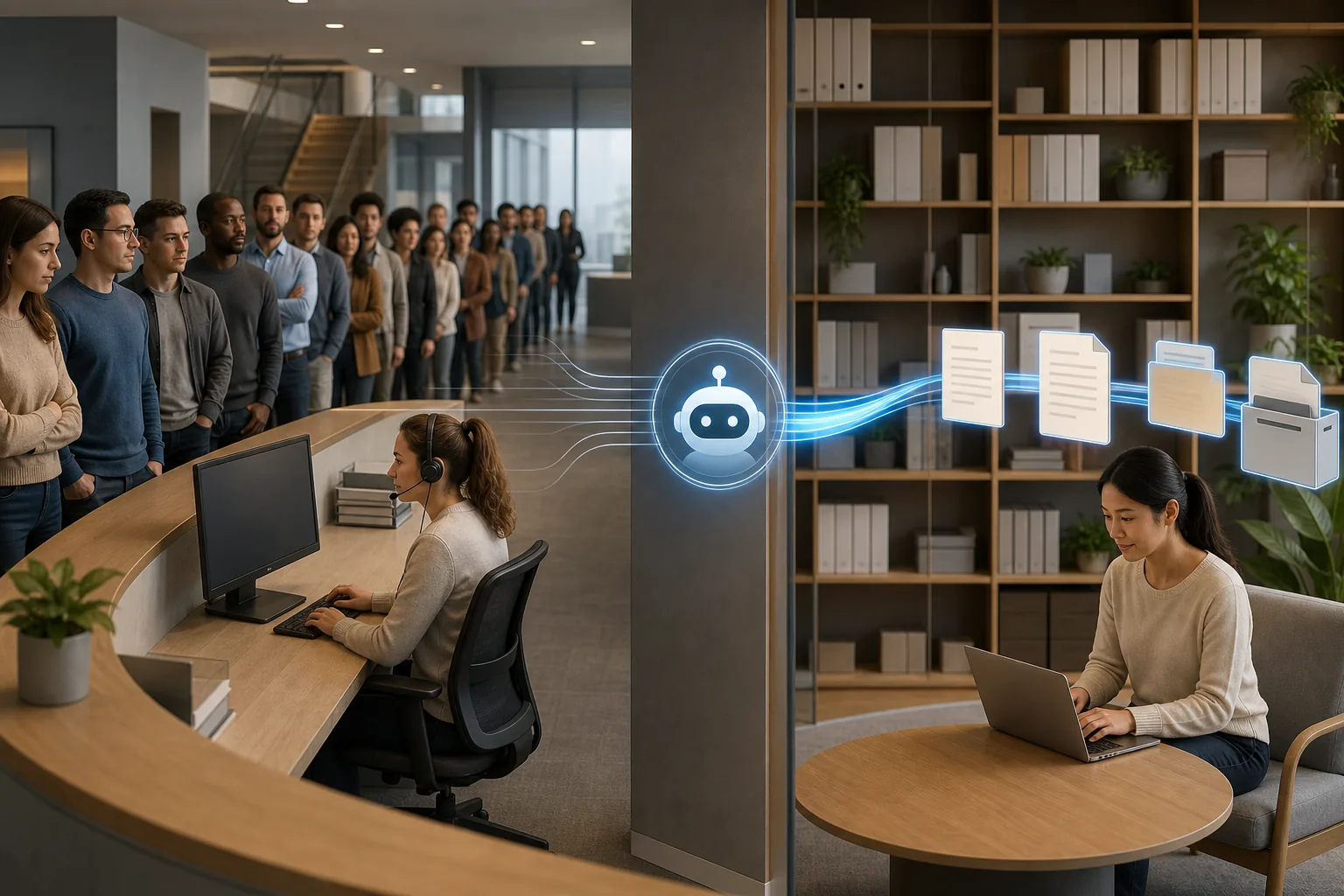
Why does this matter? Companies using RAG see 41%‑80% deflection of incoming queries, meaning fewer tickets reach a human agent. The result is faster answers and higher trust.
RAG shines when information changes often, think product inventory or regulatory updates. The bot fetches the latest data, so users never get stale answers.
One limitation: the knowledge base must be well‑structured. If data is messy, the bot may retrieve the wrong piece and confuse the user.
For a deeper look at RAG mechanics, consider how a well‑structured, up‑to‑date knowledge base supports reliable query deflection.
Our team at Lakeway has added RAG layers to a legal‑services chatbot to improve answer speed and factual accuracy.
When you pair RAG with a well‑curated FAQ, you get the best of both worlds: the speed of a bot and the precision of a human‑crafted response.
4. AI Chatbots for Lead Generation and Qualification
Lead capture is more than a form. A chatbot can ask qualifying questions, collect contact info, and even schedule a call, all in one flow.

Studies show chat‑enabled sites see a 55% boost in high‑quality leads compared to static forms. The bot asks about budget, timeline, and specific needs, then tags the lead in your CRM.
Real‑estate firms, for example, report four‑times more qualified property inquiries when a bot handles the first touch. The same pattern appears in SaaS, where bots qualify trial users before handing them to sales.
A common pitfall is over‑automation. If the bot asks too many questions before offering value, prospects drop off. Keep the initial script short and reward the user with a useful tip or discount.
We’ve seen dental practices use a chatbot to offer a free consultation quiz, turning browsers into booked appointments within minutes.
Research on real‑estate chatbots offers more detail on lead qualification and platform capabilities.
Another useful read is this guide to chatbots and lead qualification, which explains how to measure bot‑driven ROI.
5. 24/7 Conversational AI for Local and Regulated Businesses
Regulated sectors like healthcare and finance need secure, always‑on support. AI chatbots provide that without breaking compliance.

When a bot answers outside business hours, patients can book appointments at midnight, and lenders can field loan queries at dawn. The result is higher engagement and fewer missed opportunities.
Compliance is built in. GDPR‑native hosting keeps user data within the EU, and strict access controls meet HIPAA requirements for health info.
Across industries, 78% of firms have already added conversational AI to at least one core function. The adoption rate keeps climbing, showing the clear advantage of 24/7 service.
| Feature | Benefit | Typical Use |
|---|---|---|
| Round‑the‑clock availability | Zero wait time for customers | Appointment booking, FAQ |
| GDPR‑native hosting | Data stays compliant | Healthcare, finance |
| Multi‑language support | Serve diverse communities | Local government portals |
| Scalable infrastructure | Handles spikes without extra staff | E‑commerce sales events |
Industry‑wide data outlines adoption rates and satisfaction scores across sectors.
Our own compliance‑focused bots run on servers in France, meeting both GDPR and the upcoming EU AI Act, so you avoid future legal headaches.
When you combine 24/7 uptime with secure data handling, small businesses can compete with larger rivals that previously relied on big call centers.
How to Choose the Right AI Chatbot
- Identify the top three user problems you need to solve.
- Check if the vendor supports the channels your customers use (web, SMS, WhatsApp).
- Confirm data‑privacy compliance that matches your industry.
- Ask for a pilot run, a short test shows real‑world accuracy.
- Measure ROI after 30 days using cost‑per‑ticket and lead‑conversion metrics.
FAQ
What is the average cost saving from an AI chatbot?
AI chatbots can lower per‑ticket costs to $0.50‑$0.70, compared with $20‑$25 for a human agent, delivering up to a 30‑fold reduction.
Can a chatbot handle industry‑specific regulations?
Yes, many bots offer GDPR‑native hosting and HIPAA‑level encryption, keeping data safe for healthcare, finance, and other regulated fields.
How quickly can a small business launch a chatbot?
With a custom solution like Lakeway’s, most clients see a live bot within a few weeks, and some simple platforms can be up in days.
Do chatbots improve lead quality?
Research shows a 55% increase in high‑quality leads when a bot qualifies prospects before passing them to sales.
Is 24/7 support worth the investment for local businesses?
Round‑the‑clock bots capture leads and answer queries outside normal hours, which can boost conversion rates by up to 15% for local firms.
Conclusion
Pick a solution that matches your most pressing need, whether it’s cutting support costs, boosting leads, or staying compliant around the clock. If you’re ready to see a live demo, Contact Us - Lakeway Web Development and we’ll map a chatbot plan for your business.